

MATH+ Scientists on the Containment of the Mpox Epidemic in Berlin

Mpox (Monkeypox) is a viral disease spread through direct contact with infected individuals or contaminated materials. In 2022, major Mpox outbreaks occurred in several countries, especially among men who have sex with men (MSM). At its peak in Berlin, more than 200 new cases per week were reported, before numbers dropped rapidly over the summer. Scientists from the Robert Koch Institute (RKI) and Freie Universität Berlin, including MATH+ members Nils Gubela (PhD student) and Max von Kleist (MATH+ Professor), used mathematical simulations to explore how sexual contact patterns, temporary behavioral changes, and immunity from infection or vaccination shaped the outbreak. The findings from a MATH+ Emerging Fields project, were published in Communications Medicine in early 2026 and covered by the German newspaper Tagesspiegel.
Background
Mpox is a viral zoonosis caused by the orthopoxvirus Monkeypox (MPXV) and is endemic in West and Central Africa. In spring 2022, substantial outbreaks were reported in several high-income countries, predominantly affecting men who have sex with men (MSM). At the peak of the outbreak, more than 200 new Mpox cases per week were reported in Berlin, which hosts one of the largest MSM populations in Europe. Within the same year, the outbreak declined markedly; however, the factor contributing to this rapid decrease remained unclear.
Methods
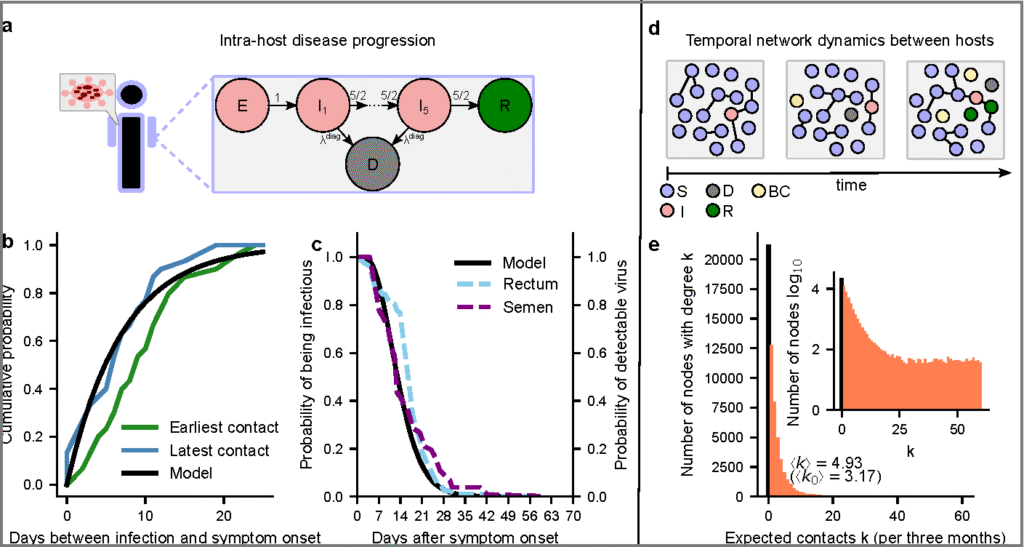
To investigate the combined effects of sexual contact networks, temporary reductions in contact, and infection- versus vaccine-derived immunity on the 2022 Mpox outbreak, the scientists developed an agent-based model and used a novel exact and fast numerical simulation method developed in the context of MATH+. This novel numerical scheme allowed calibrating the agent-based model with epidemiological, vaccination, contact, and behavioral data.
Results
The results showed that vaccination had only a marginal effect on the decline of the epidemic. Instead, a combination of infection-induced immunity among individuals with many sexual contacts and temporary behavioral changes reduced the number of susceptible individuals below the epidemic threshold. However, the 2022 Mpox vaccination campaign, together with infection-induced immunity, may have contributed to herd immunity against sustained Mpox outbreaks within the Berlin MSM population. Demographic changes and waning immunity could compromise this herd immunity over time, and we may in fact witness a recent re-surge in Mpox cases in recent weeks.
Conclusions
These findings demonstrated that, in addition to vaccination, timely and clear communication of transmission routes could trigger spontaneous protective behaviors in key populations. They underscored the importance of targeted sexual health education as a central component of outbreak control for Mpox.
MATH+ Reference
The work is based on the MATH+ funded research project Effective Stochastic Simulation of Adaptive AB Models (EF 45-2) within the Emerging Fields Multi-Agent Social Systems.
LINKS:
- Publication in Communications Medicine
- Article in the German newspaper Tagesspiegel (Plus): Mpox-Epidemie in Berlin: Warum die Impfung nicht entscheidend war, das Virus zu stoppen (Mpox Epidemic in Berlin: Why Vaccination Was Not the Key Factor in Stopping the Virus), 08 January 2026
- MATH+ research project “Effective Stochastic Simulation of Adaptive AB Models” (EF 45-2) in the Emerging Fields Multi-Agent Social Systems
- Max von Kleist research group (Freie Universität Berlin)