

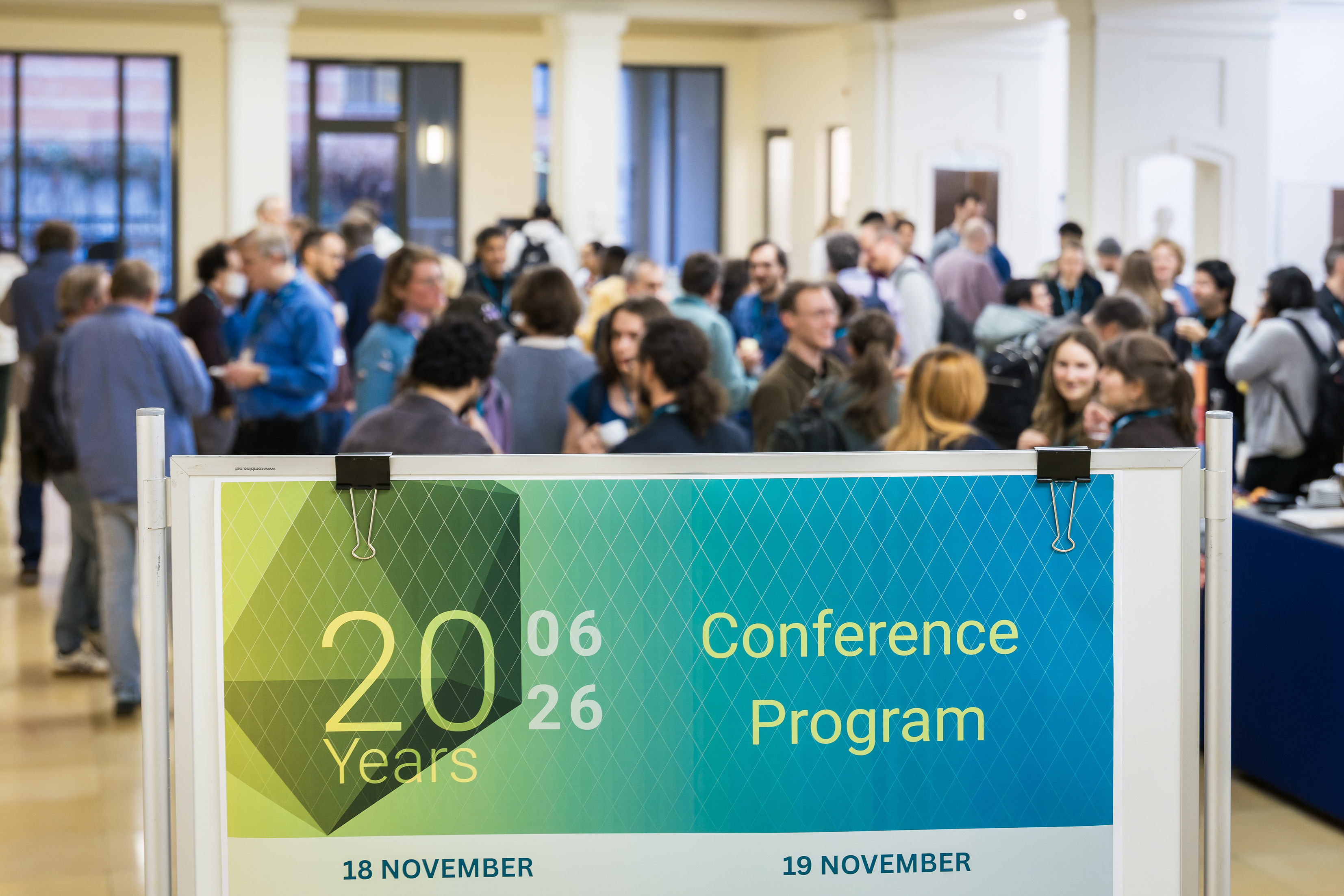
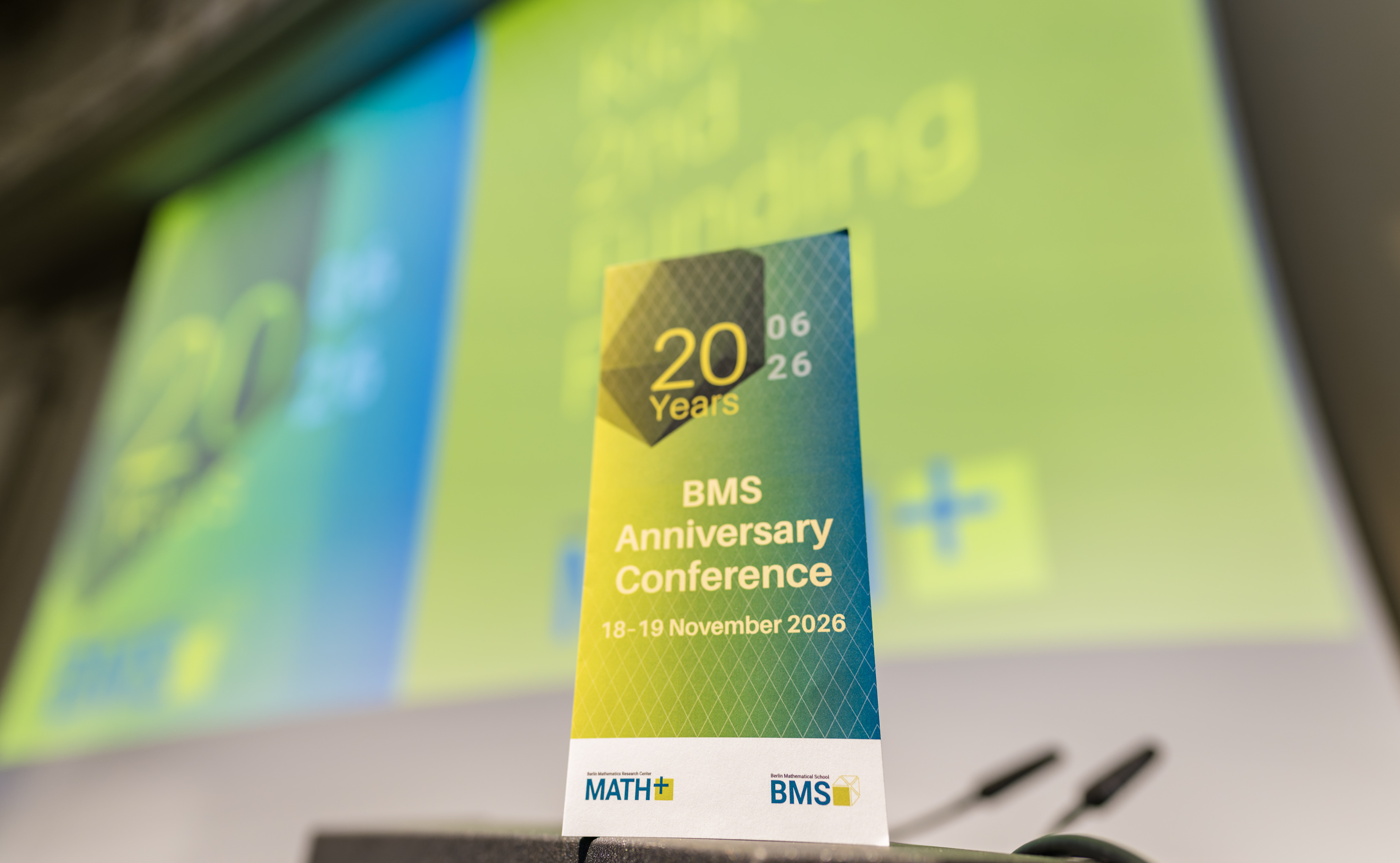
BMS20 Anniversary Conference: 18–19 November 2026
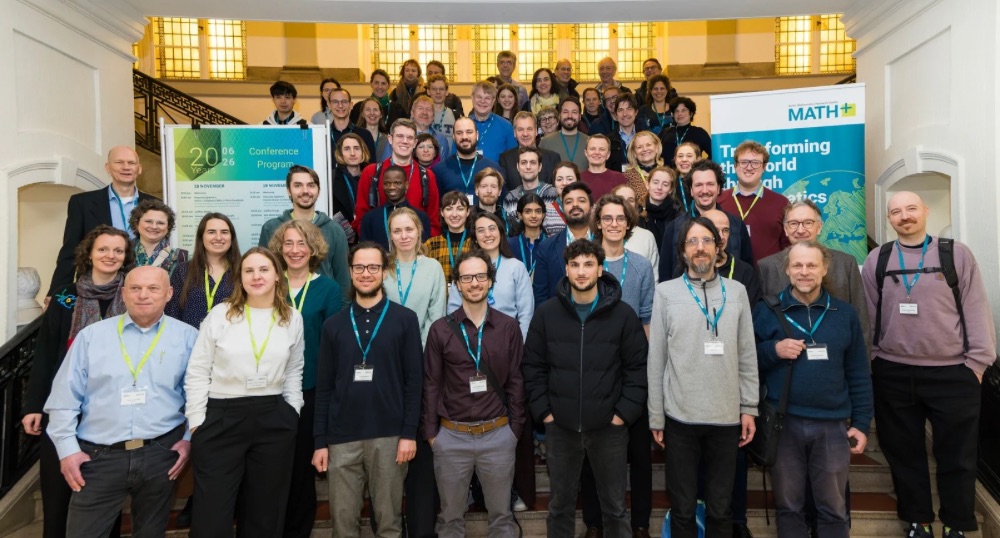
BMS20 Anniversary Conference, 18-19 November 2026 | Photos: © Kay Herschelmann / MATH+
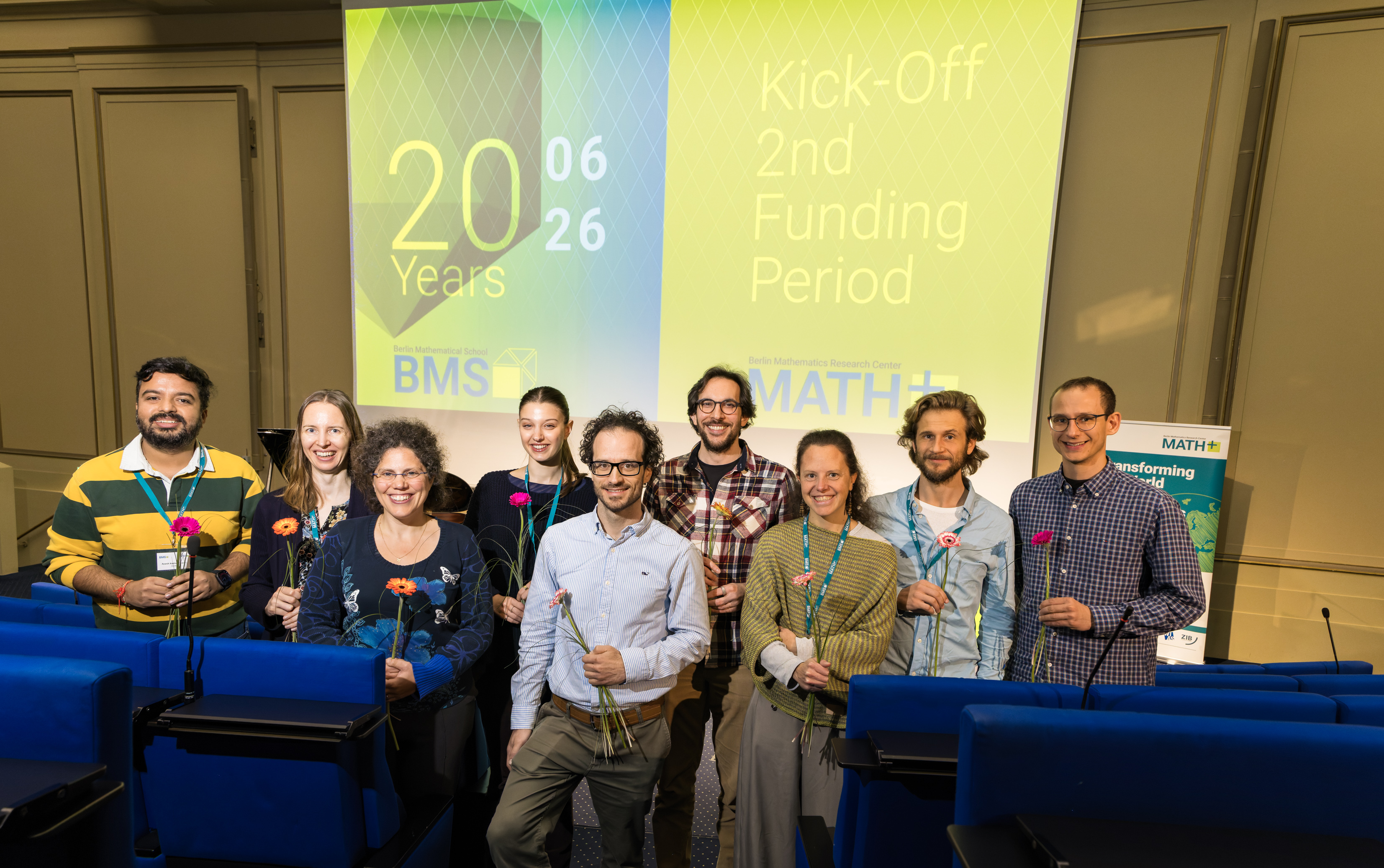
In July 2006, the three mathematics institutes at Freie Universität Berlin, Humboldt-Universität zu Berlin, and Technische Universität Berlin announced the founding of the Berlin Mathematical School (BMS). In October of that year, the German Research Foundation (DFG) announced that the BMS would receive funding as a graduate school under the “Excellence Initiative.” Twenty years later, we are delighted and proud to celebrate the 20th anniversary of the BMS, the graduate school of MATH+ since 2019, while marking this milestone with the launch of the second funding period of the Cluster of Excellence MATH+.
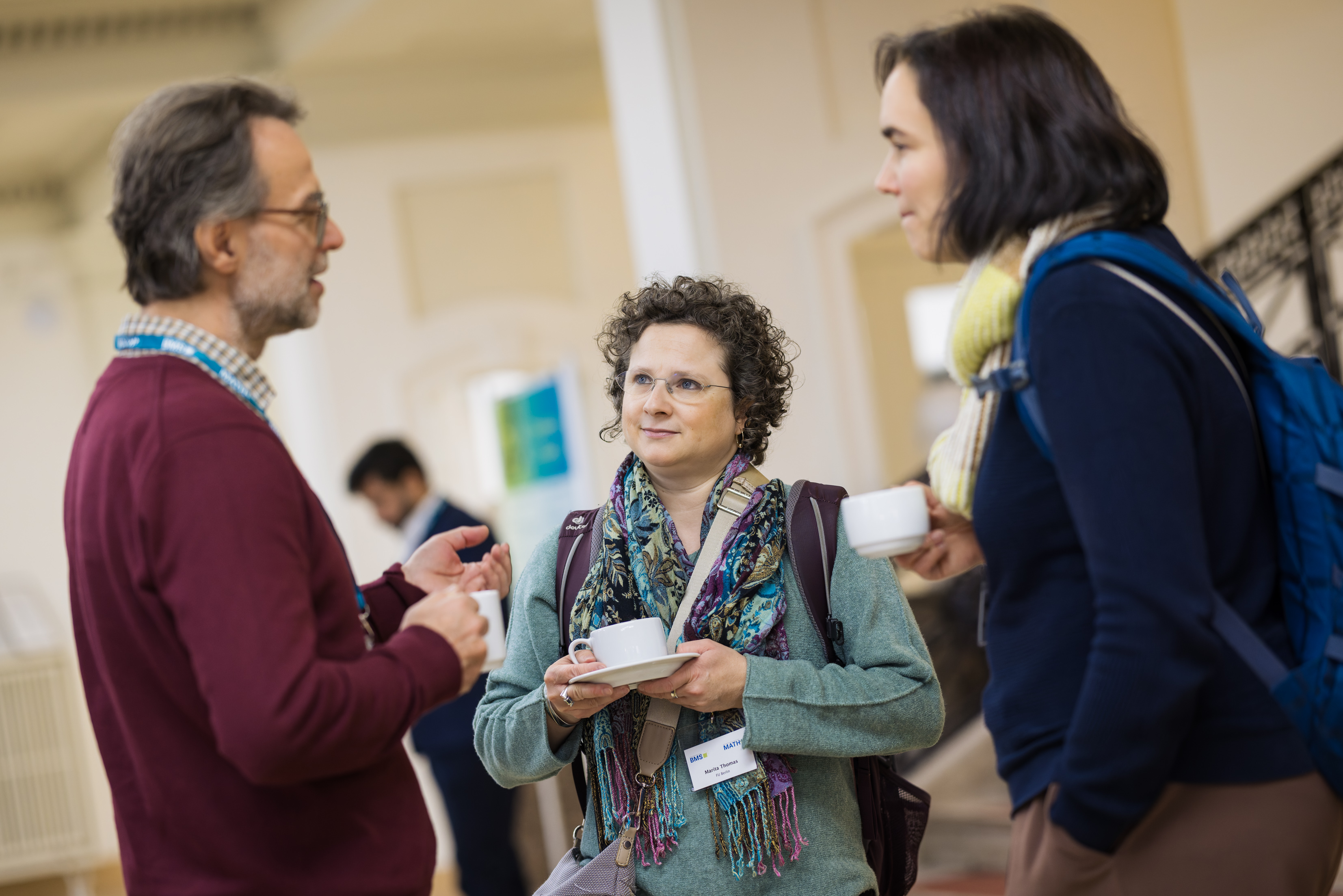
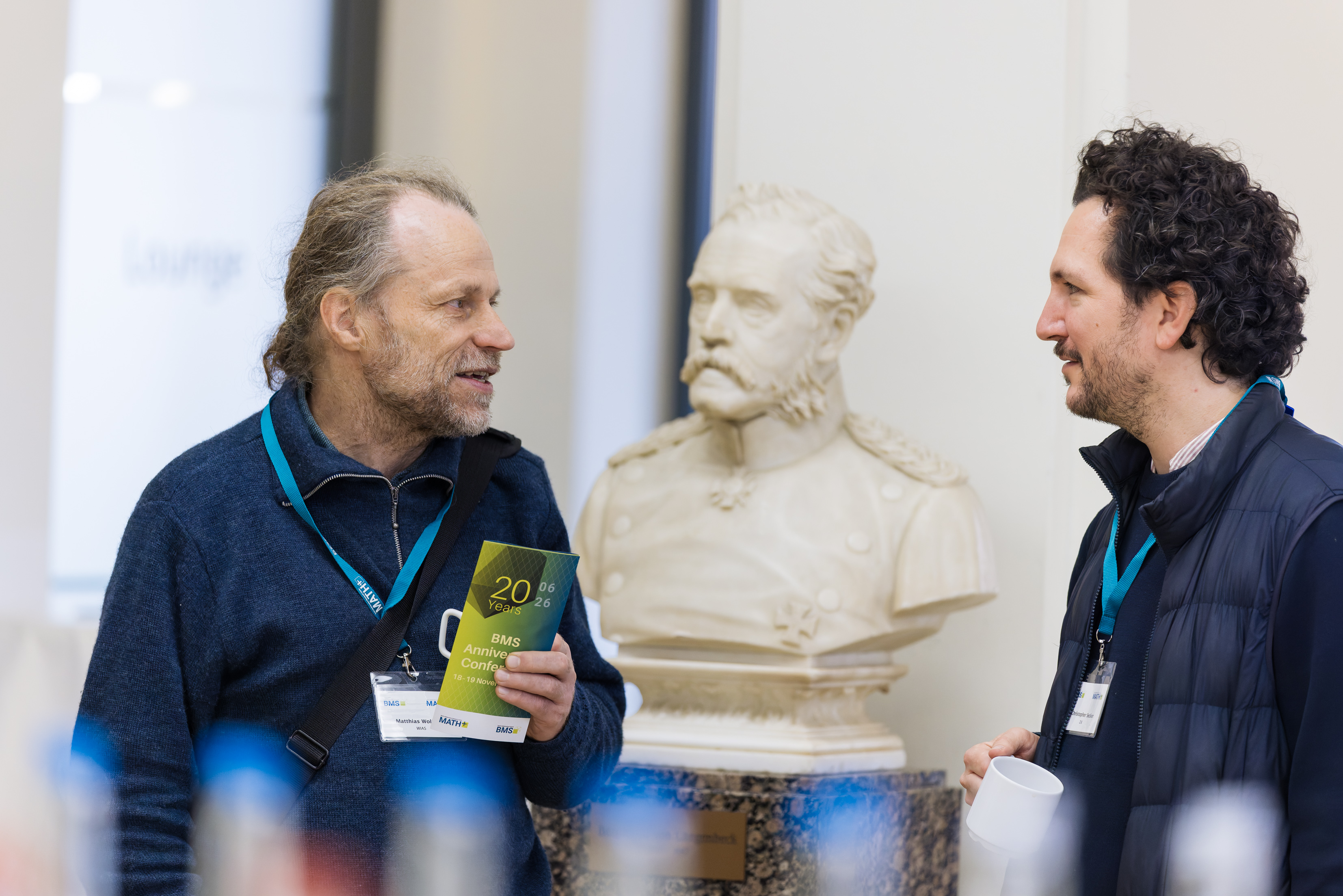
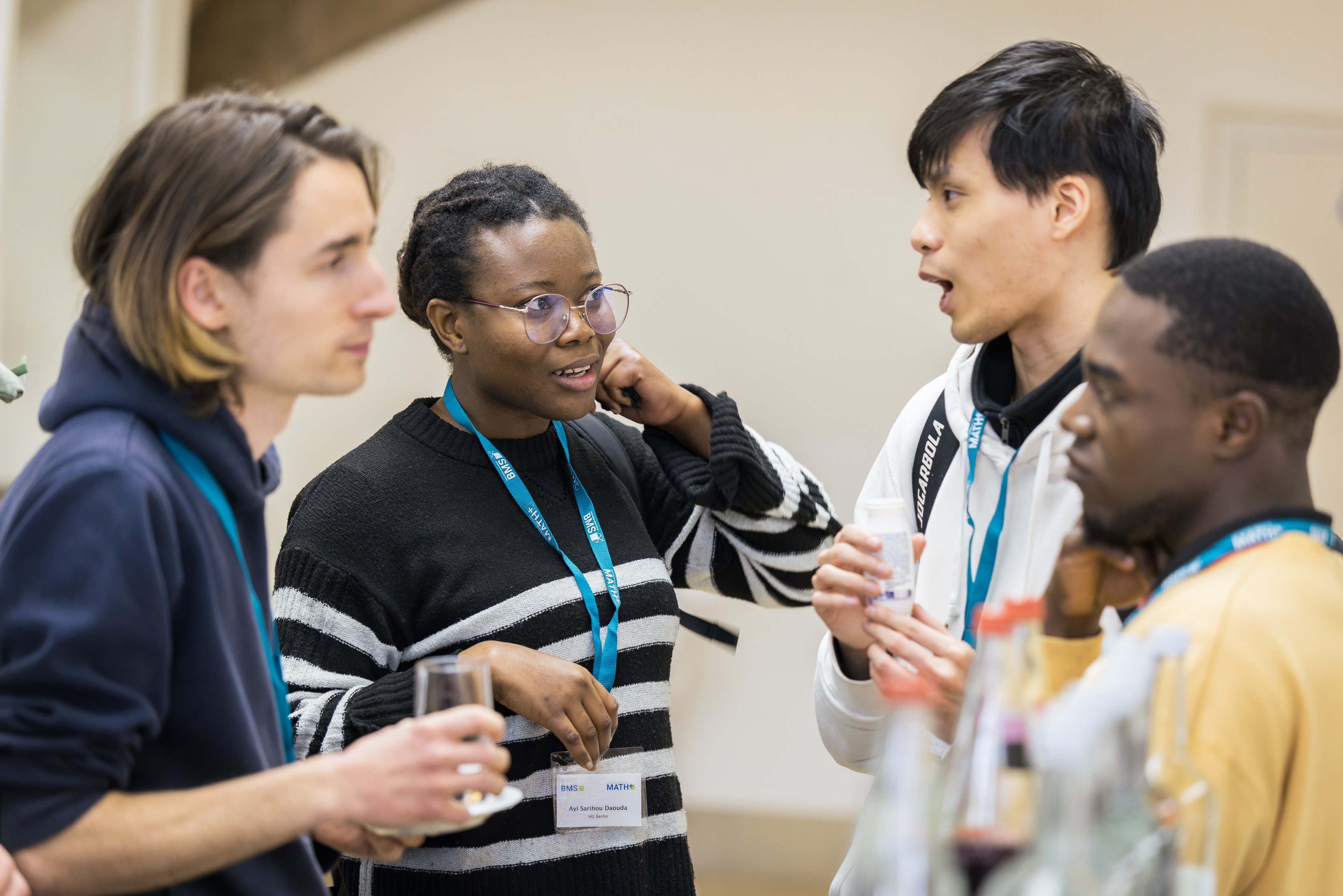
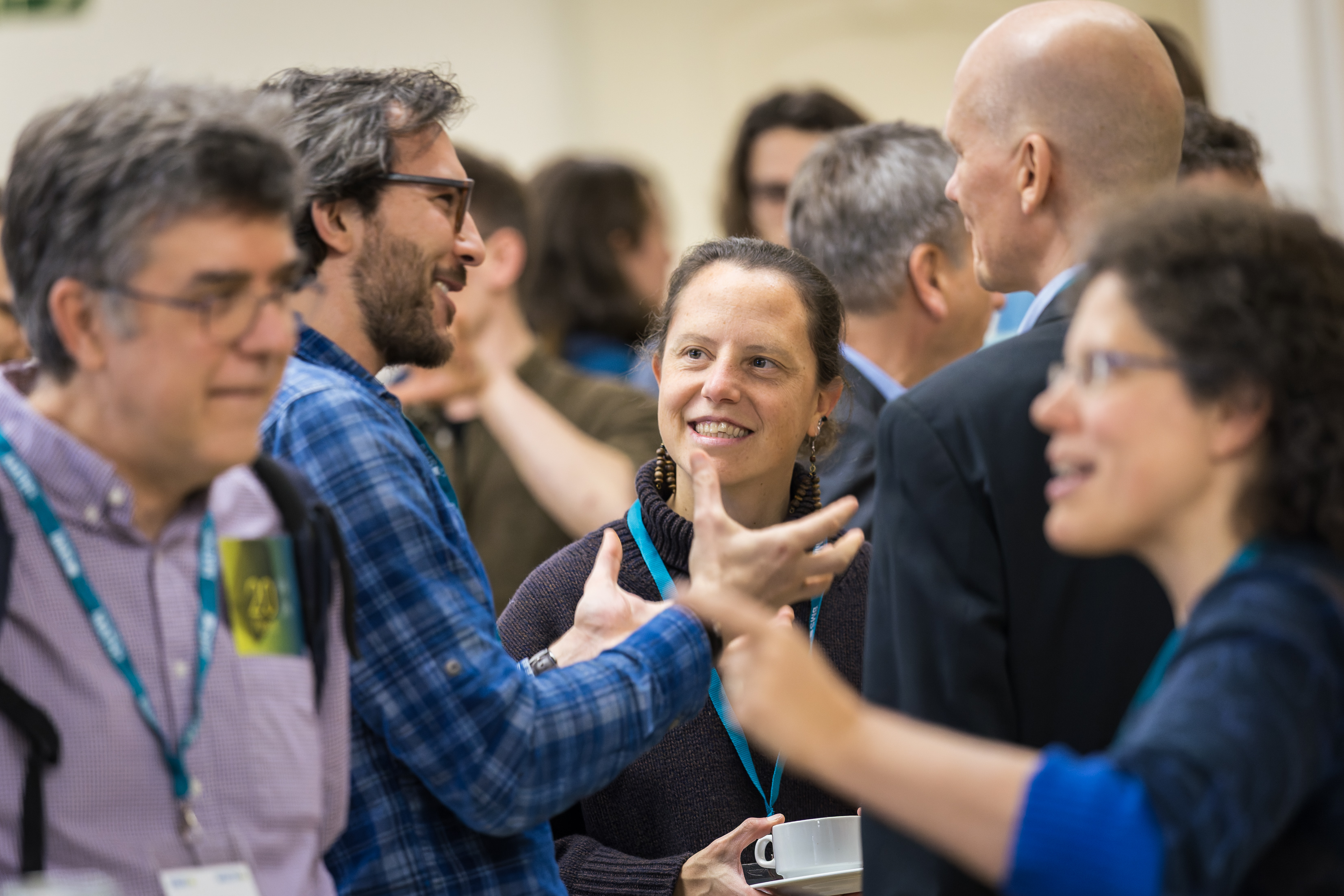
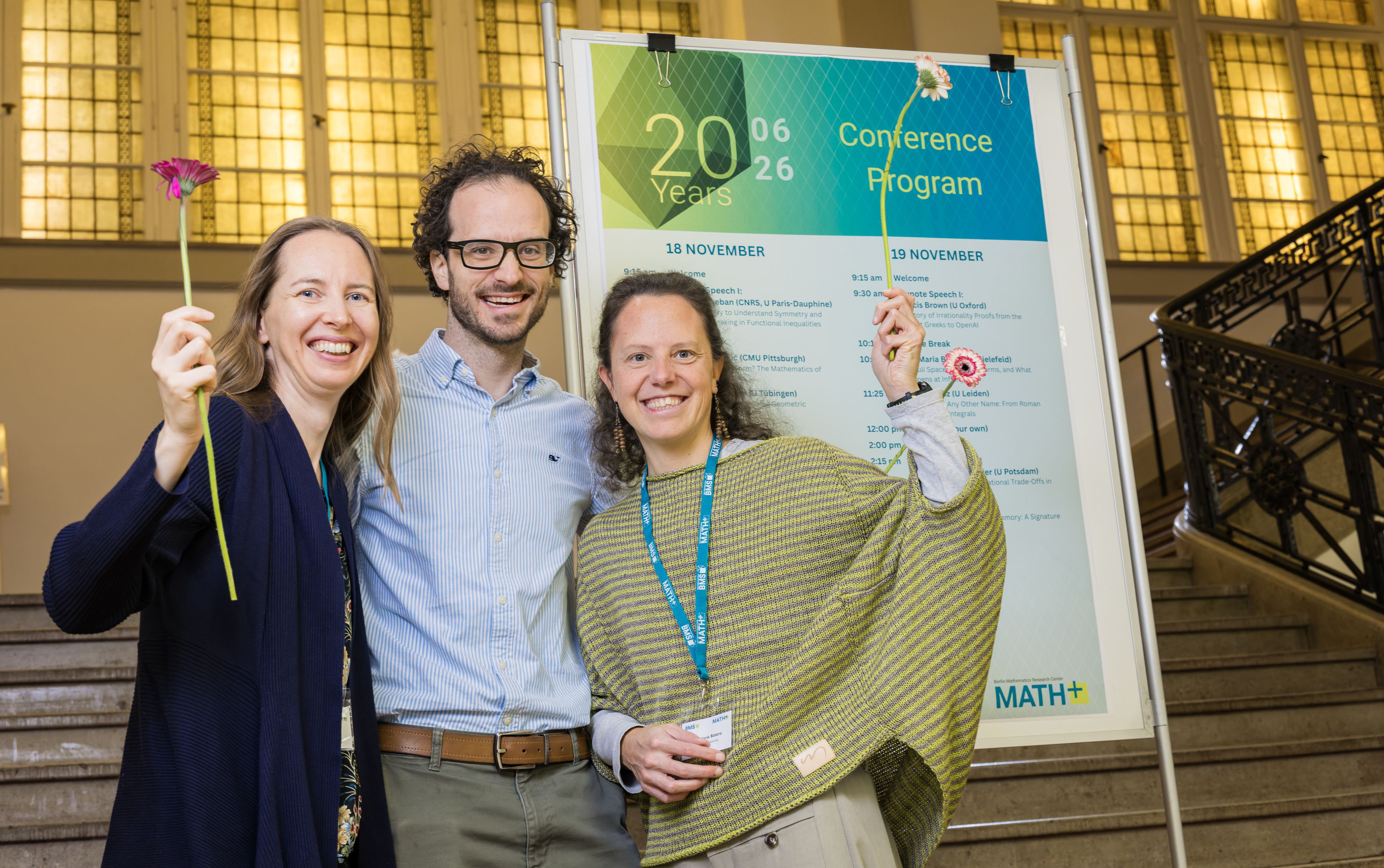
The celebrations included a festive Celebration Ceremony on the evening of 17 November, attended by key figures from Berlin’s political and scientific communities, and a two-day BMS Anniversary Conference featuring outstanding keynote speakers and BMS alumni. Alumni from around the world returned to their mathematical roots, sharing experiences, discussing their career paths, and strengthening their professional networks. Inspiring lectures and lively conversations during coffee and lunch breaks created a wonderful atmosphere in which to reconnect with old friends and celebrate 20 years of BMS.
18–19 NOVEMBER 2026 | BMS20 ANNIVERSARY CONFERENCE
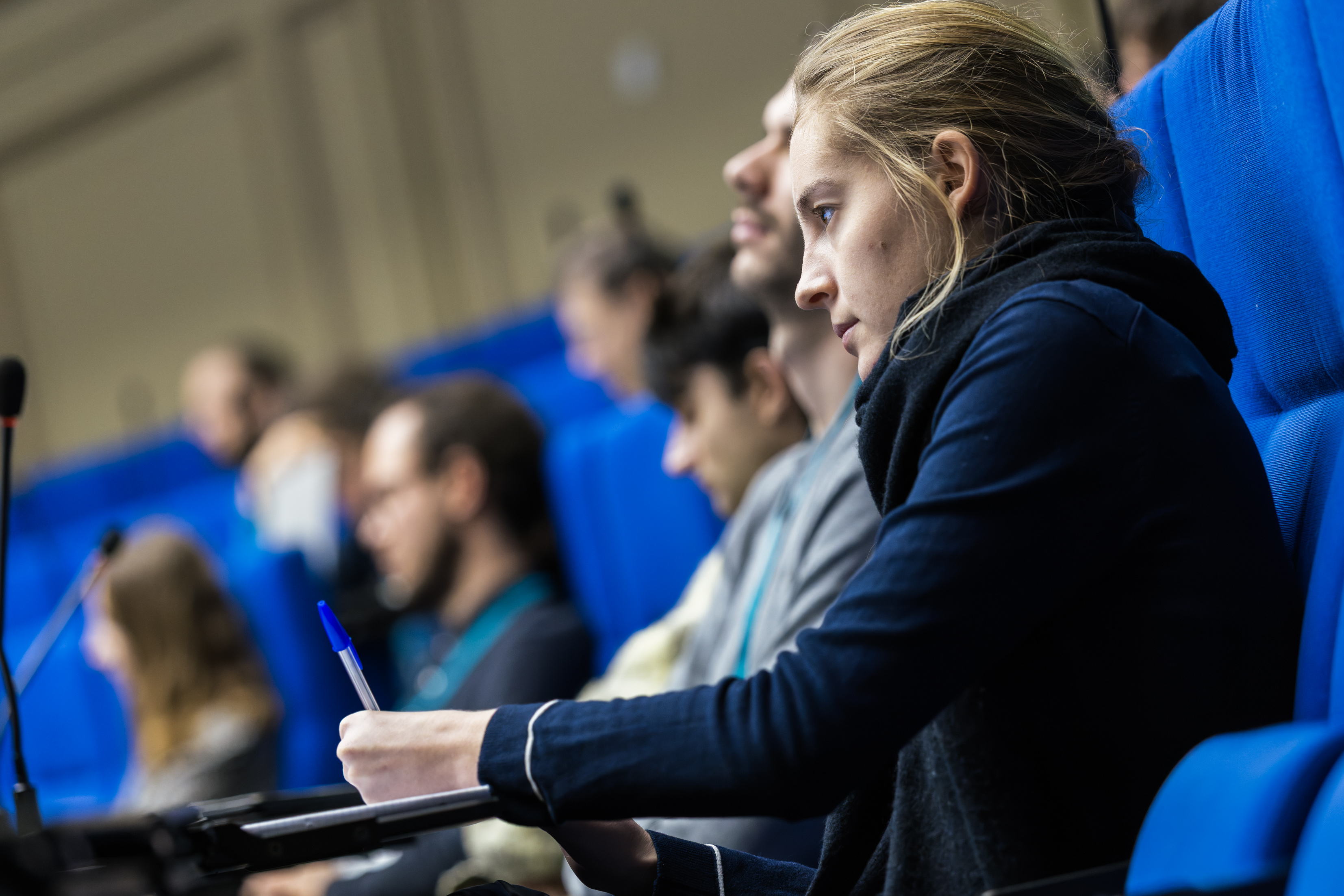
The two-day conference took place at the Langenbeck-Virchow-Haus in Berlin. We welcomed distinguished mathematicians with ties to Berlin for keynote lectures, alongside BMS alumni from around the world who presented their current research. Together, they showcased the breadth of mathematical research while enjoying opportunities for scientific exchange and personal reunions.
Program – Day 1: 18 November
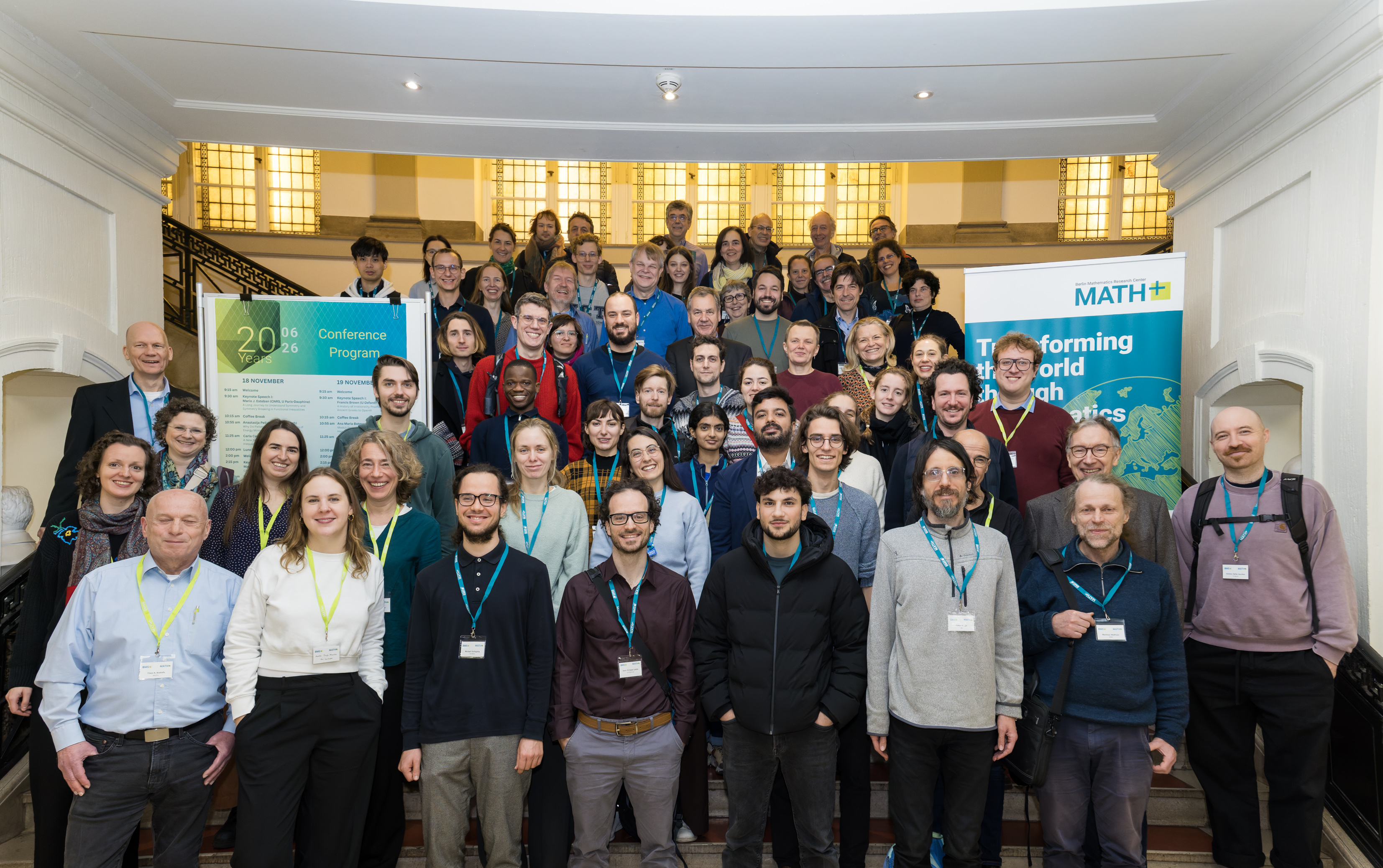
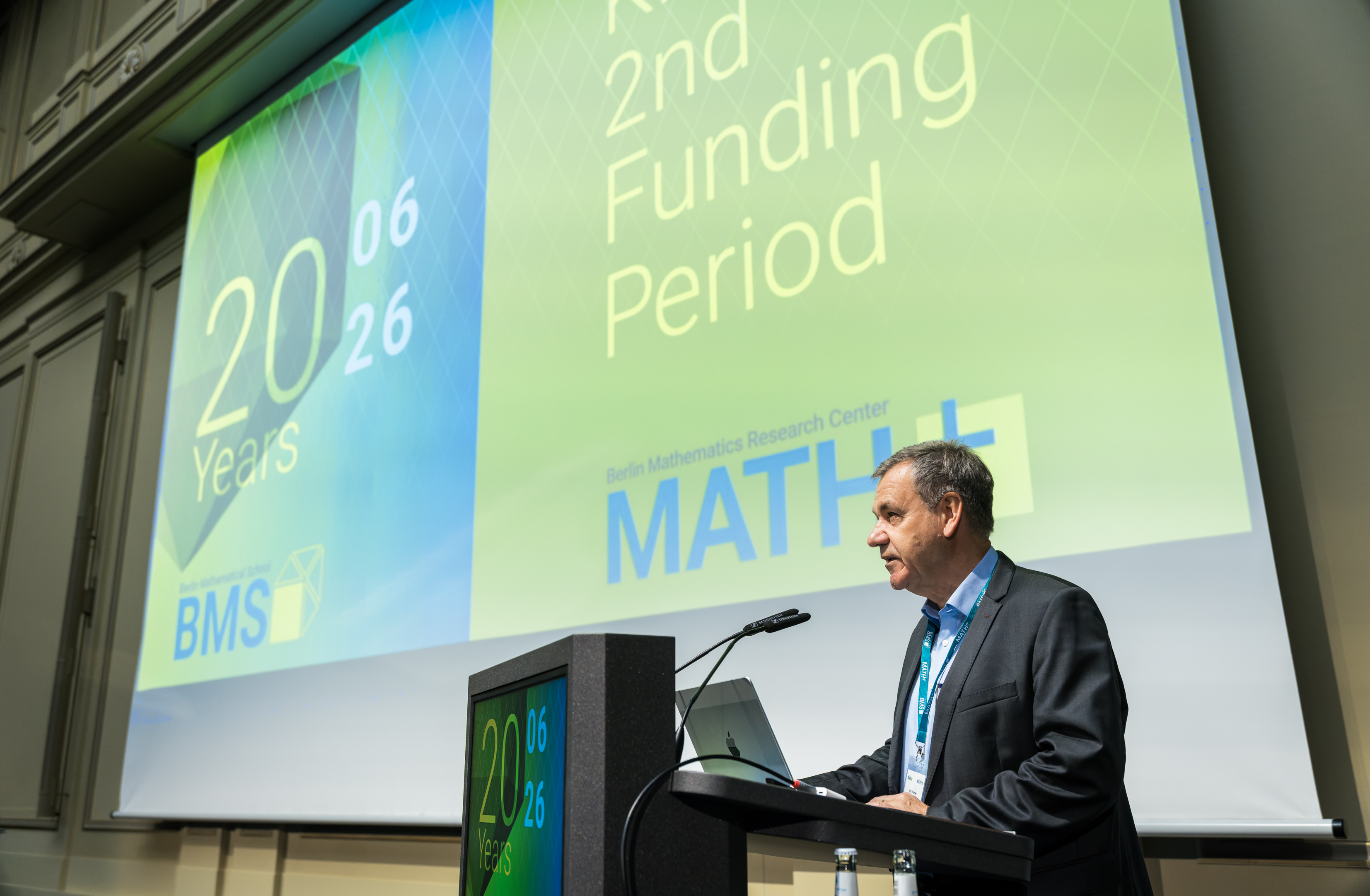
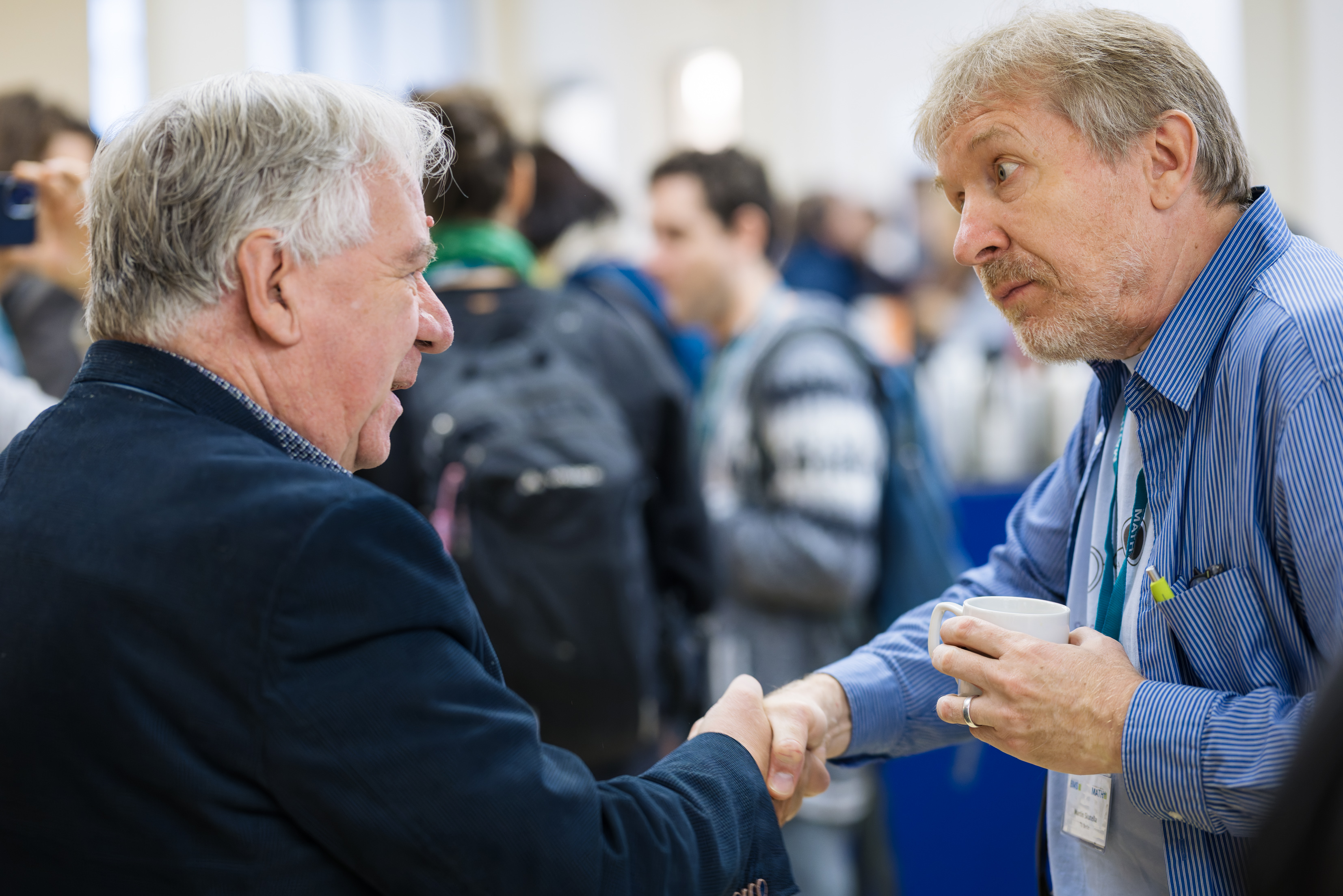
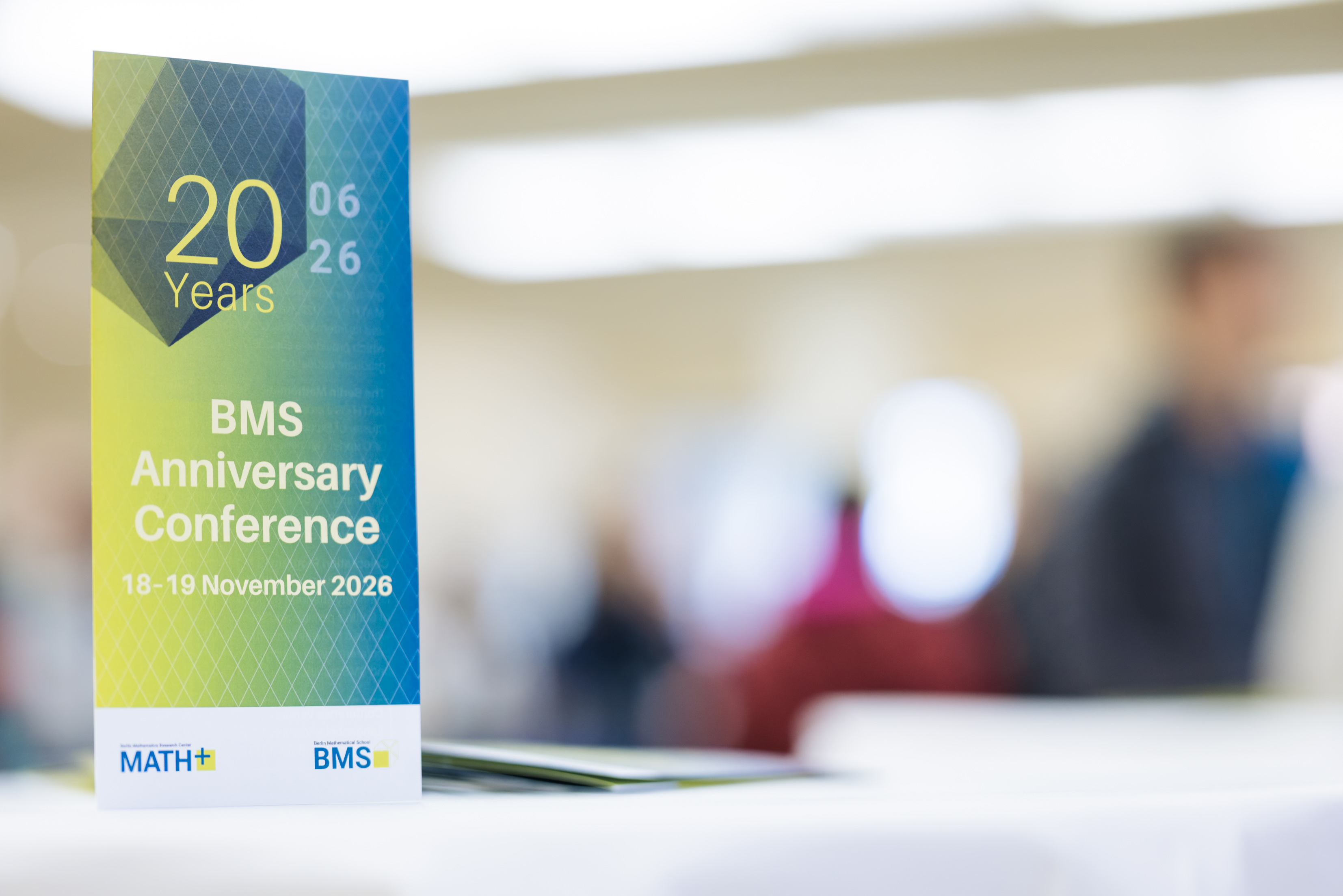
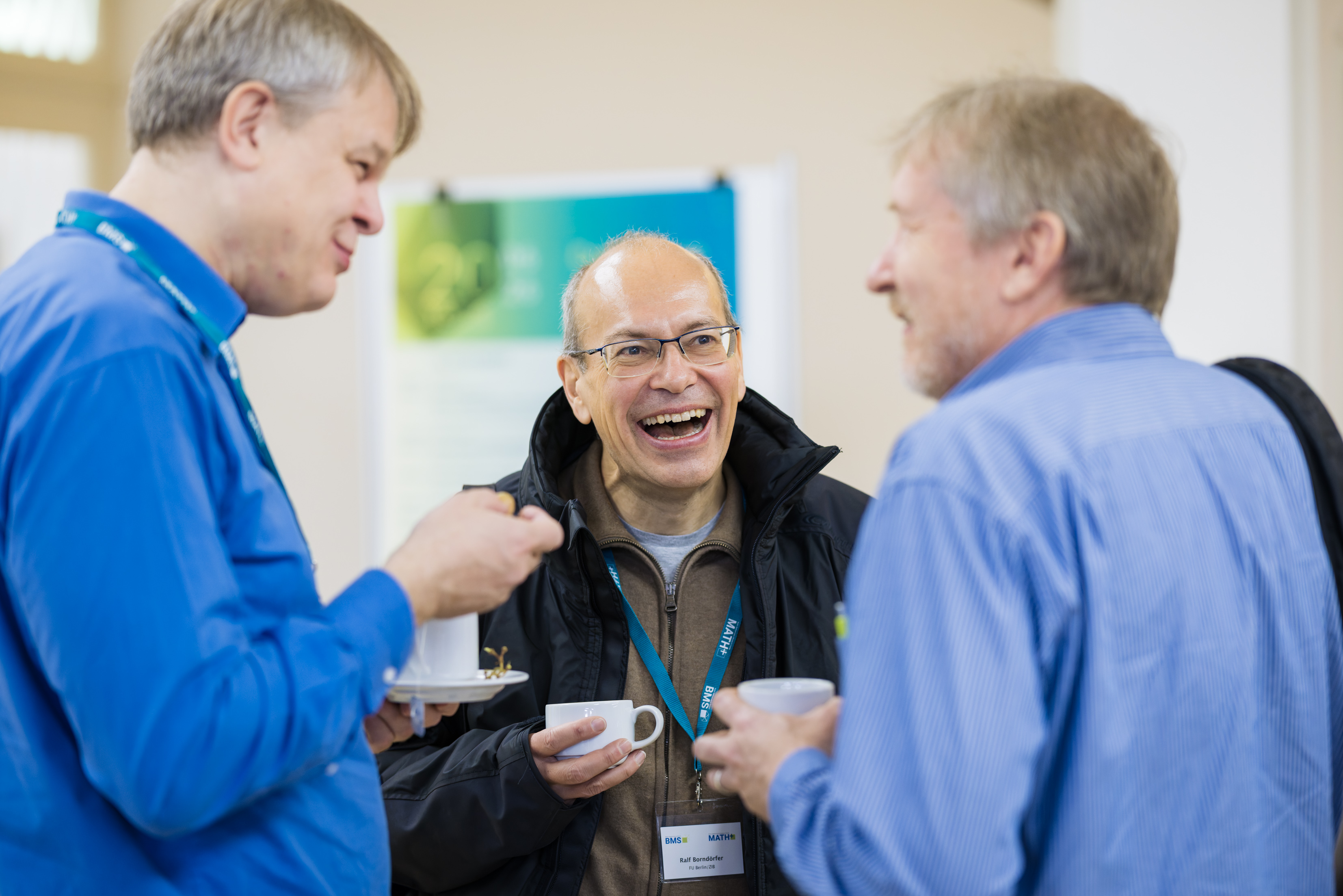
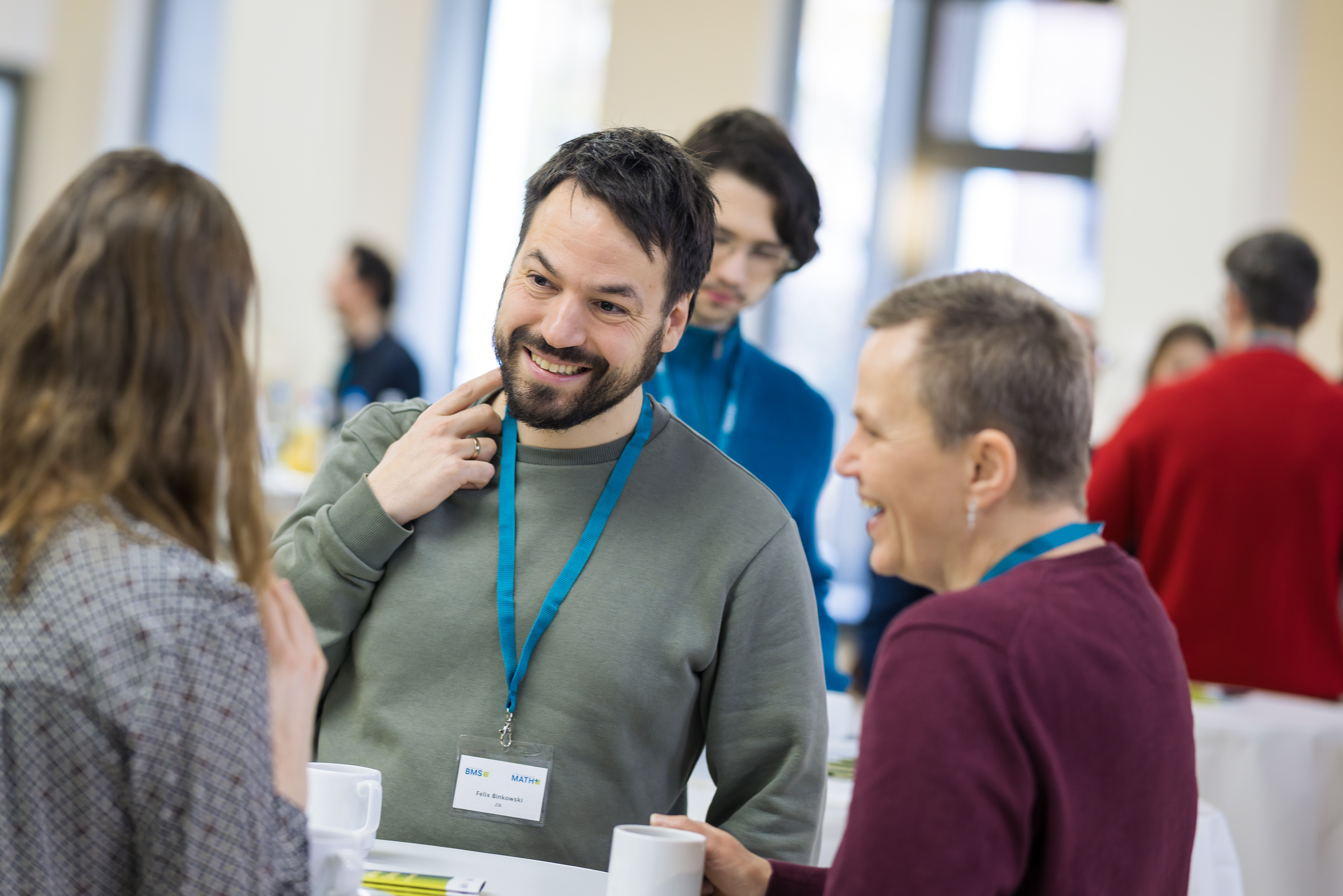
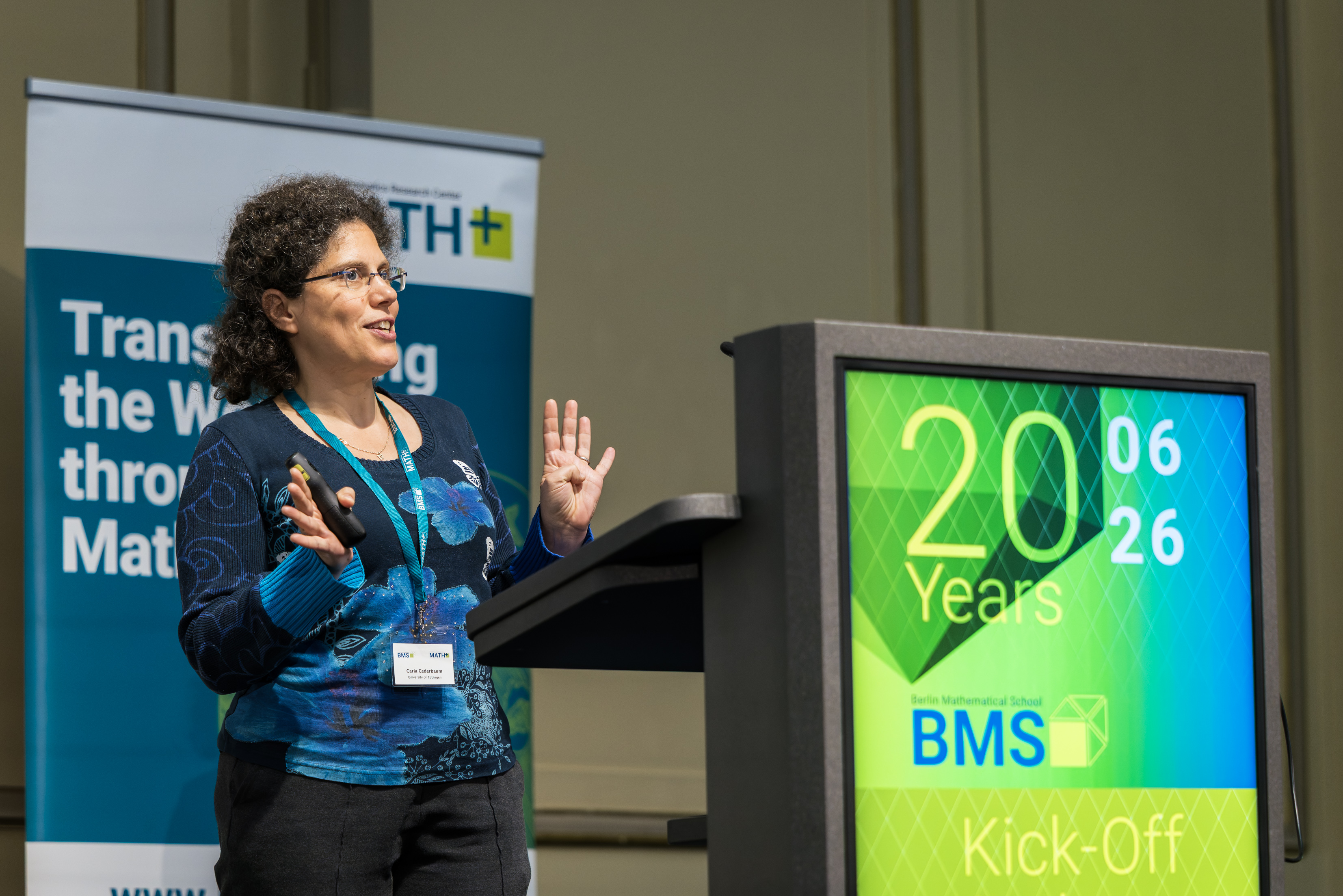
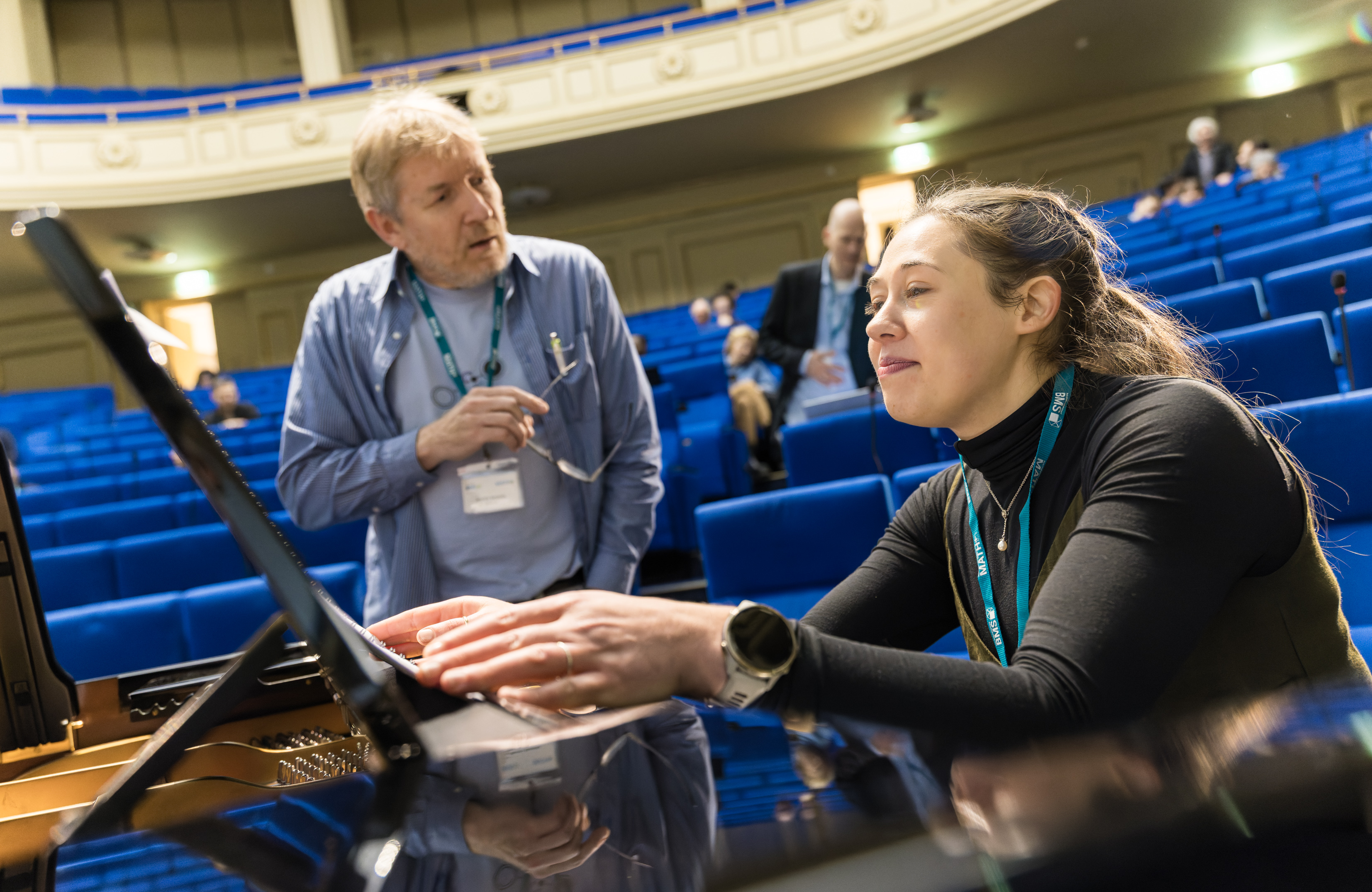
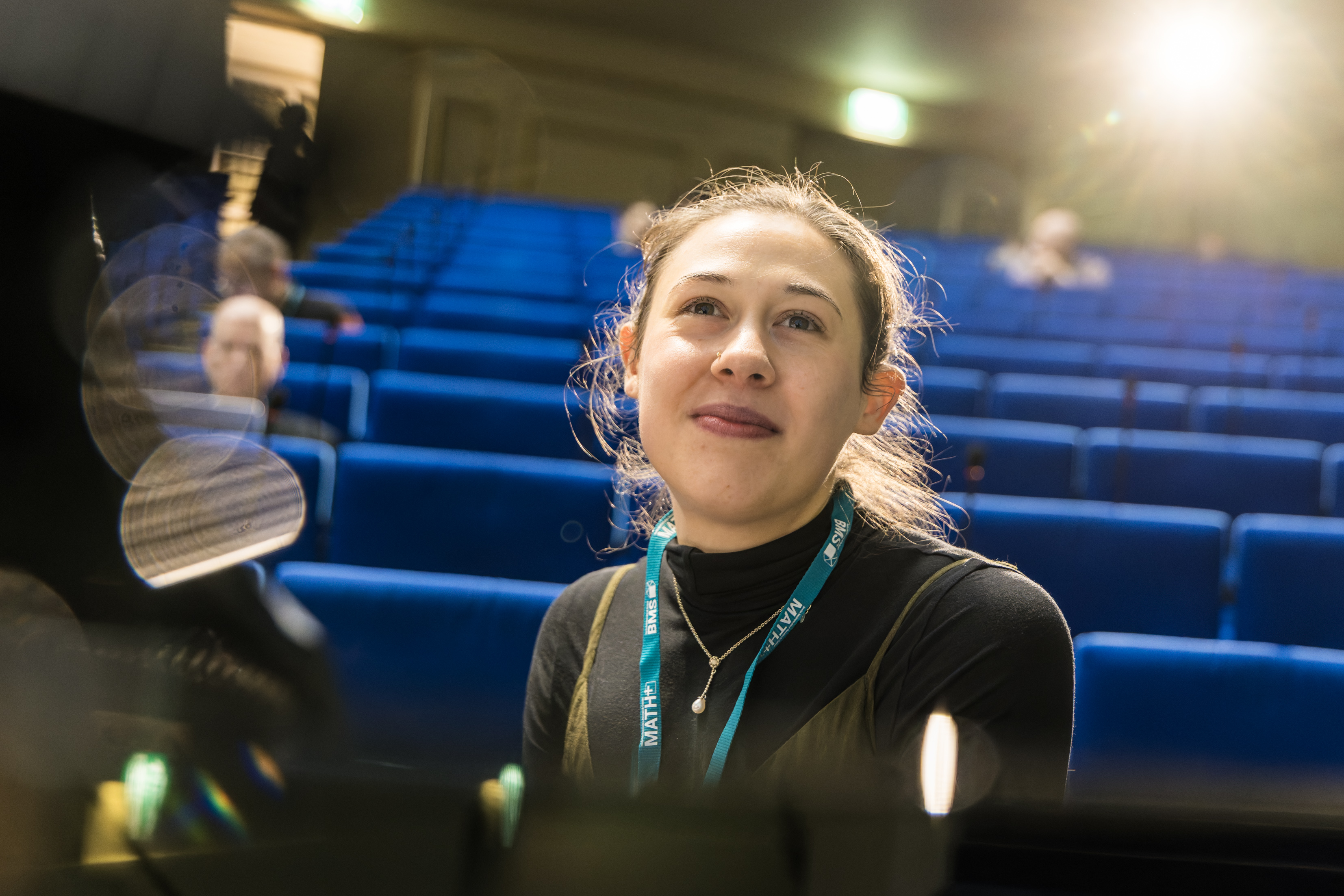
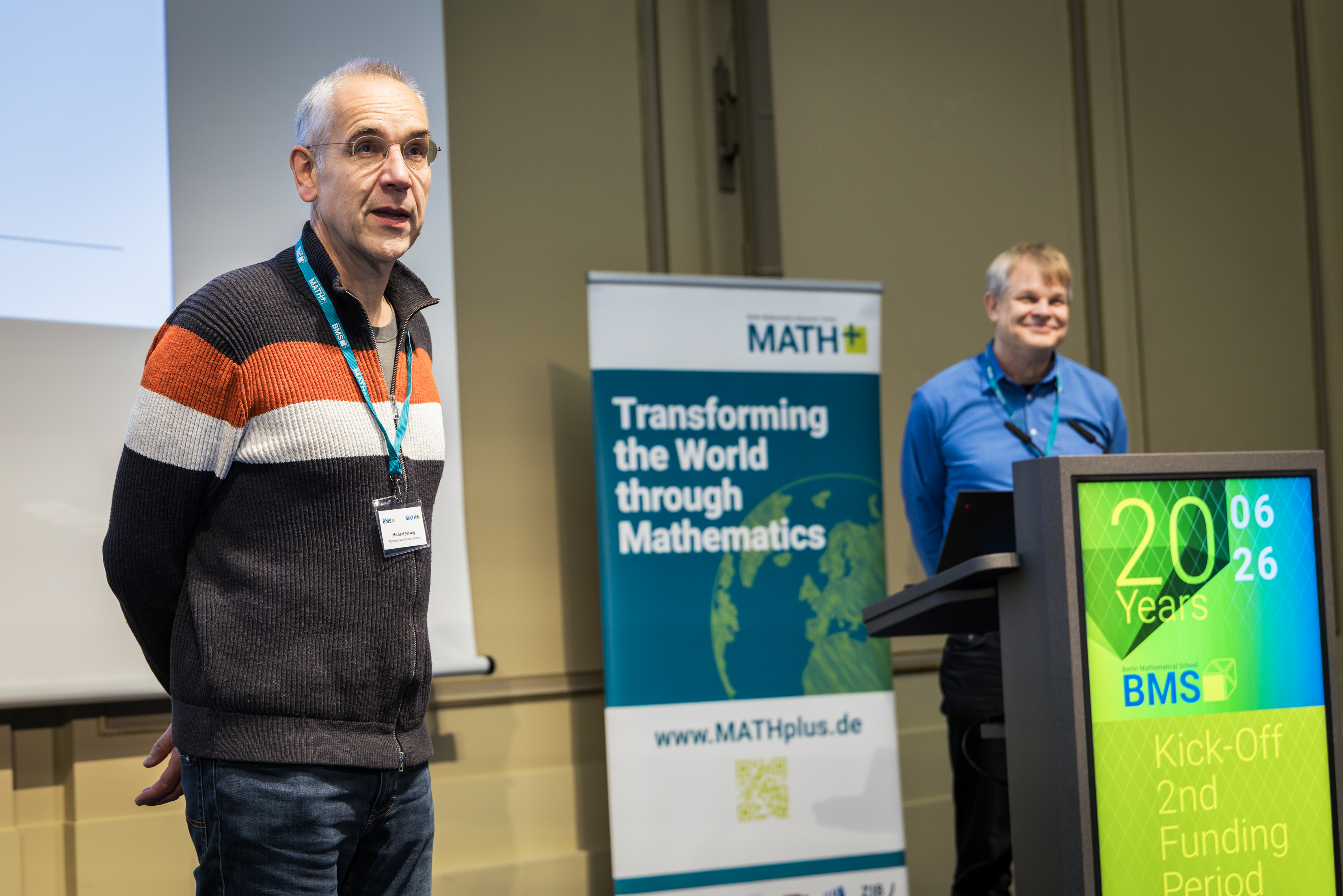
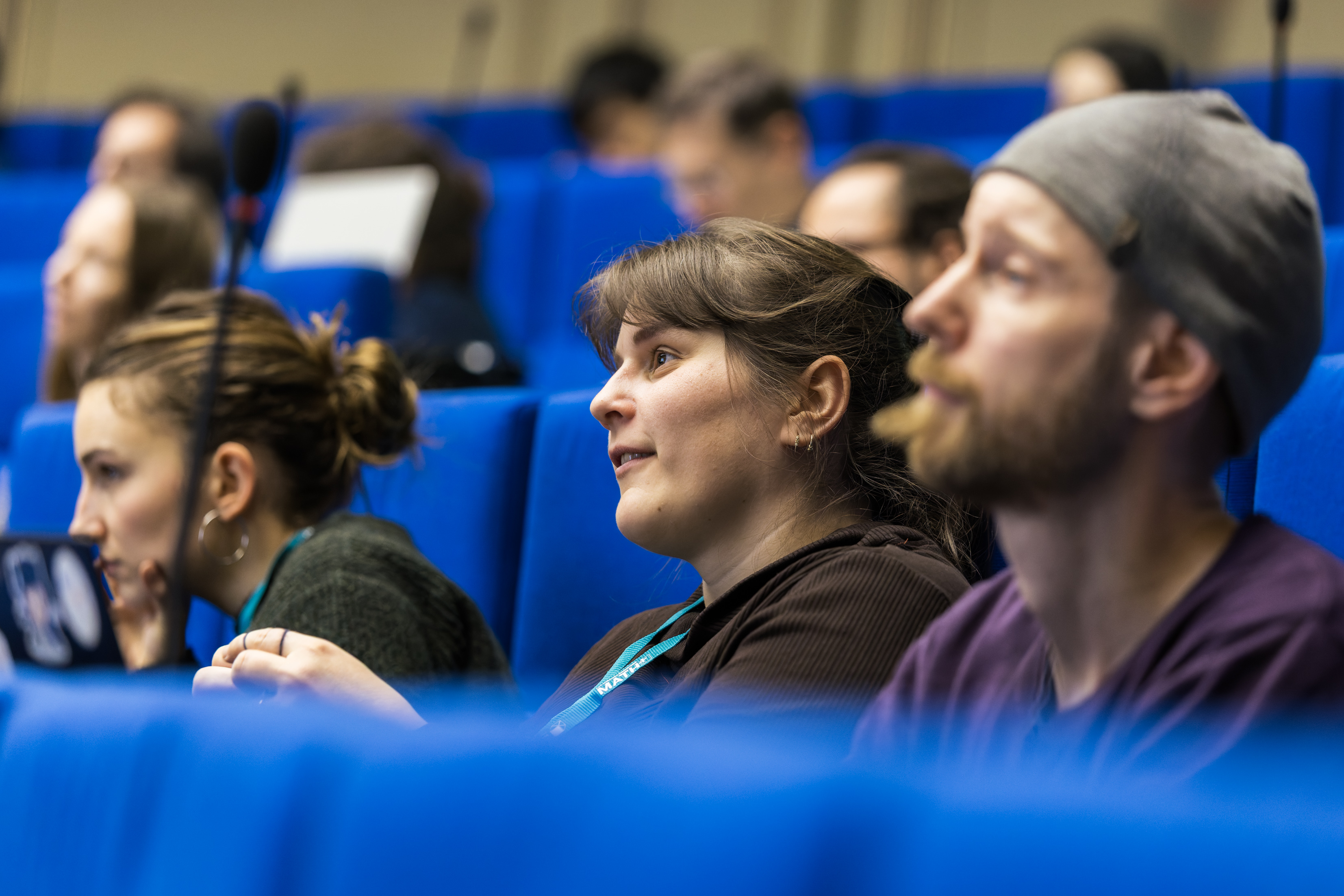
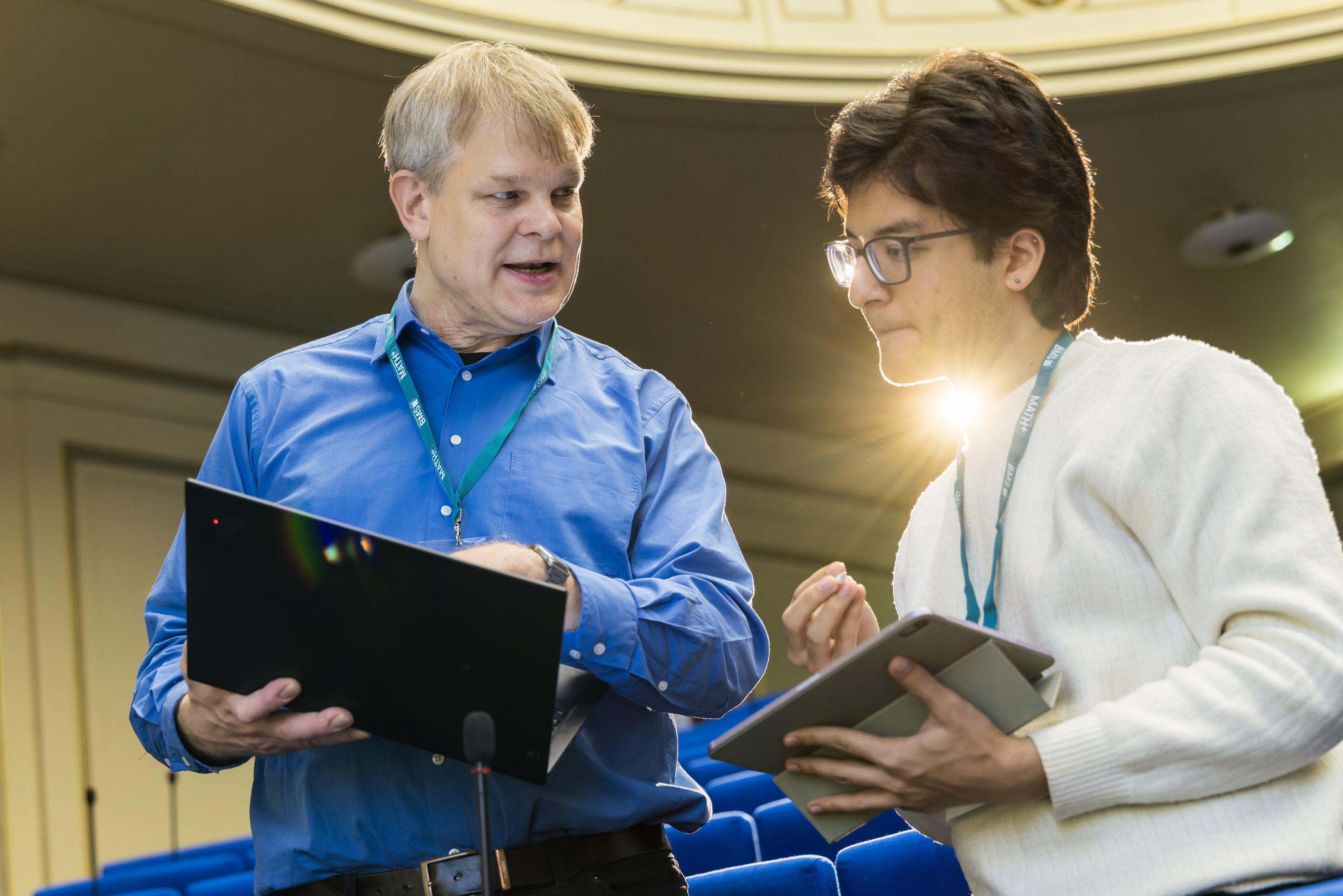
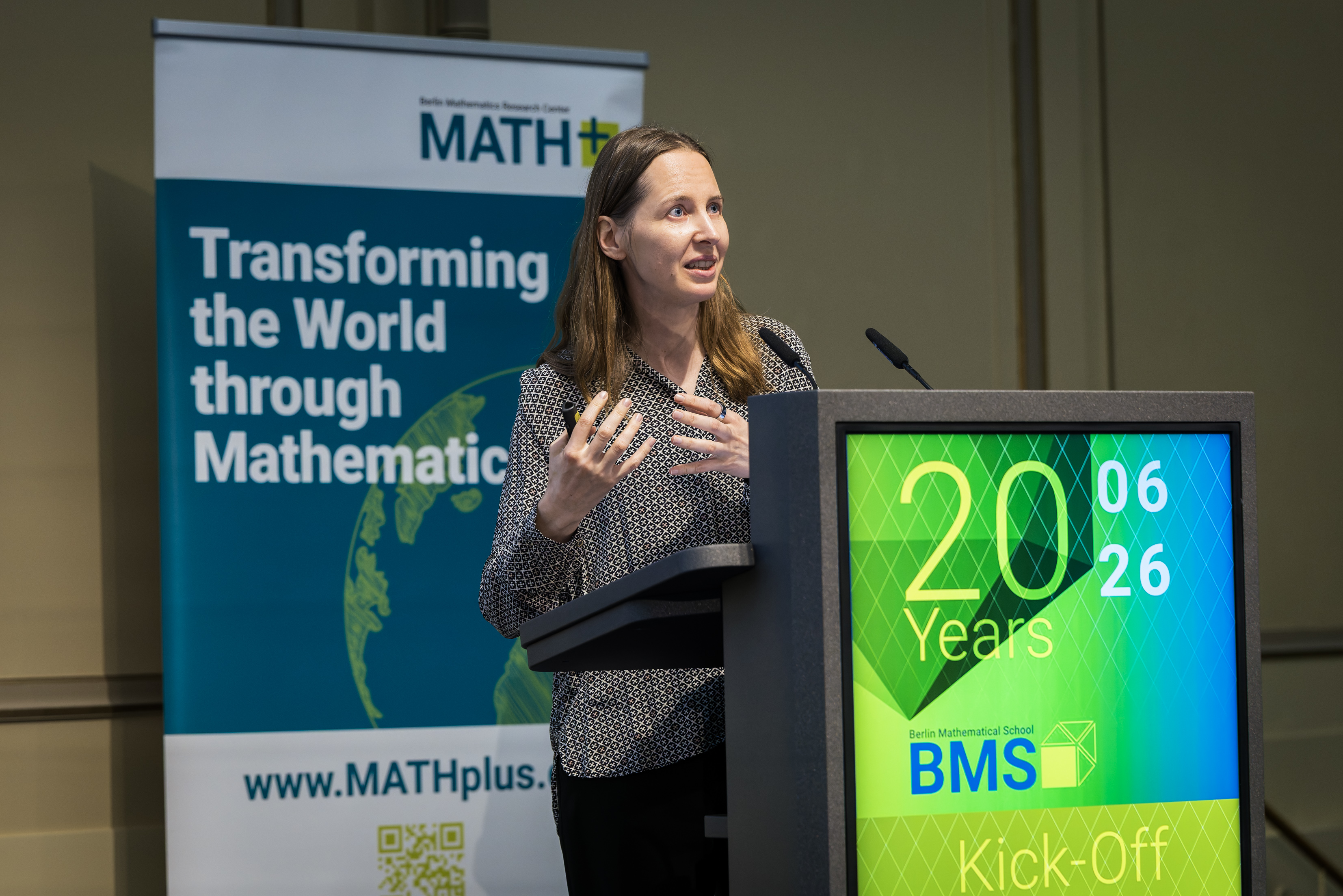
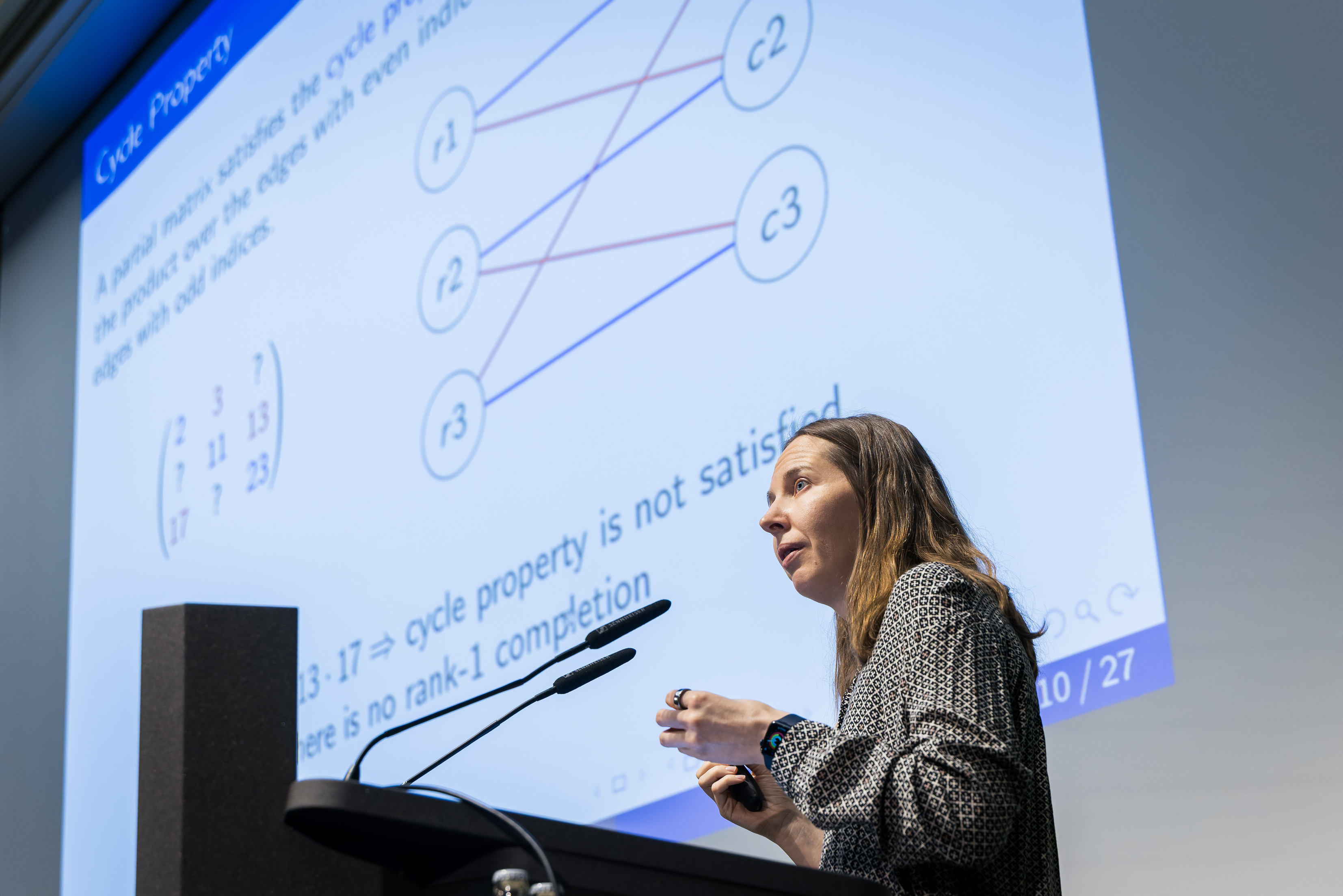
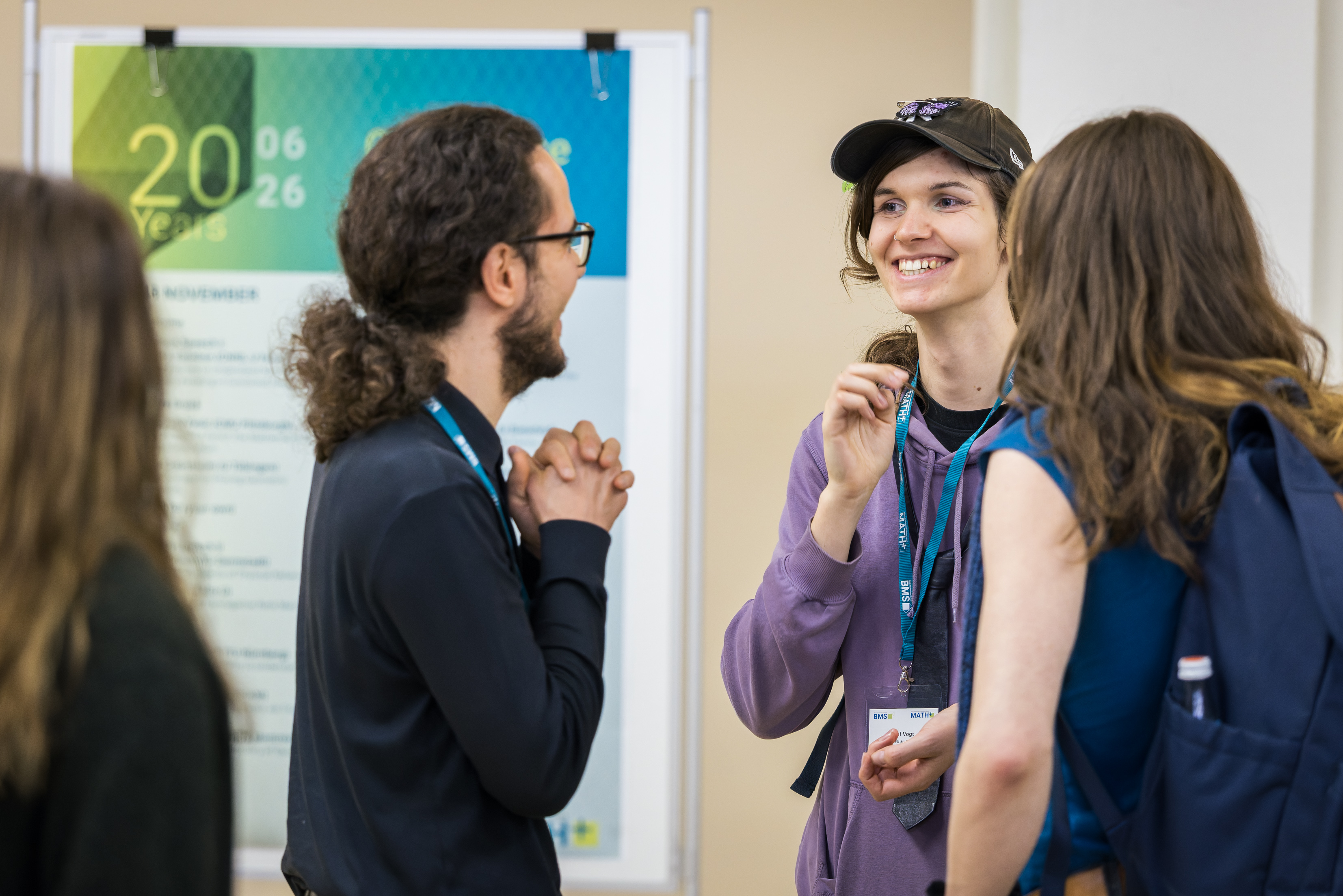
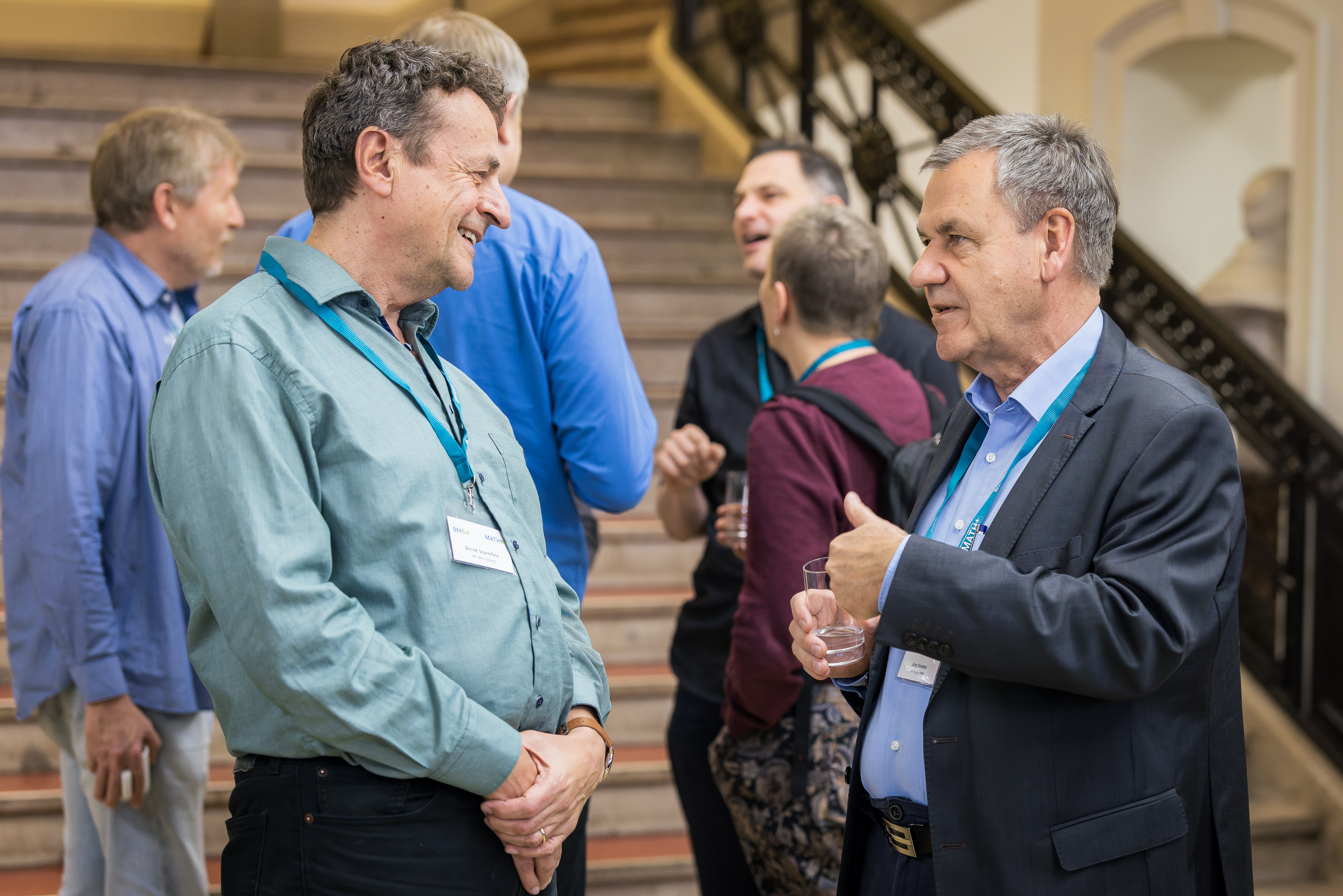
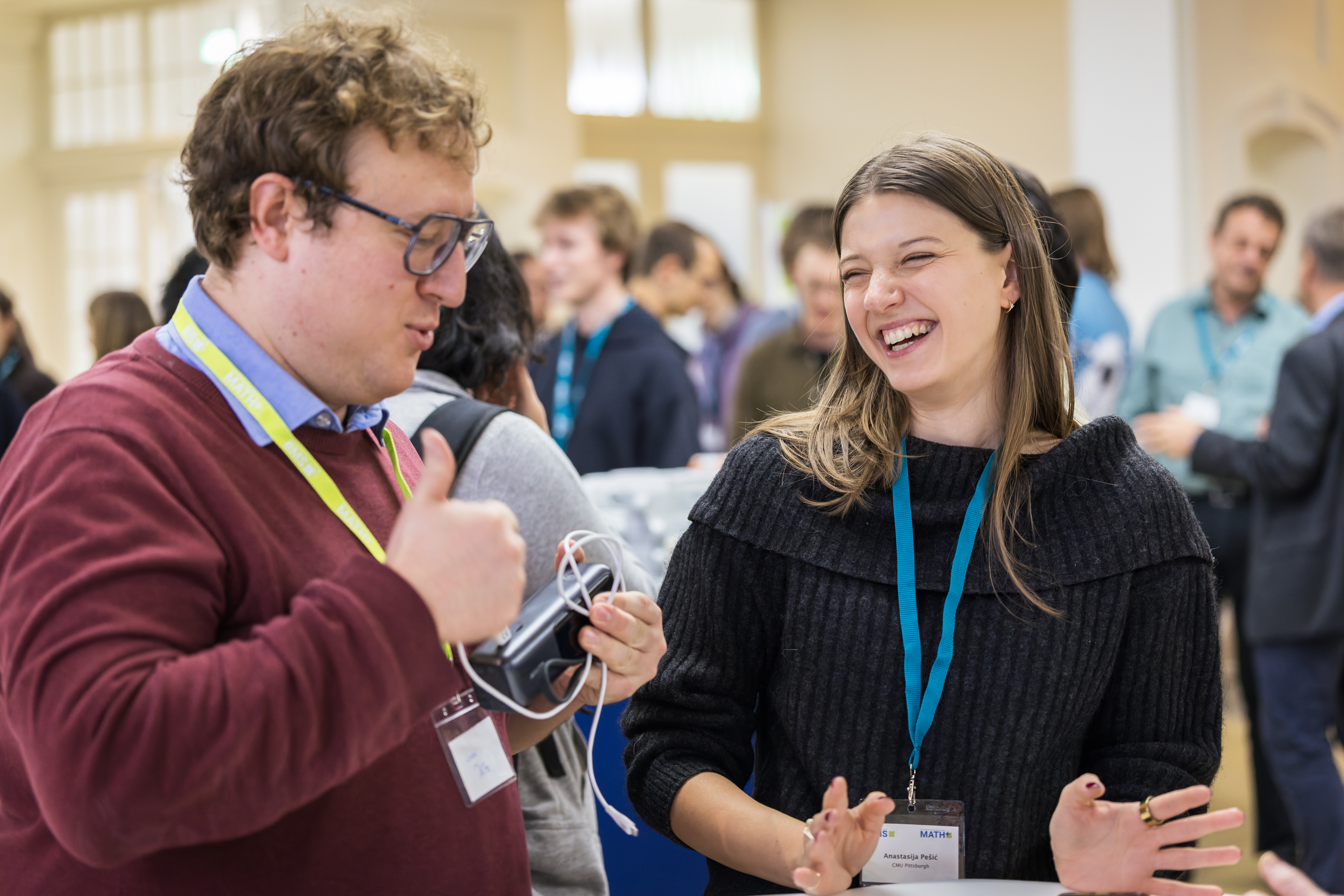
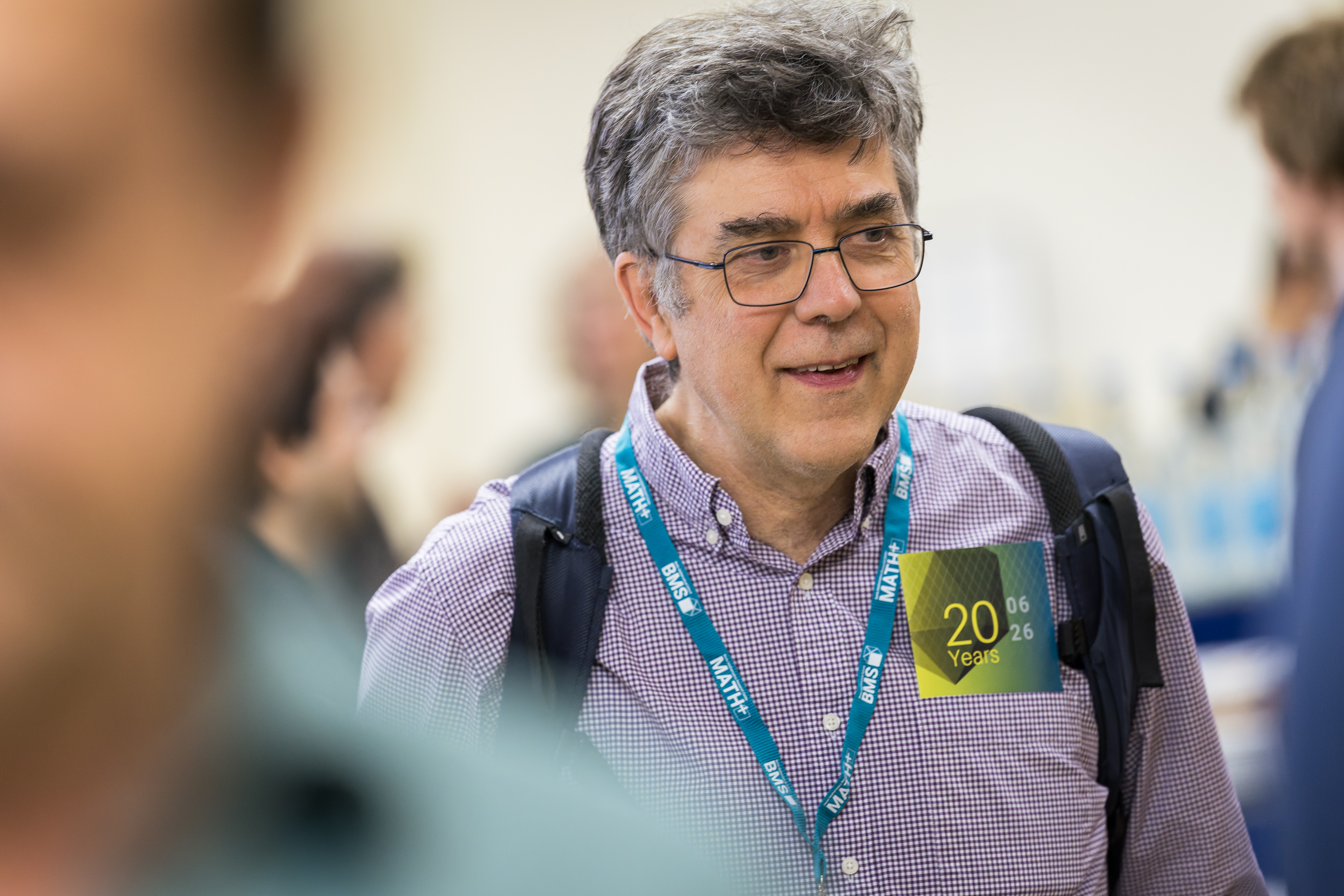
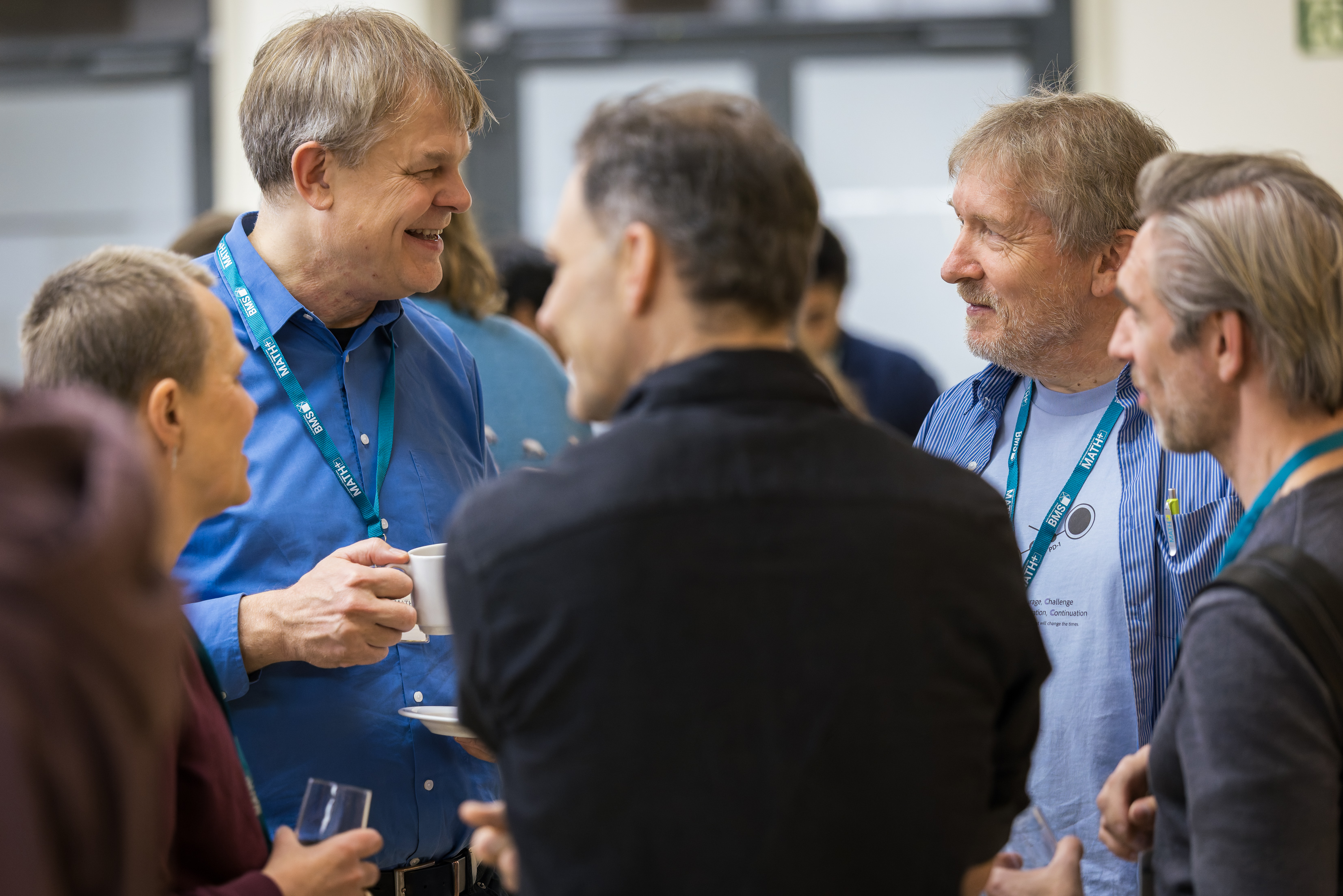
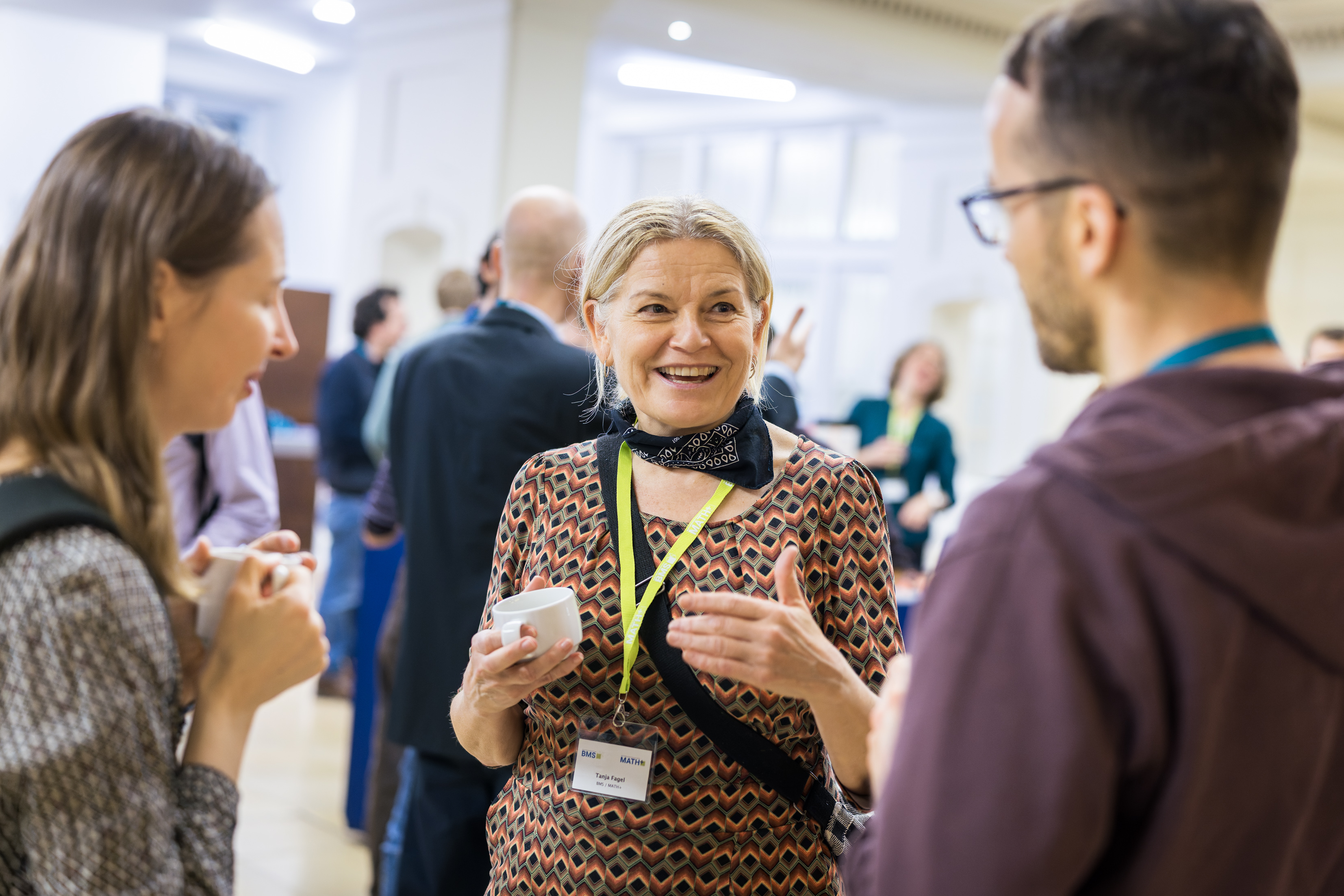
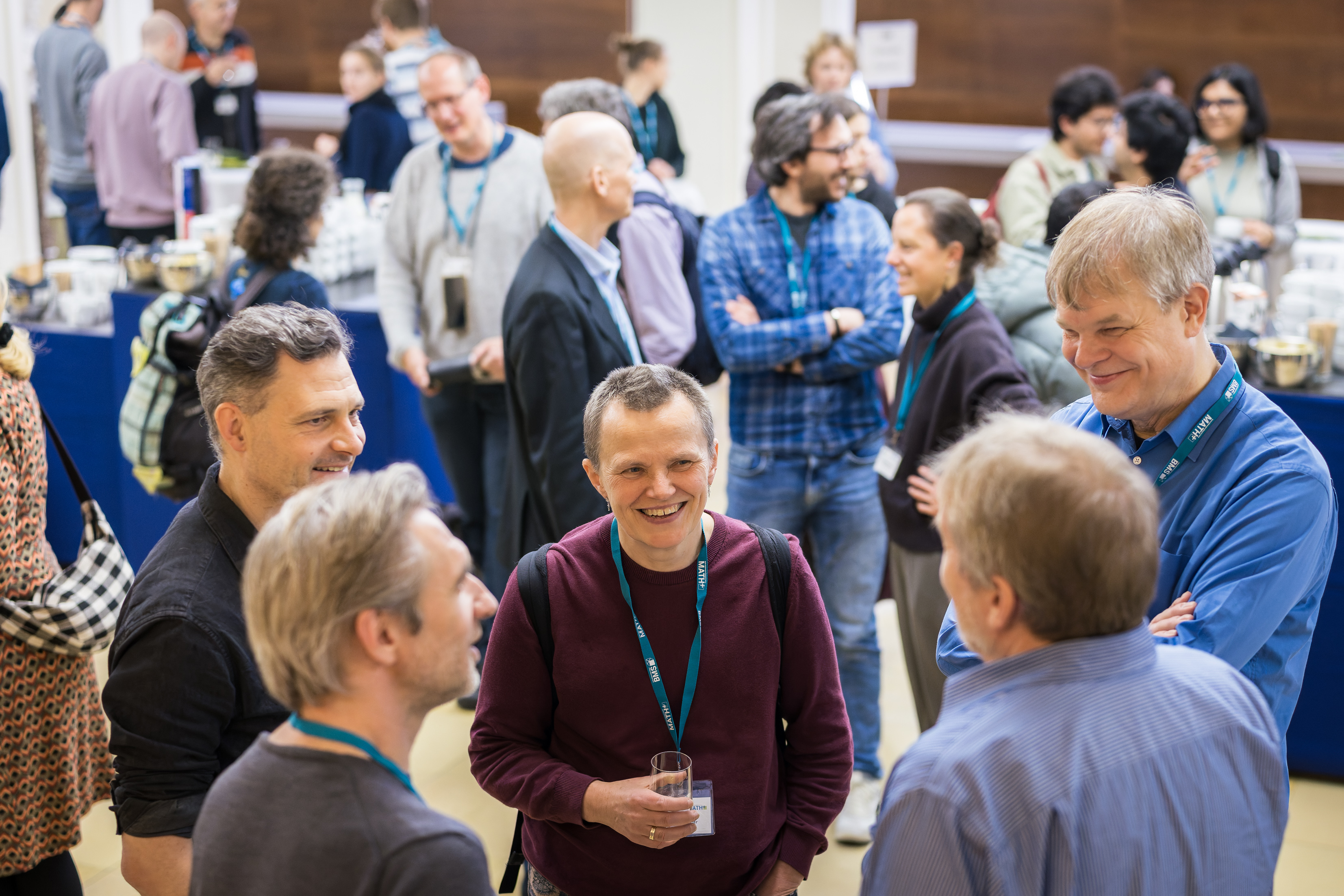
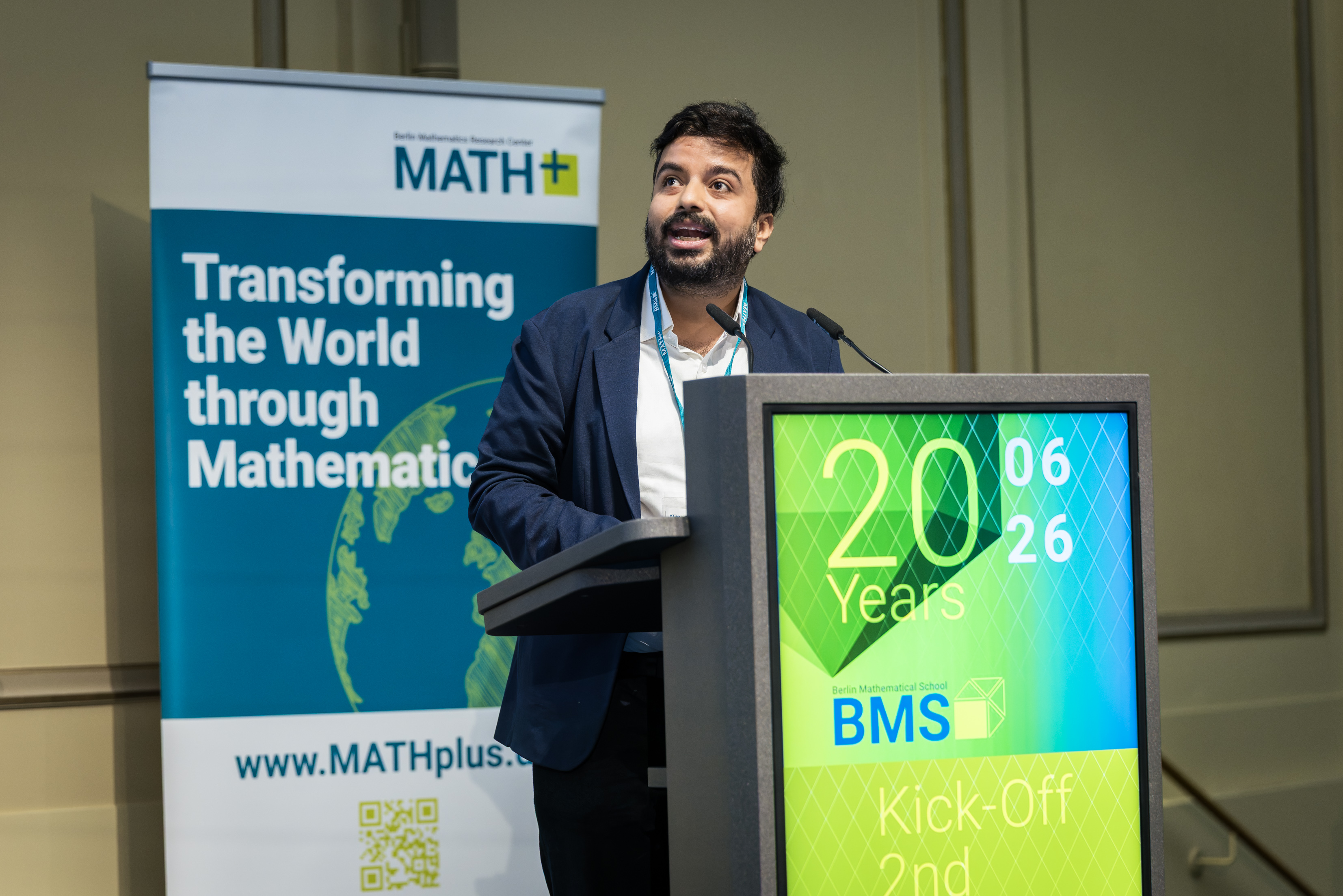
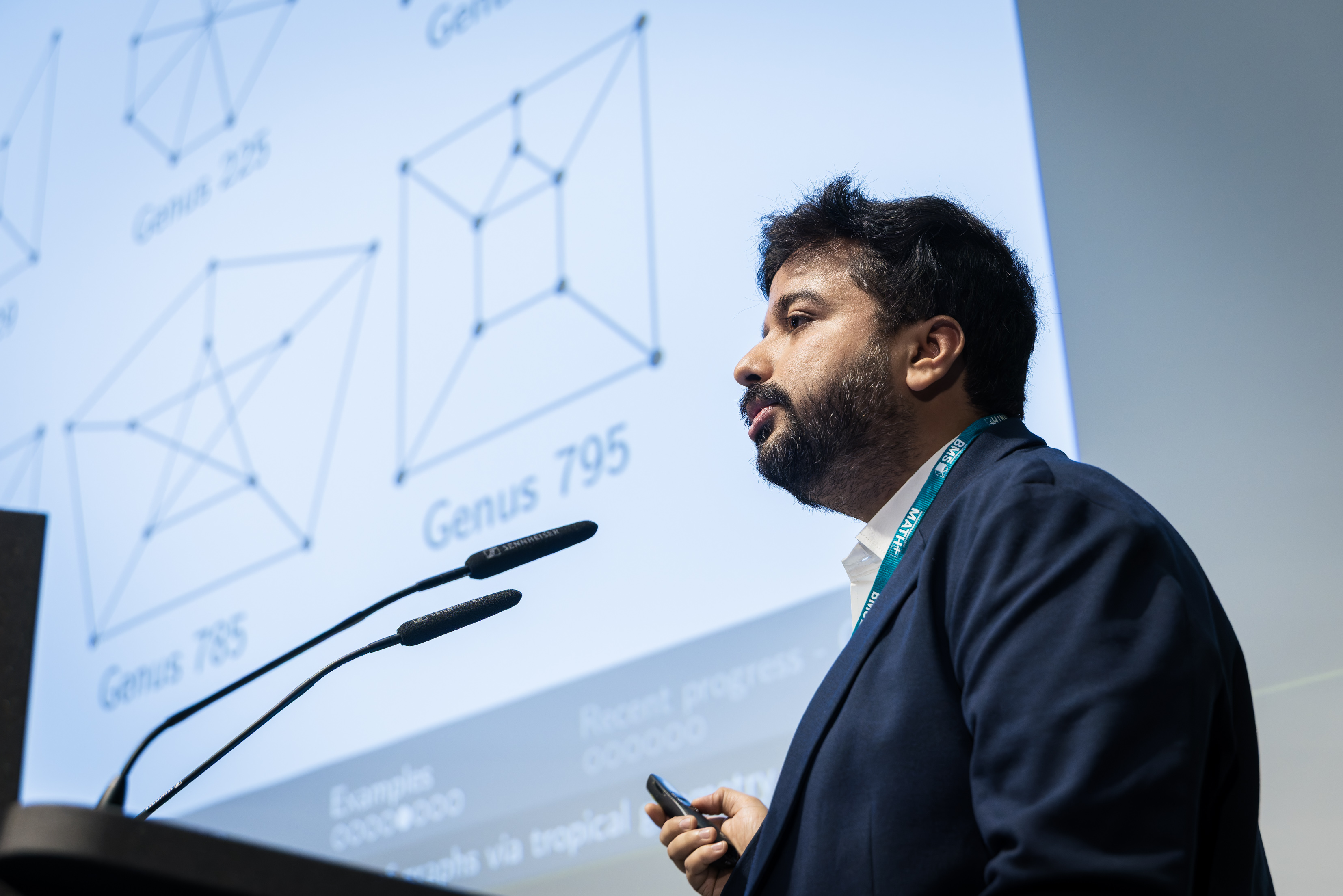
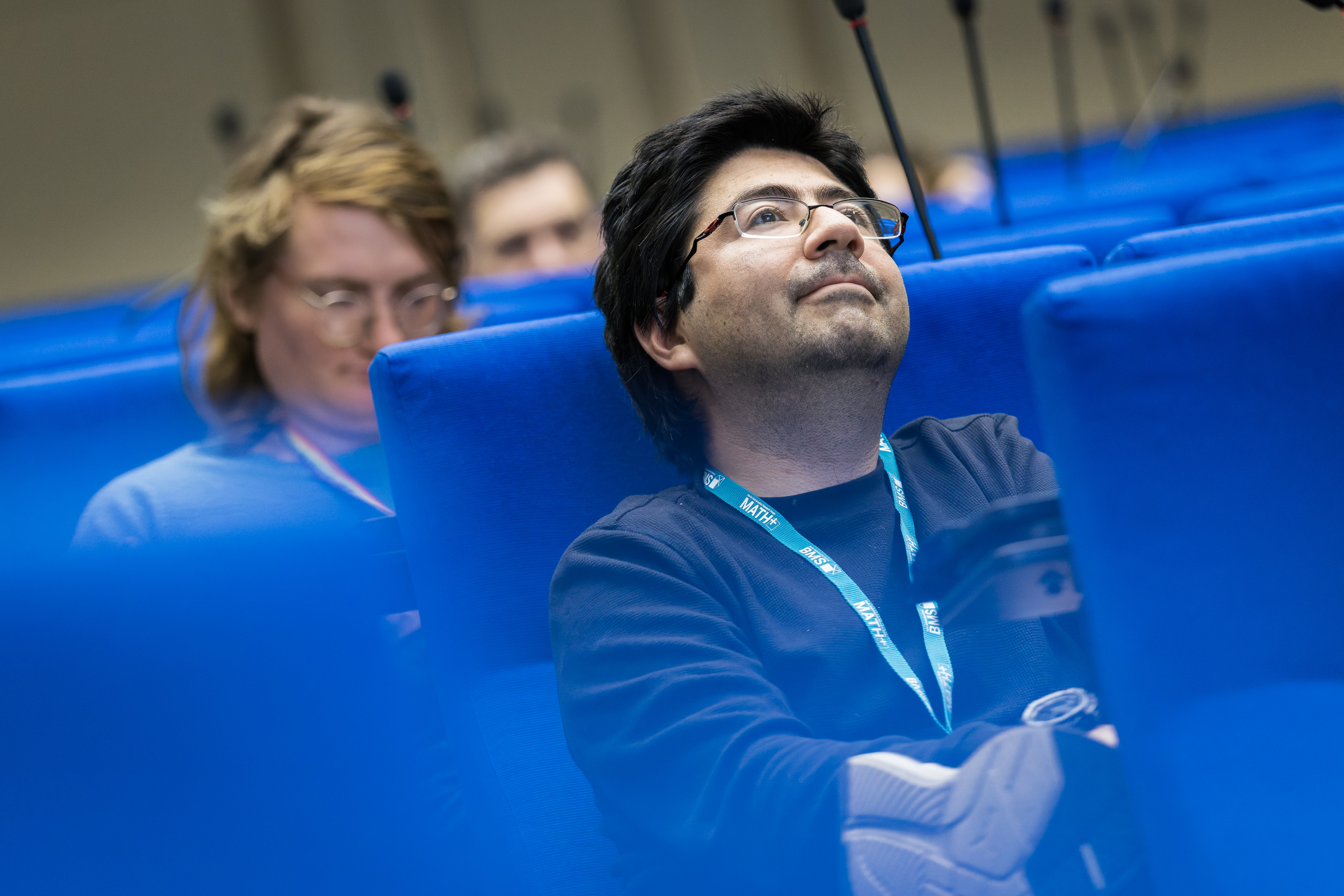
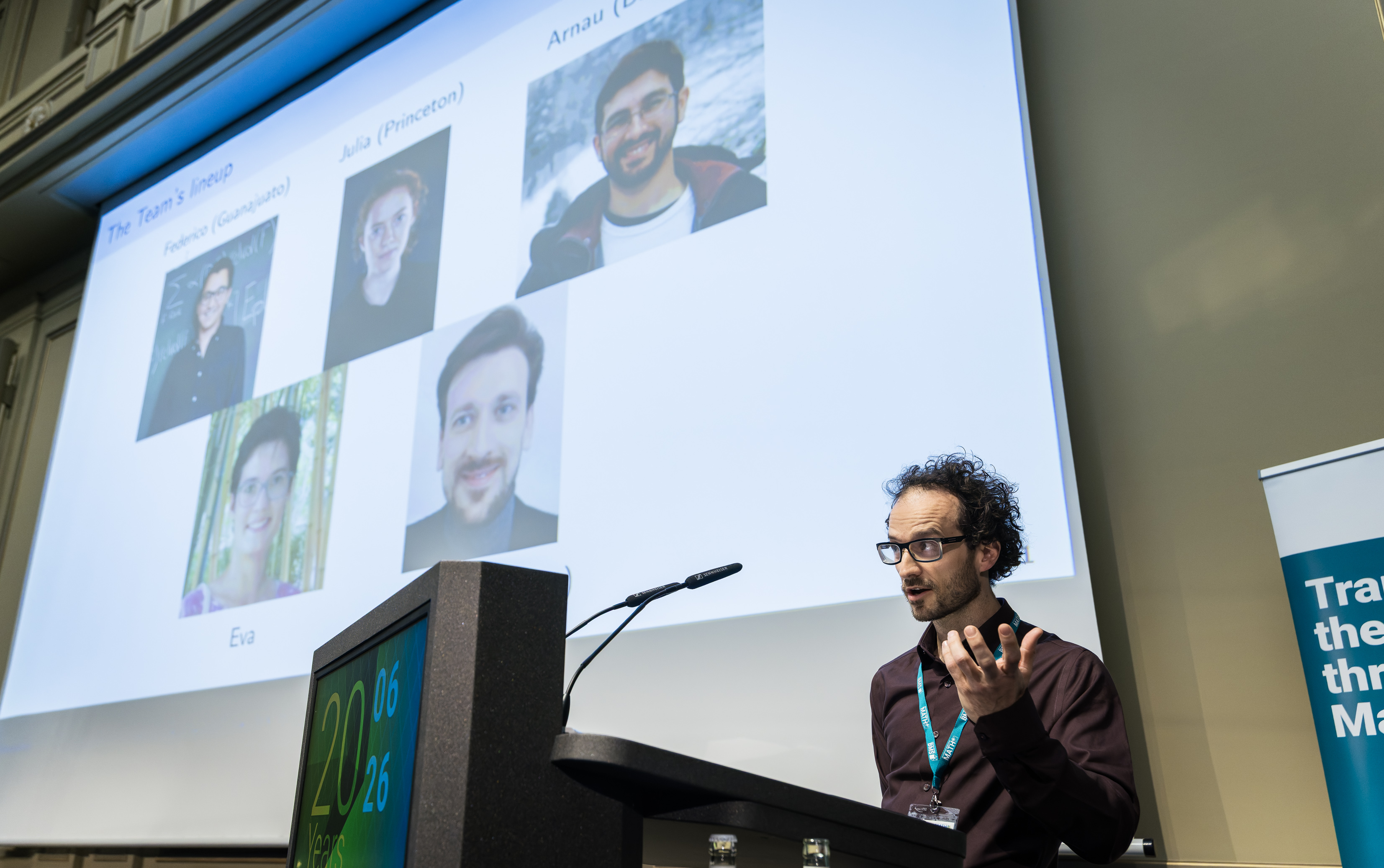
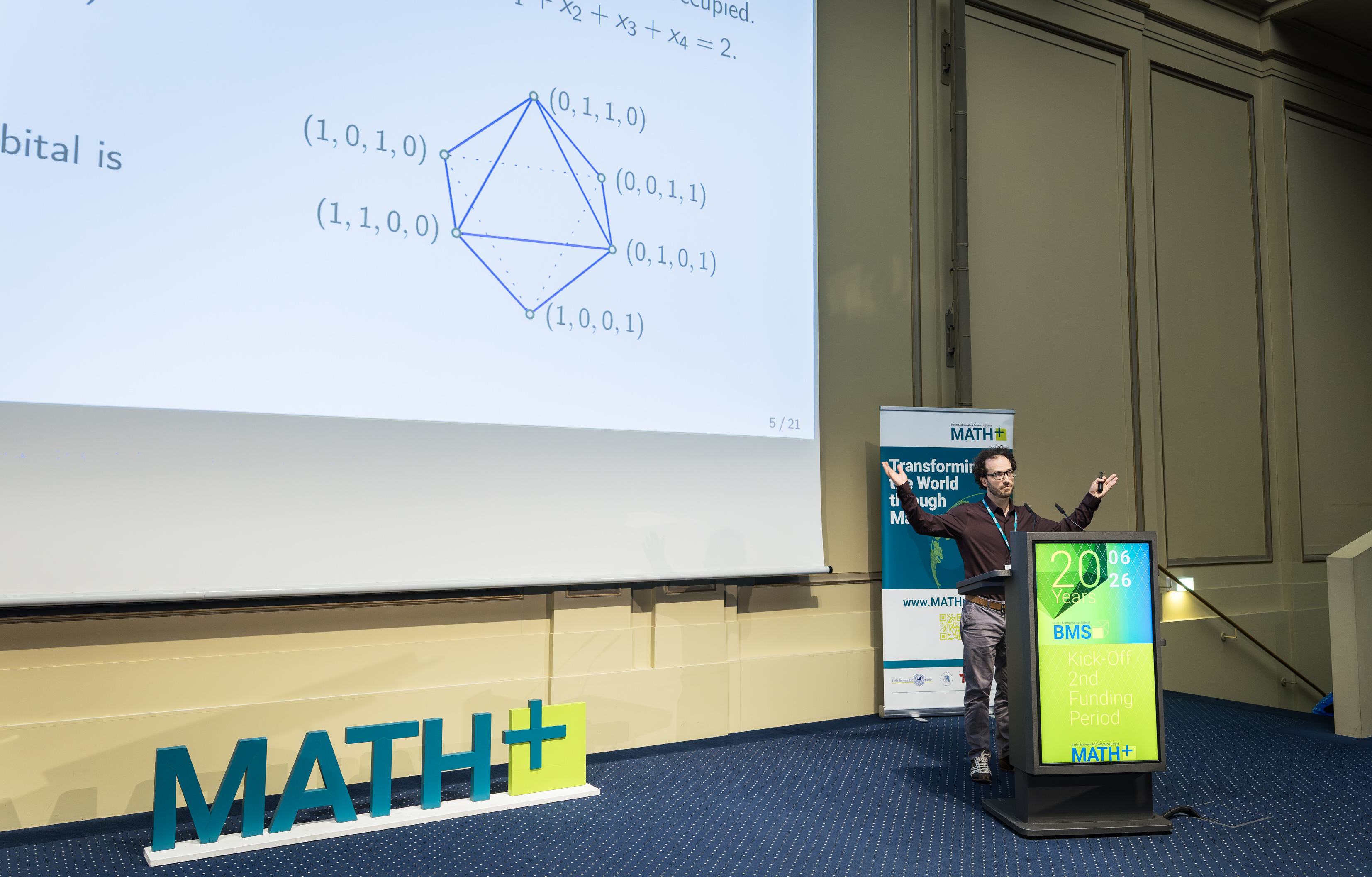
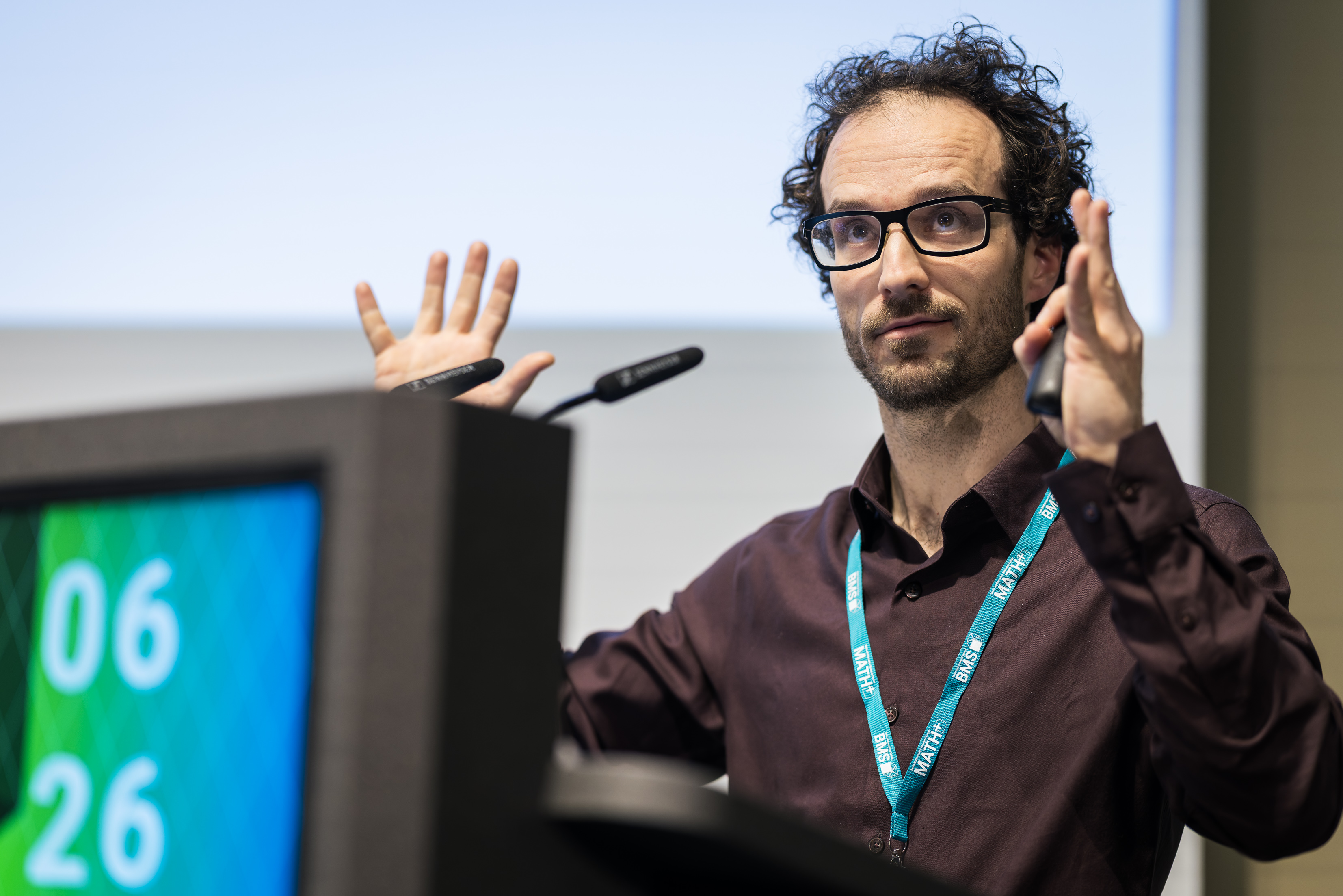
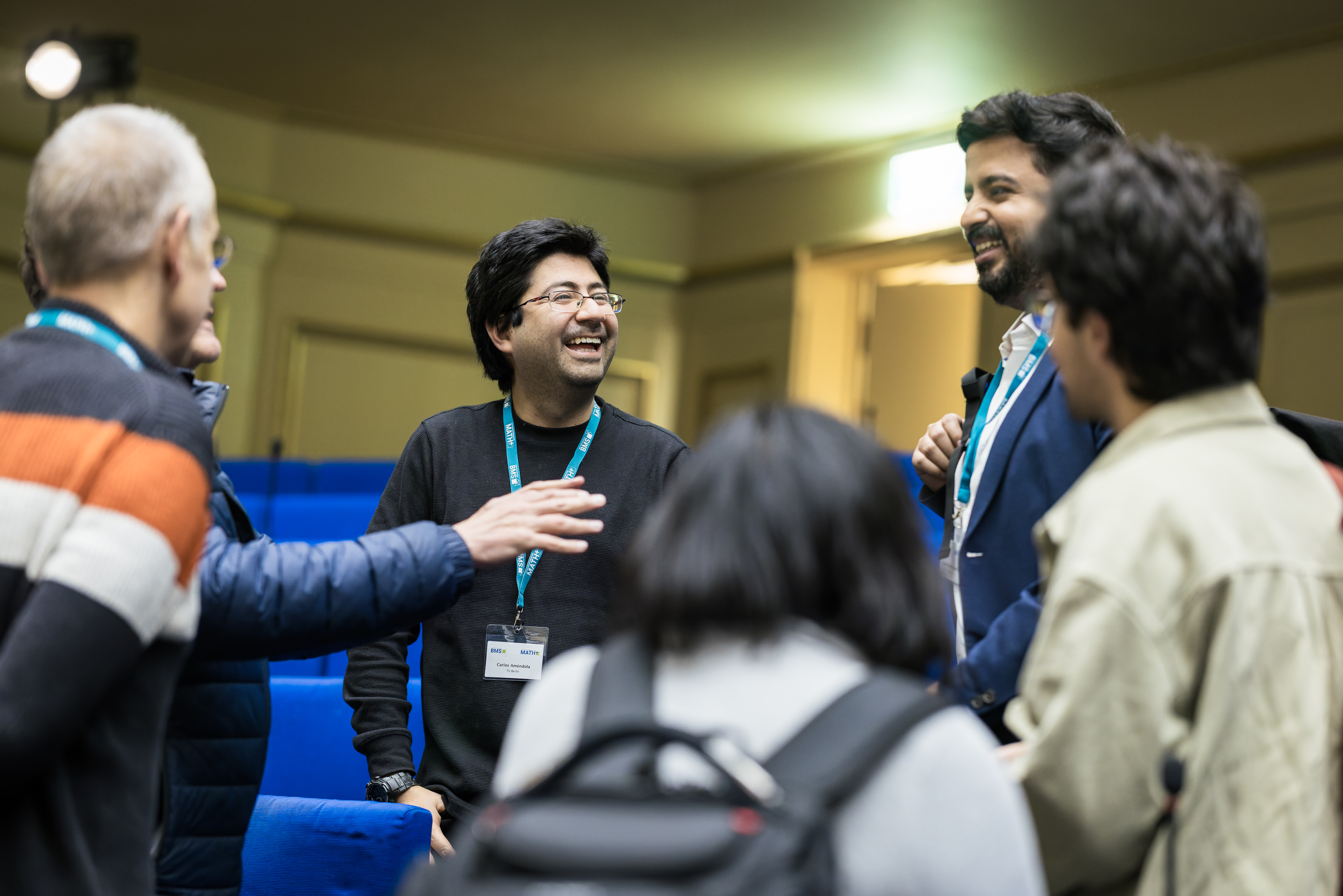
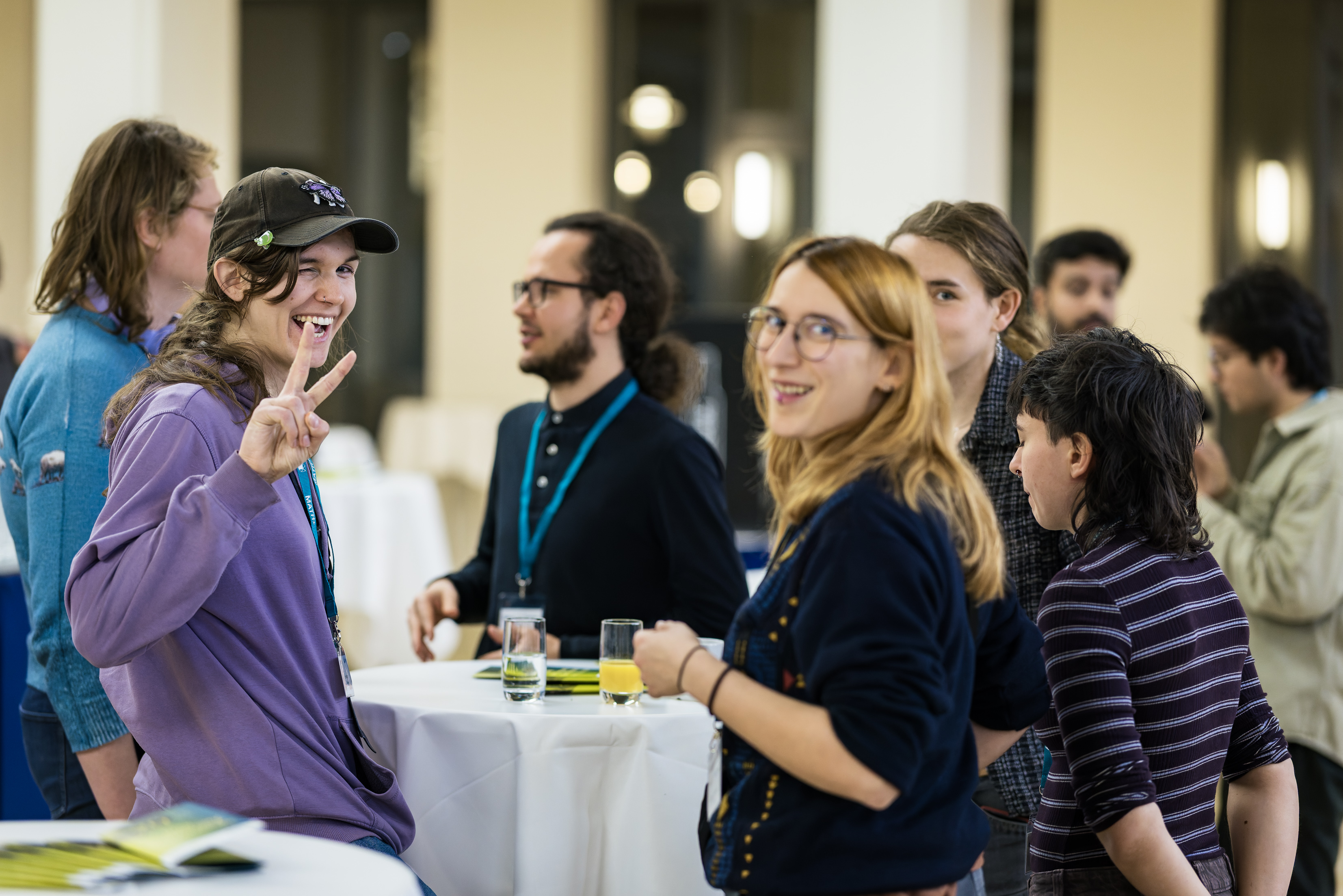
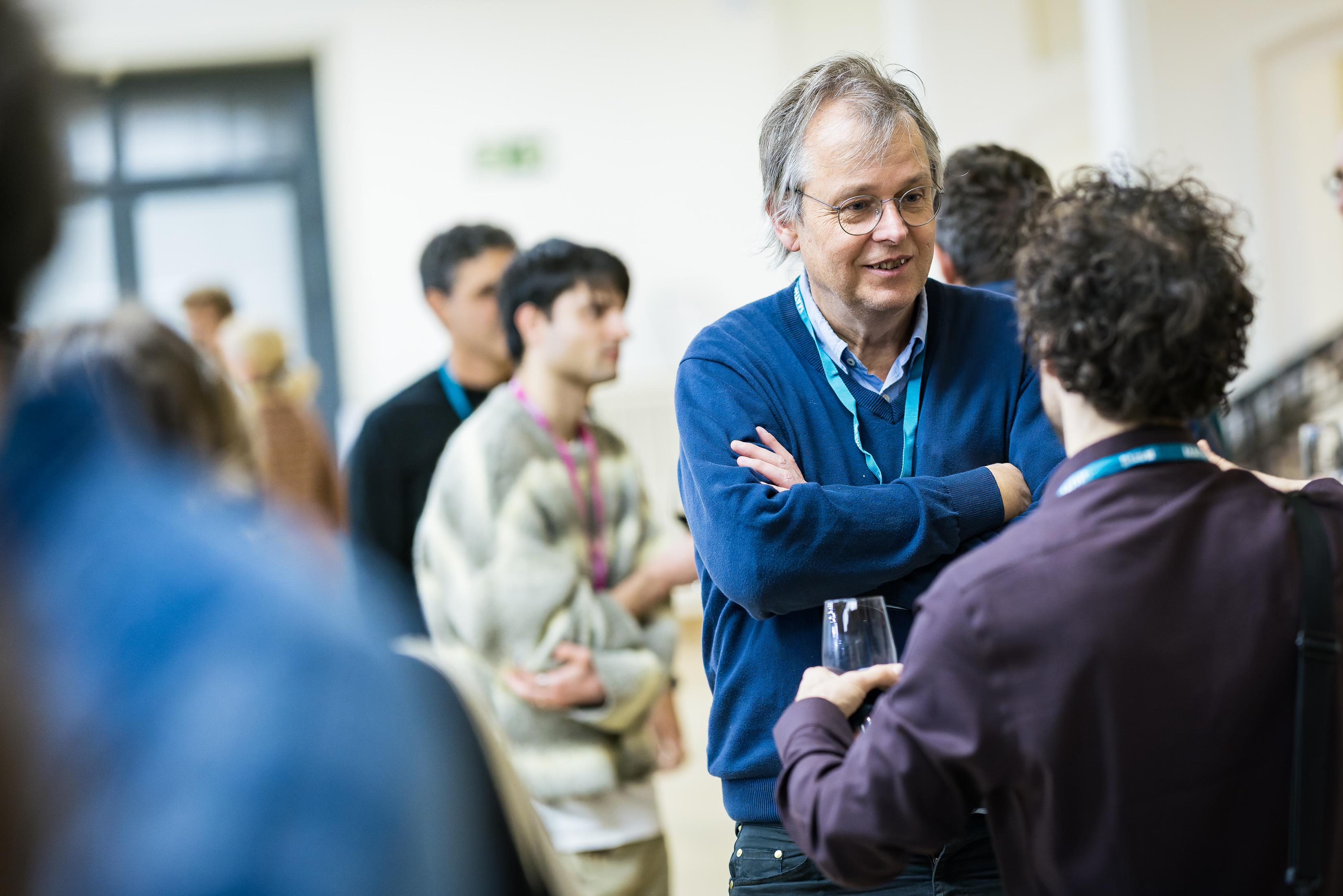
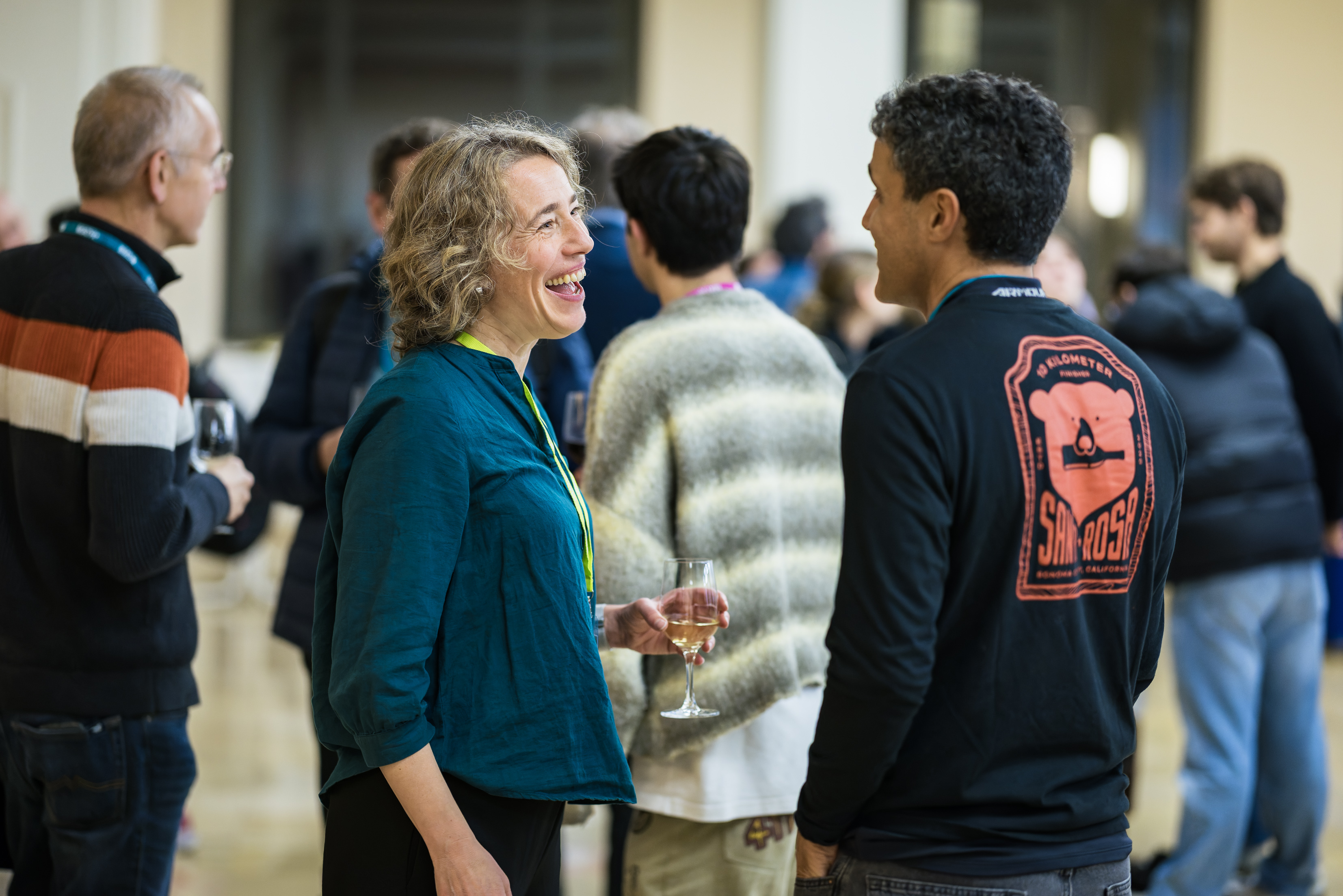
BMS20 Anniversary Conference – Day 1: 18 November 2026 | Photos: © Kay Herschelmann / MATH+
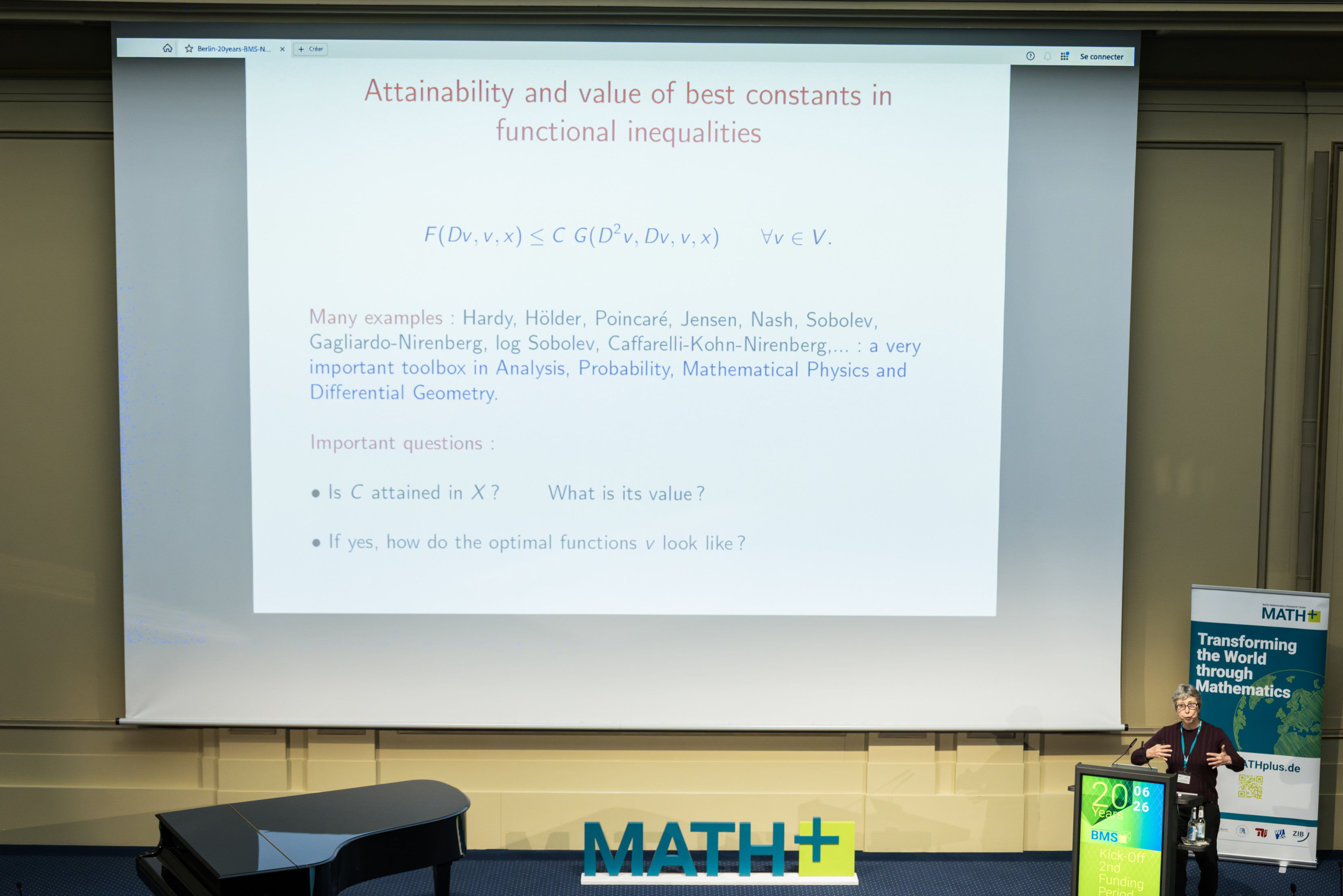
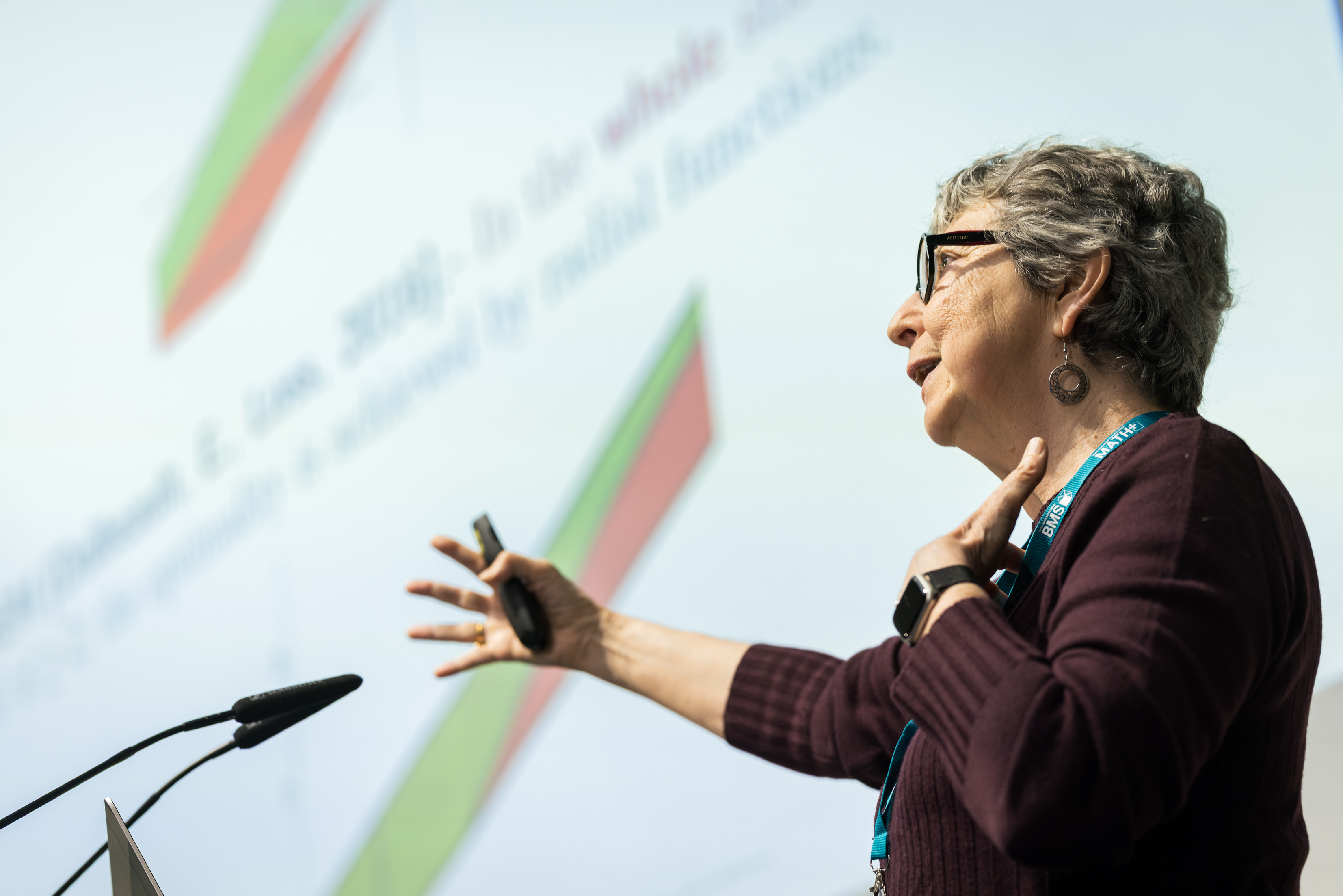
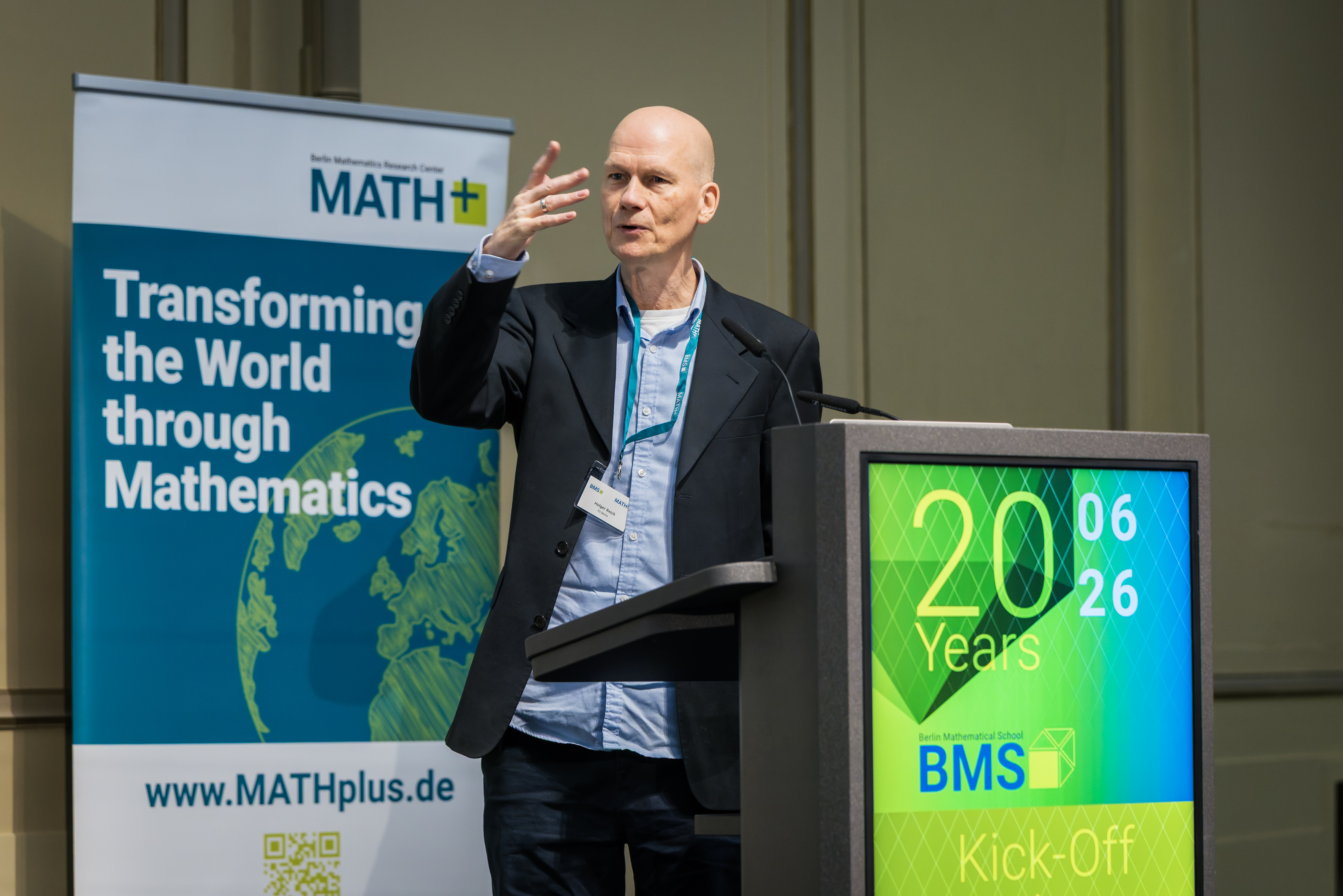
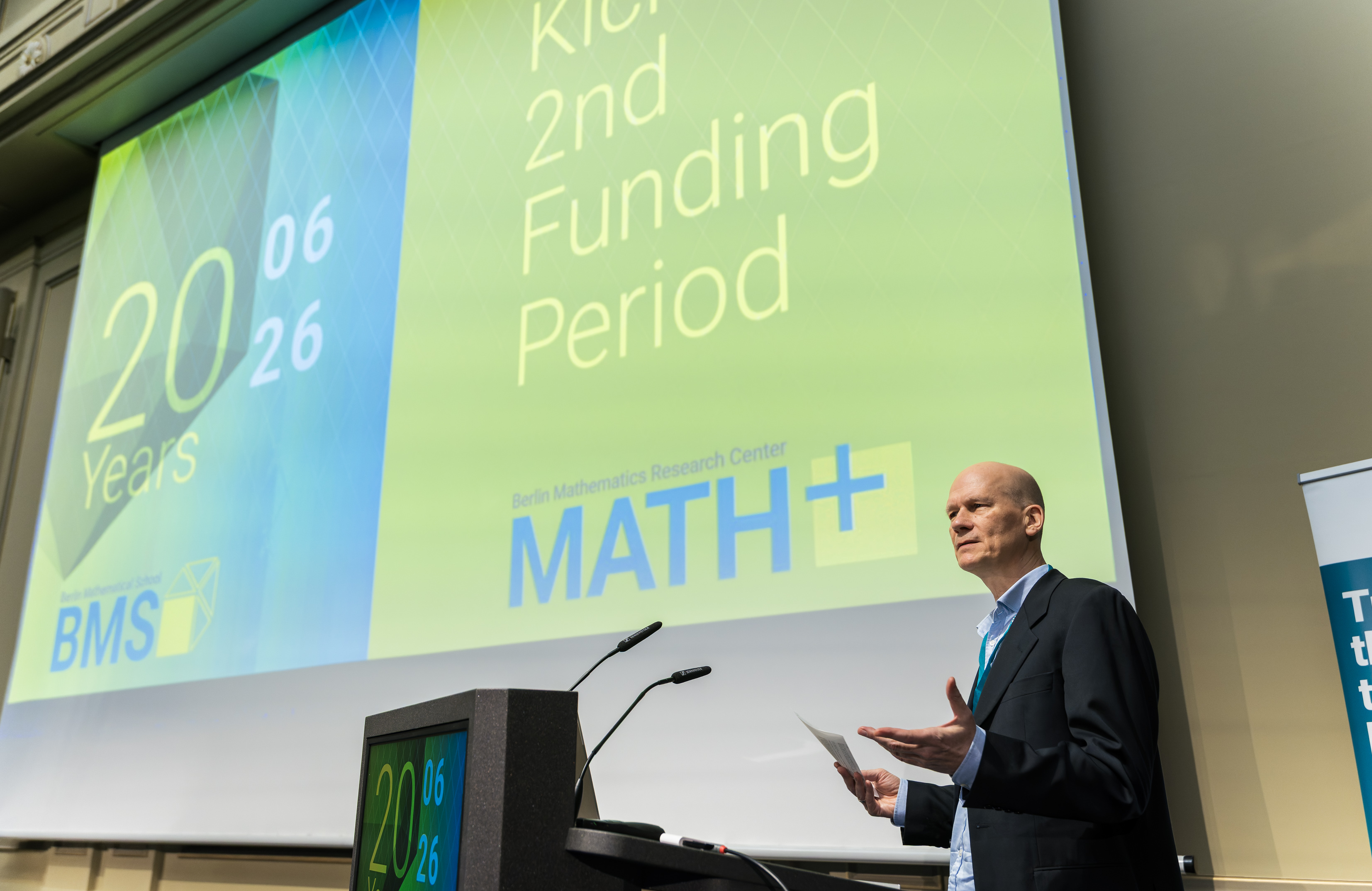
Former BMS Chair Jürg Kramer, who now serves as president of the German Mathematical Society (DMV), welcomed all participants, particularly our Scientific Advisory Board (SAB) member Maria J. Esteban from Paris (CNRS and University Paris-Dauphine). She opened the conference program with her keynote lecture on “A Long Journey to Understand Symmetry and Symmetry Breaking in Functional Inequalities.” She described how she and her colleagues developed methods to study the symmetry properties of optimizers of functional inequalities, illustrating the challenges they encountered through a series of examples.
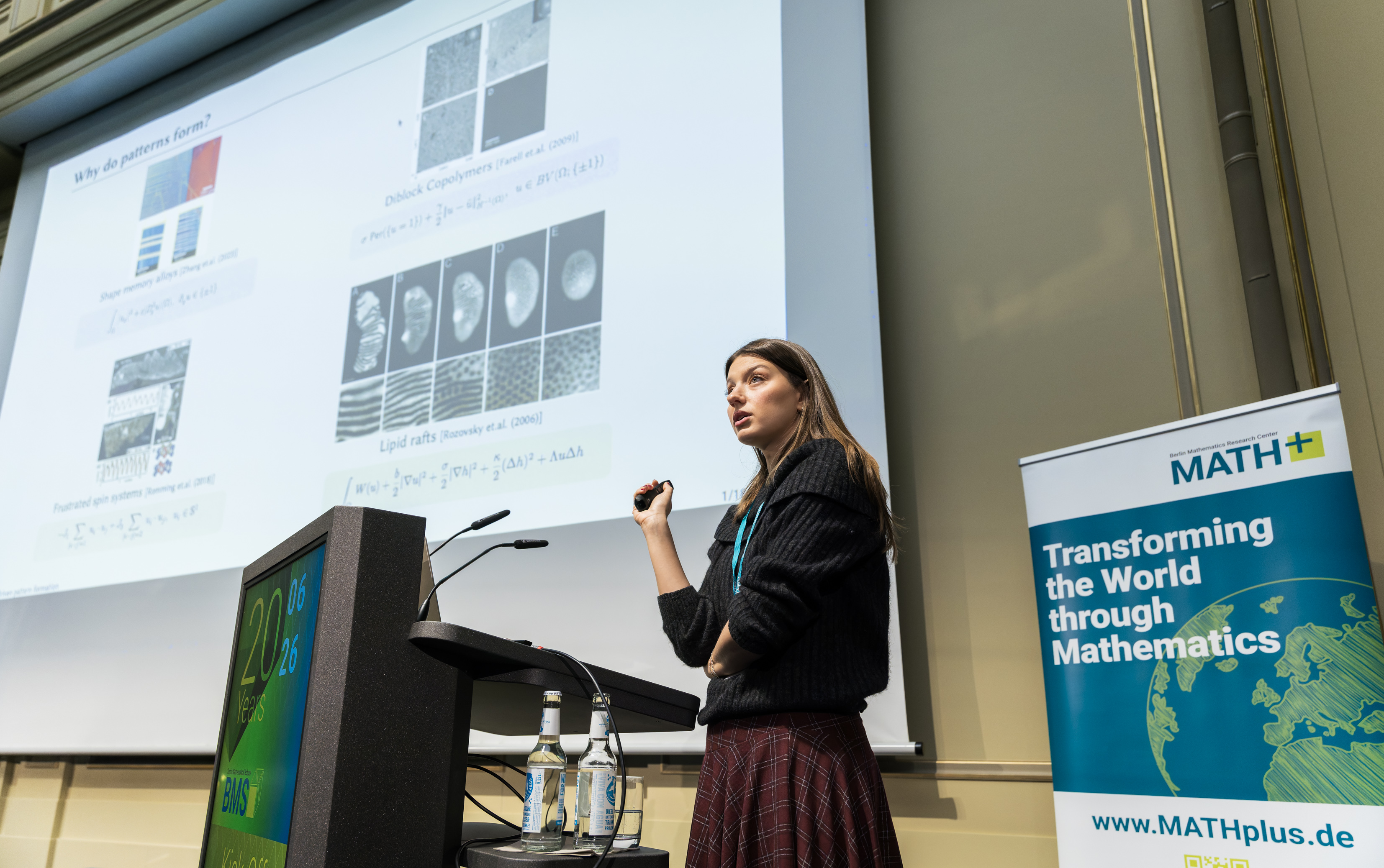
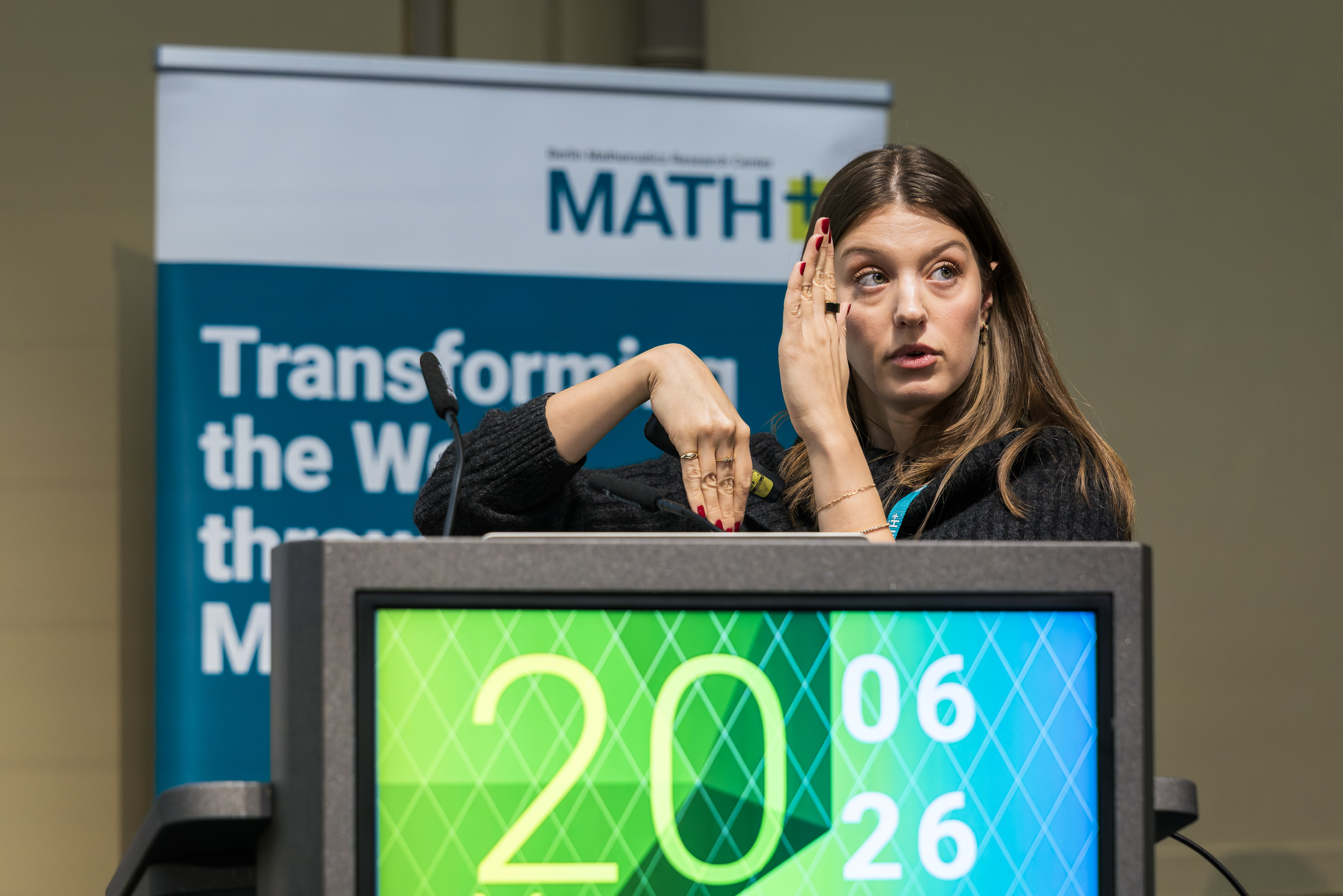
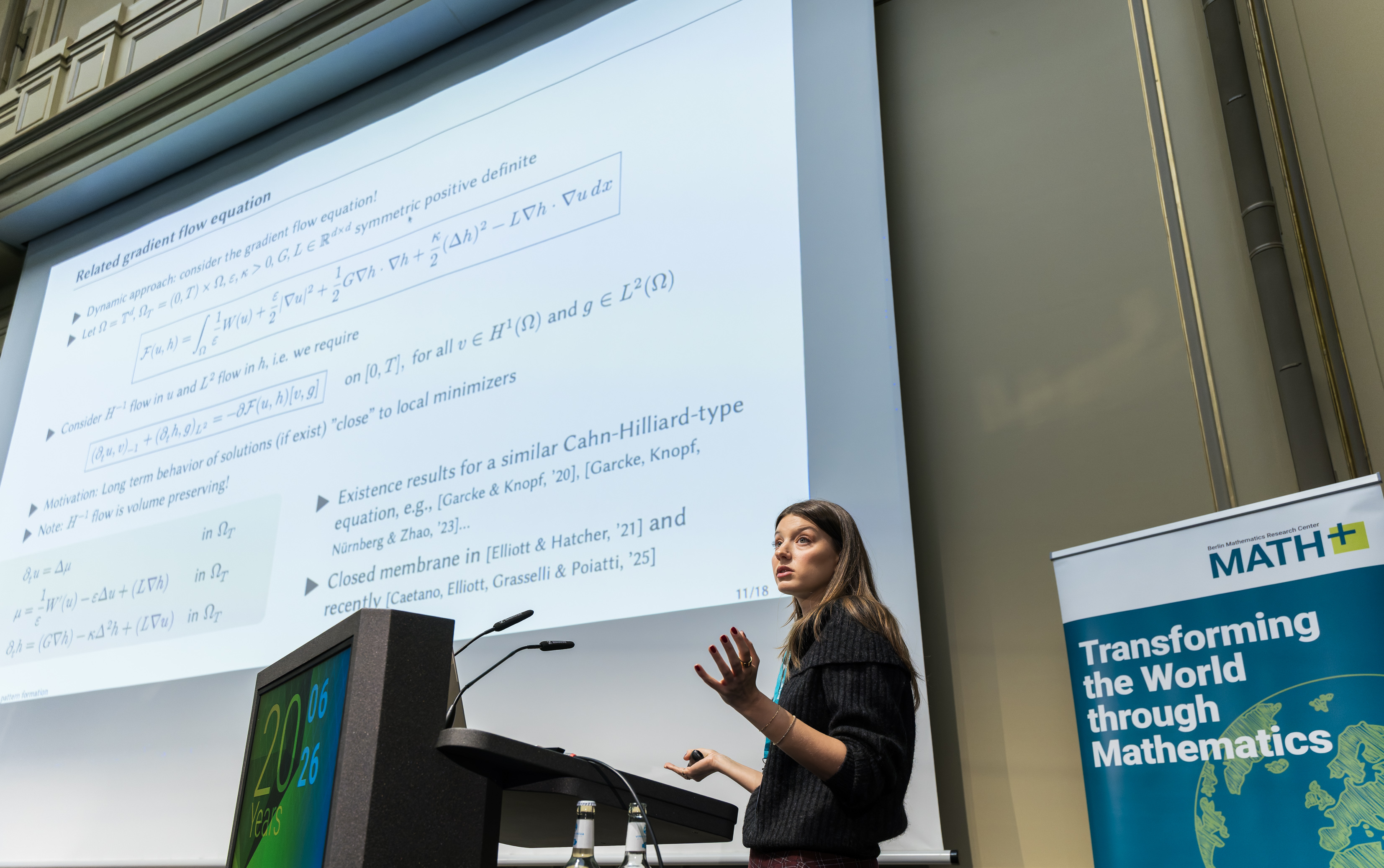
Anastasija Pešić, BMS alumna (2025), now at Carnegie Mellon University in Pittsburgh, followed with a lecture on “Why Do Patterns Form? The Mathematics of Energy Minimization.” She explored why materials form stripes, branches, and other intricate patterns. The answer often lies in competing energetic effects: while some favor fine-scale structures, others penalize interfaces or bending.
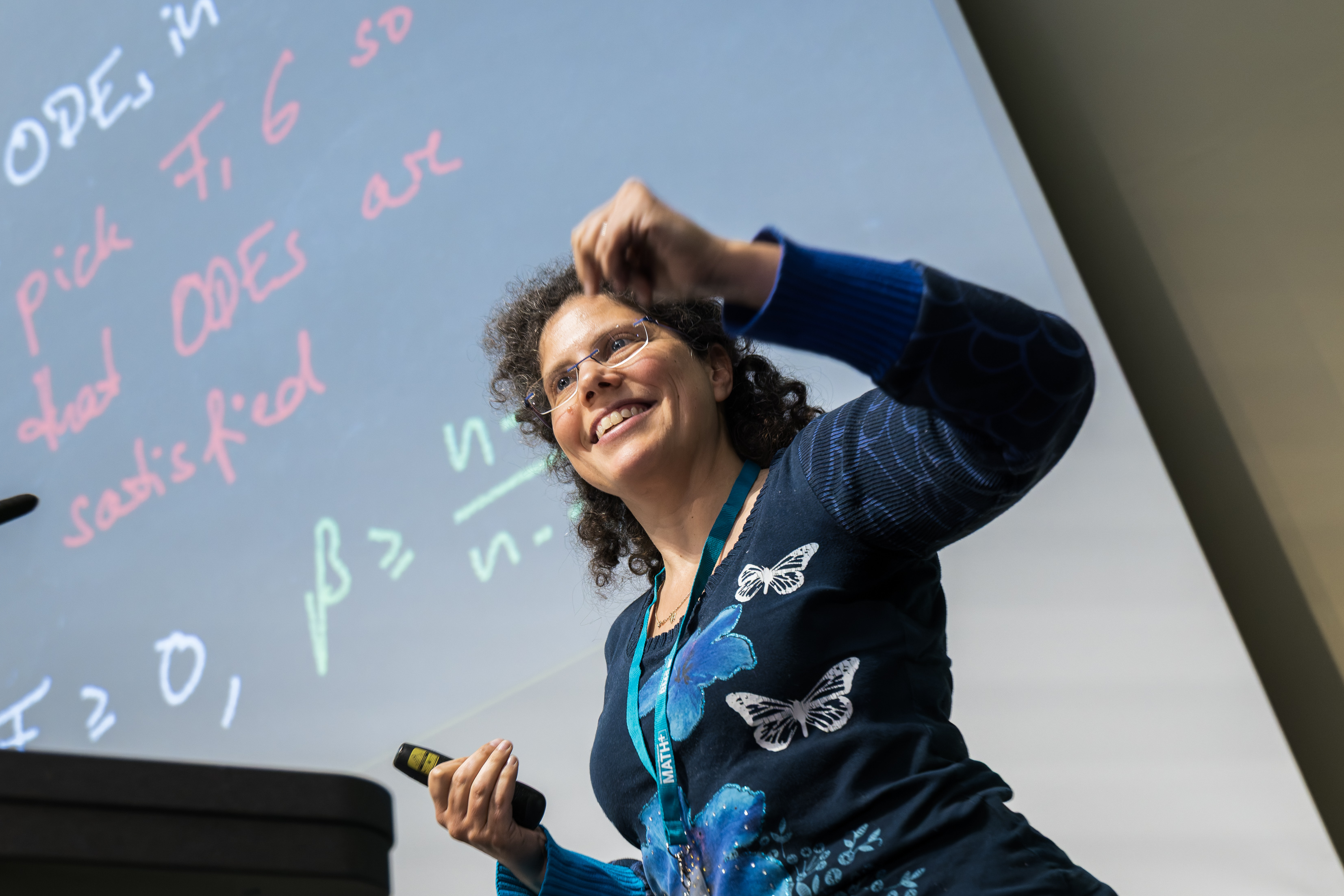
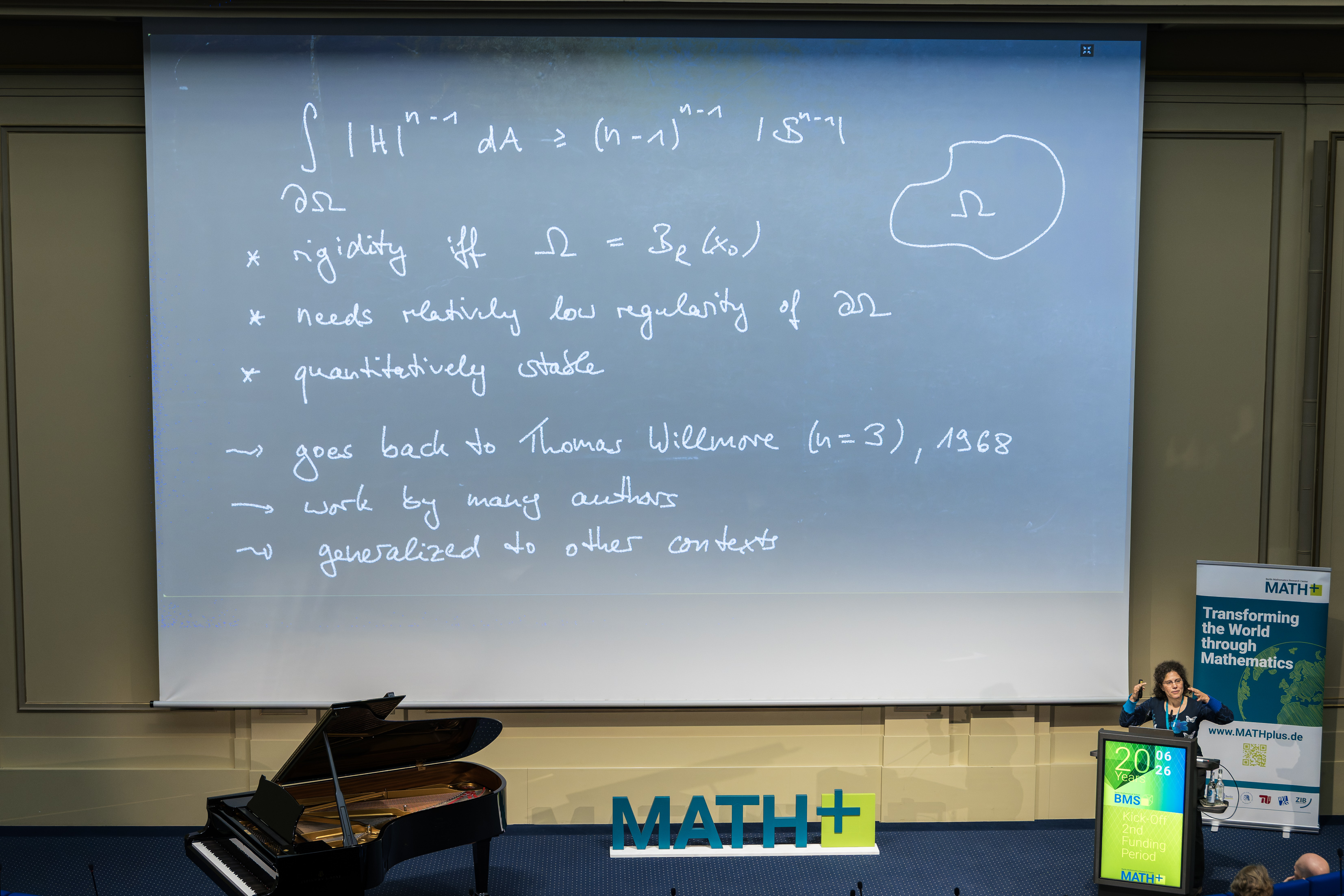
Carla Cederbaum, BMS alumna (2011), now at the Universität Tübingen, presented “A New Strategy for Proving Geometric Inequalities,” explaining an approach based on potential theory and the divergence theorem. She illustrated the method using the classical Willmore inequality from differential geometry and demonstrated how it can be generalized to other geometric inequalities.
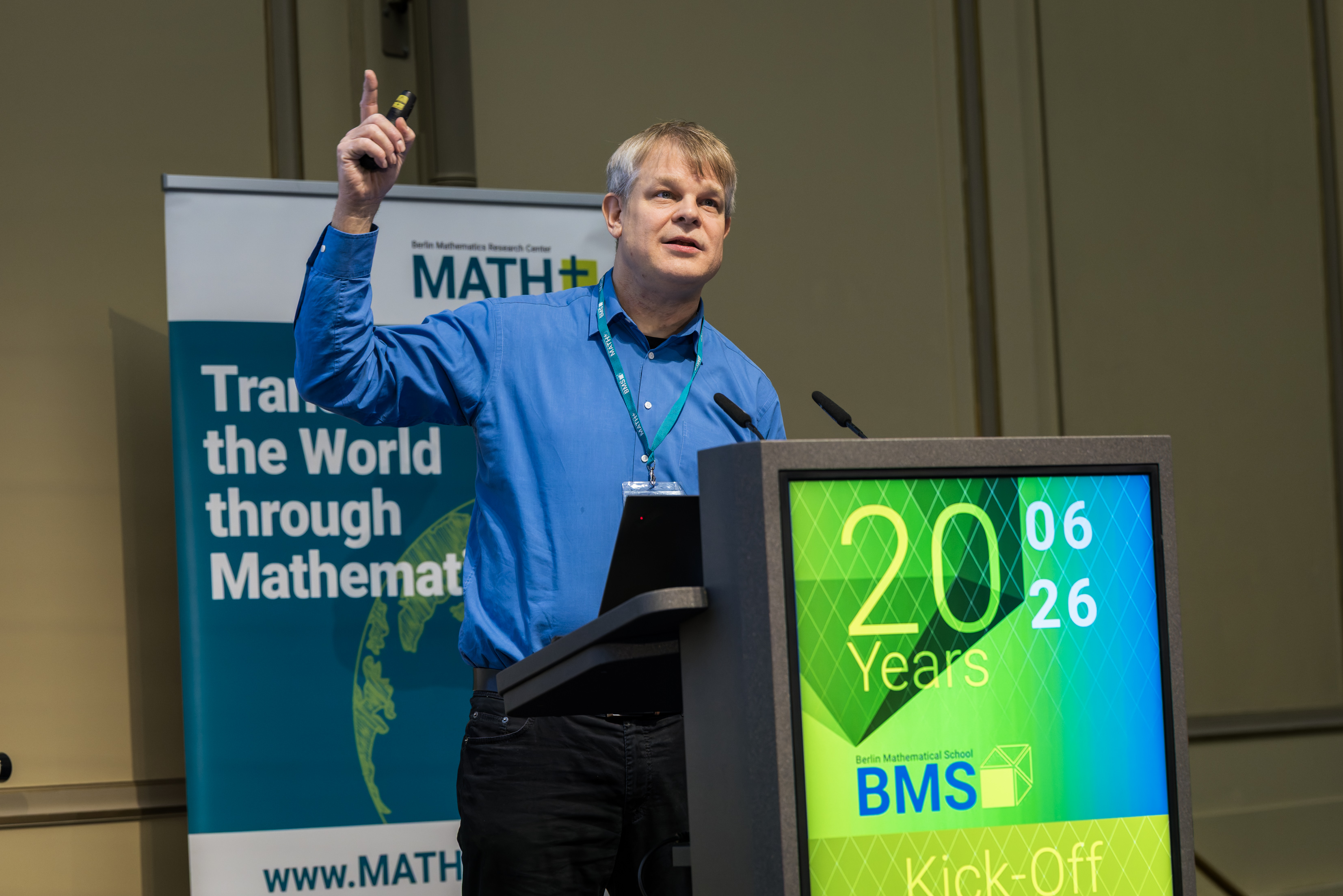
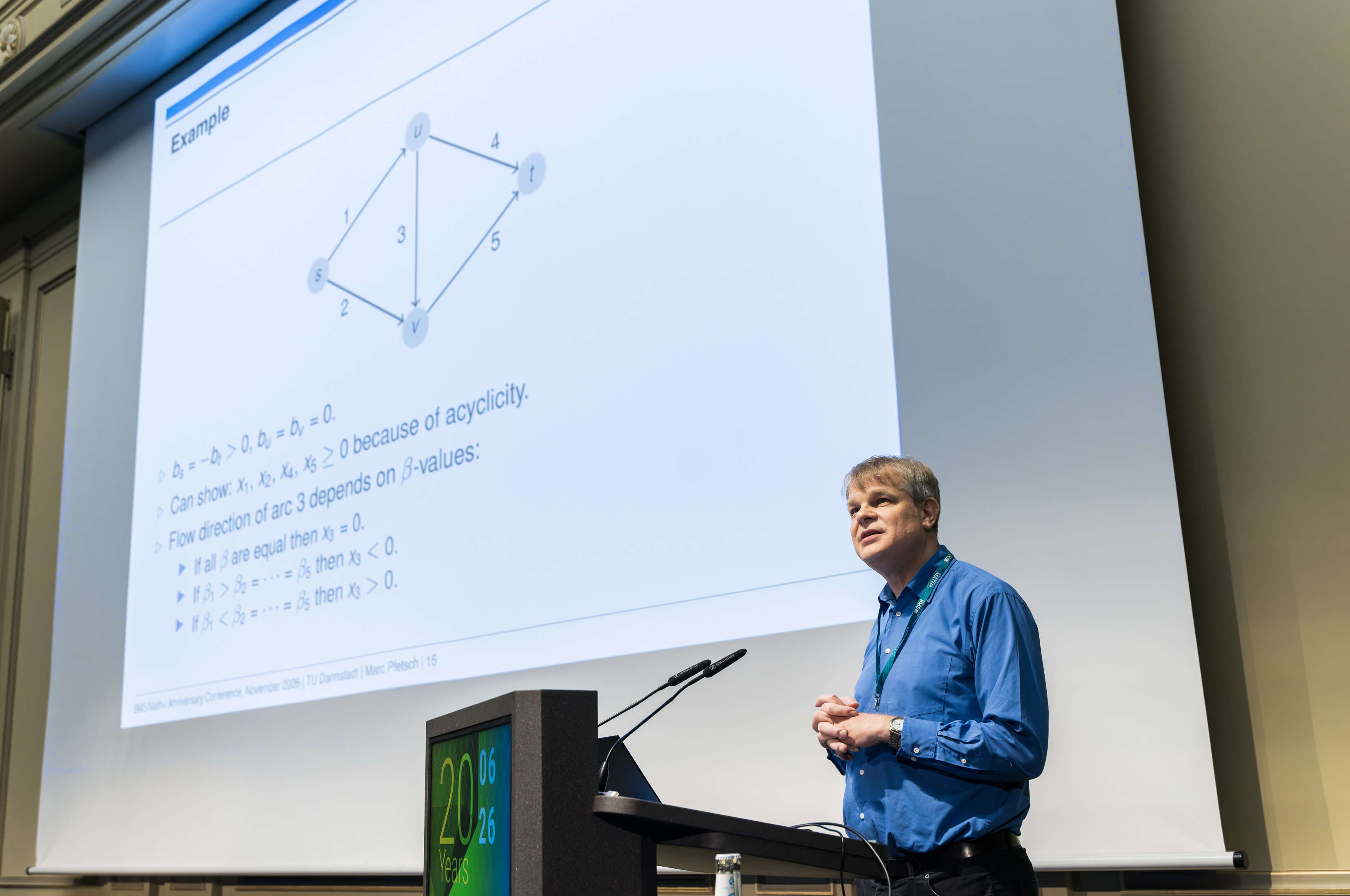
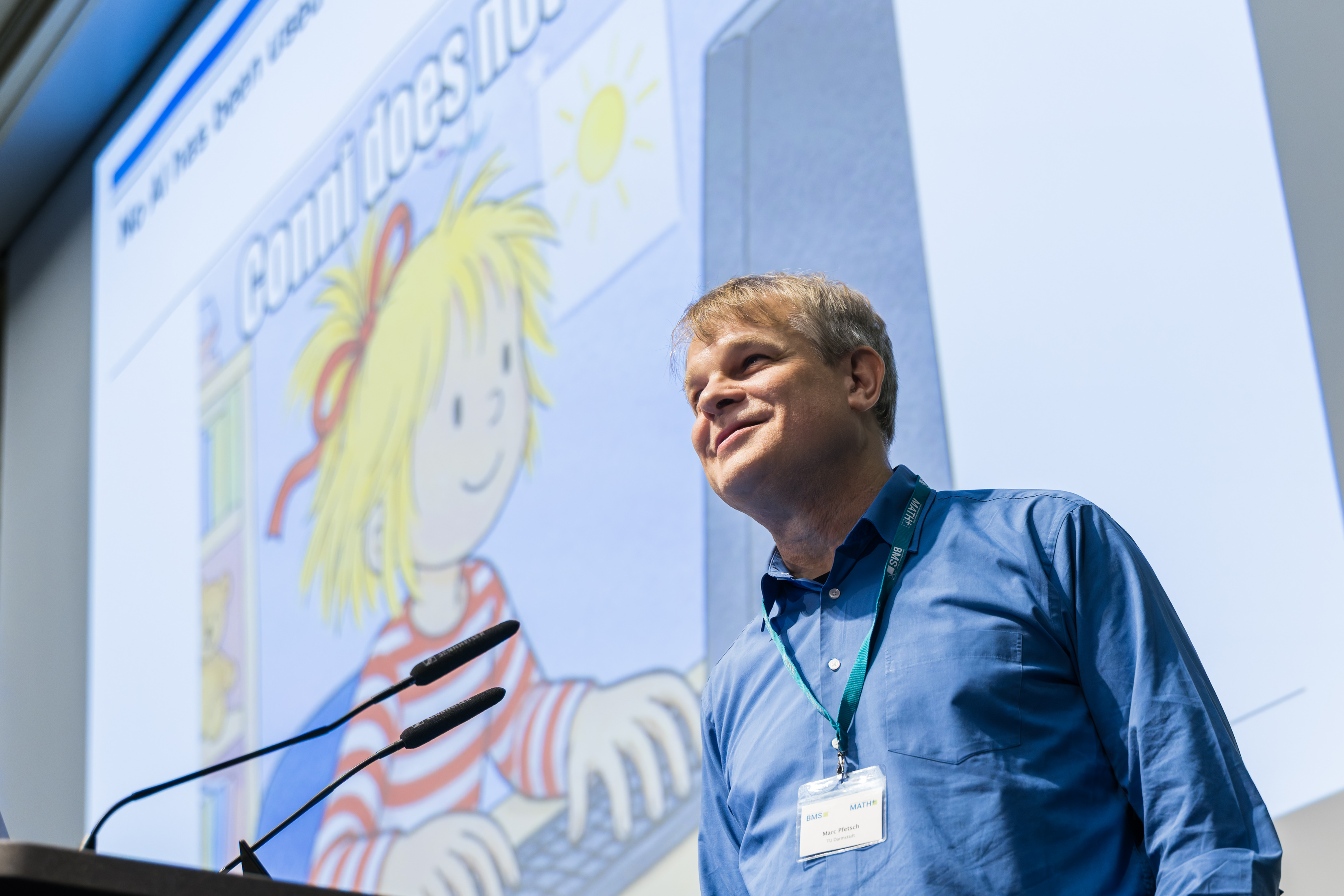
The afternoon began with the second keynote lecture, delivered by Marc Pfetsch from Technische Universität Darmstadt on “Combinatorial Aspects of Physical Networks.” He explored the combinatorial properties of physical networks, including water, gas, heat, and electrical networks.
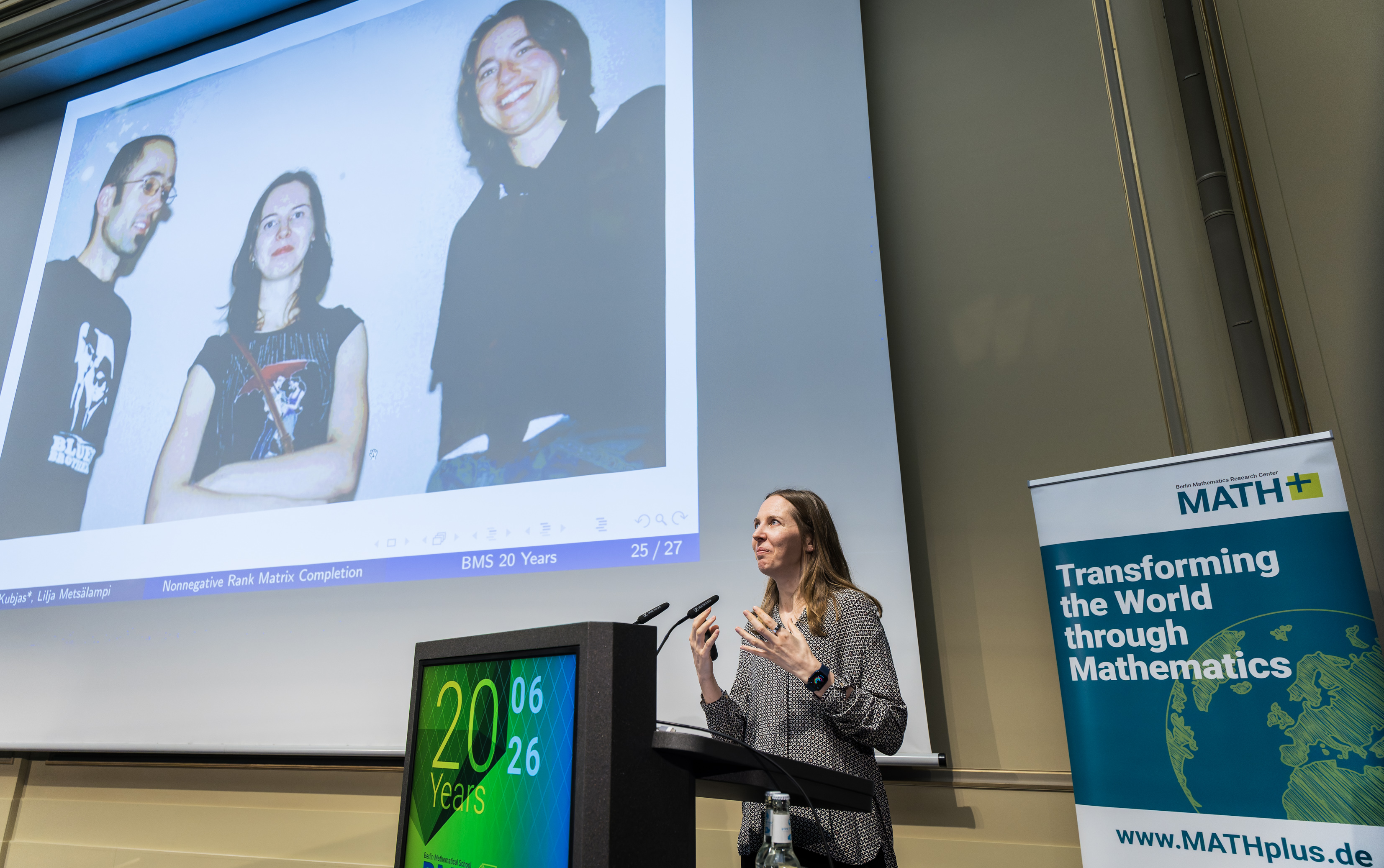
Kaie Kubjas, BMS alumna (2013), now at Aalto University in Finland, spoke about “Geometry of Low Nonnegative Rank Matrix Completion.” She explored how partial matrices with nonnegative entries can be completed to matrices of nonnegative rank at most r, where r is a natural number.
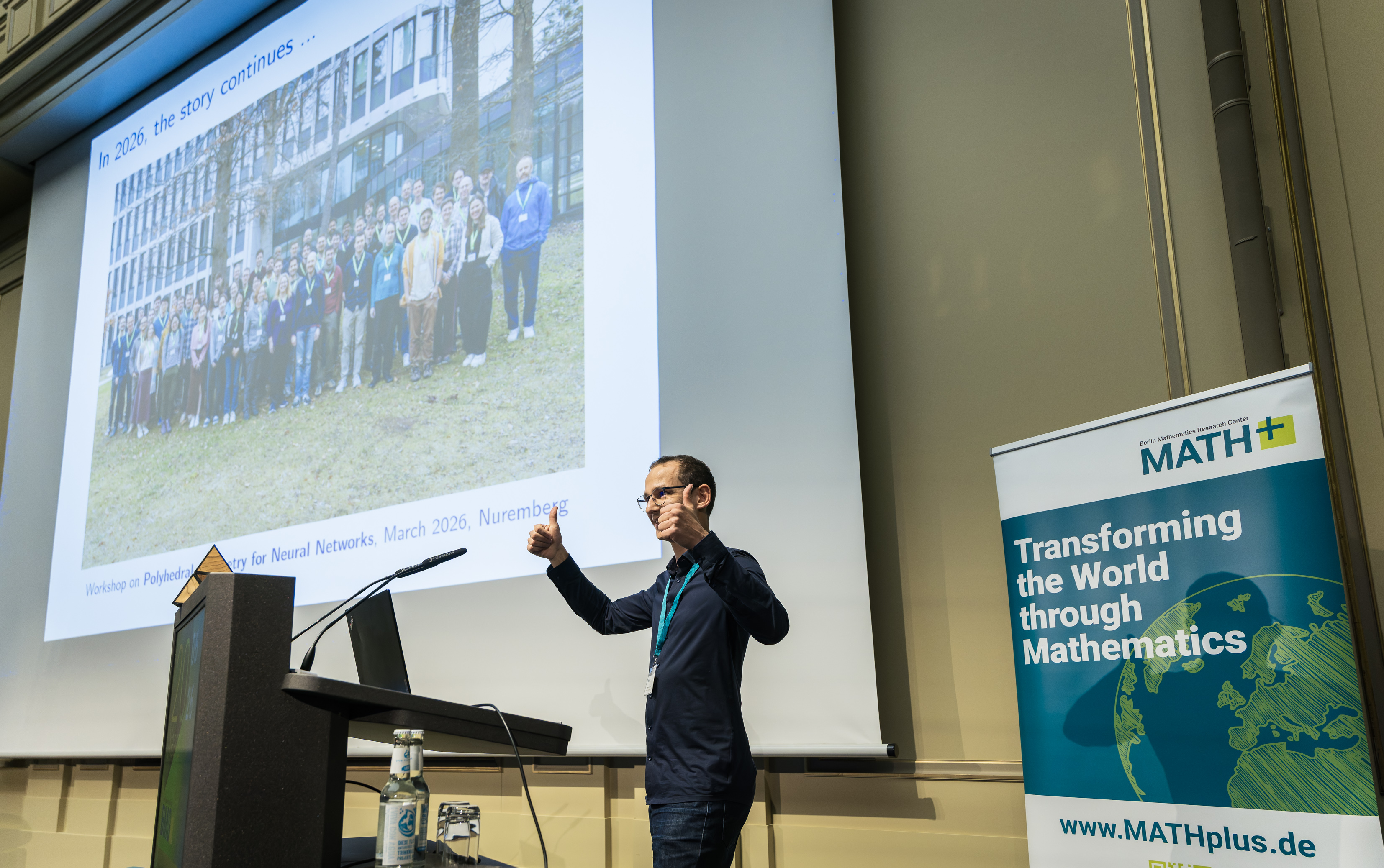
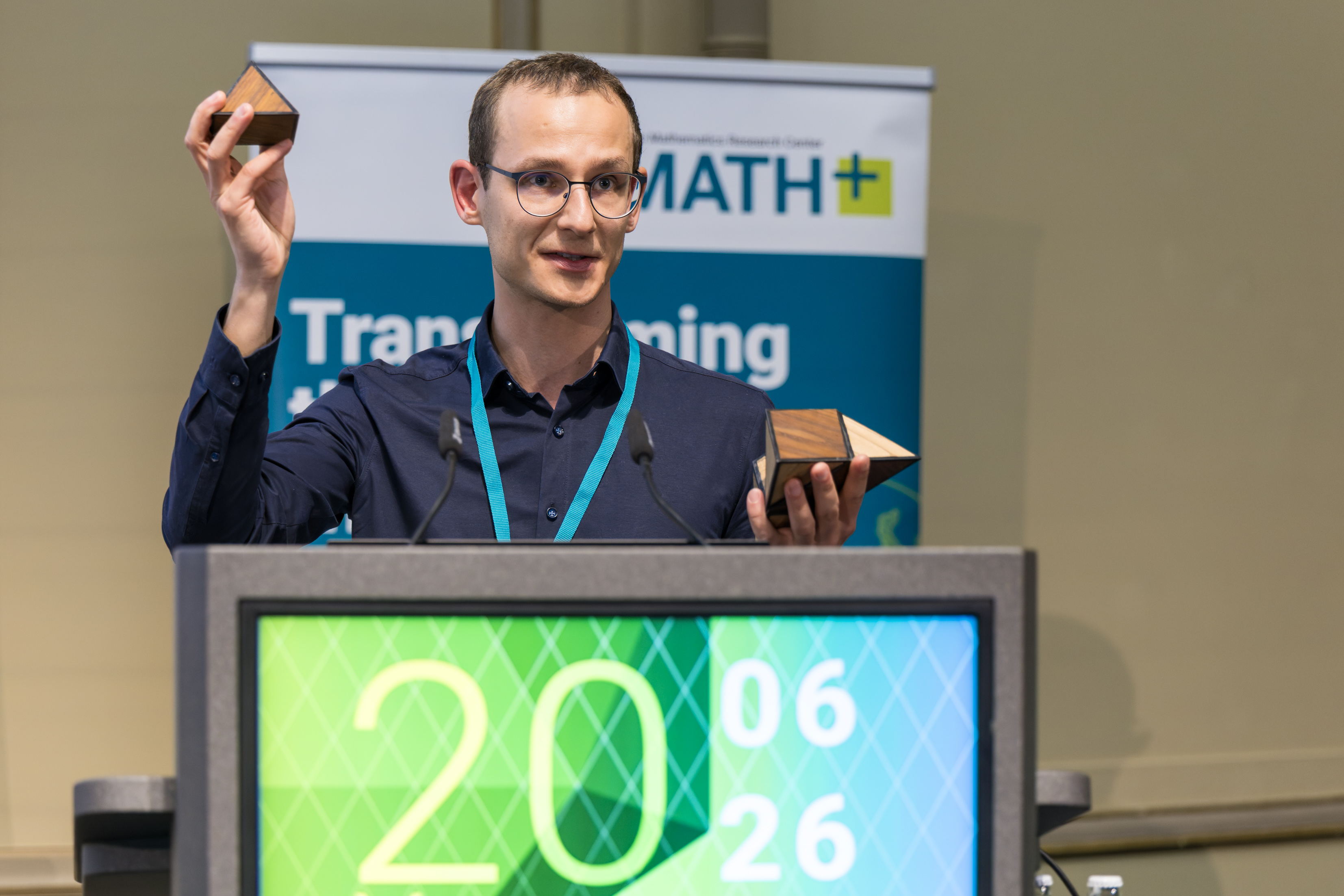
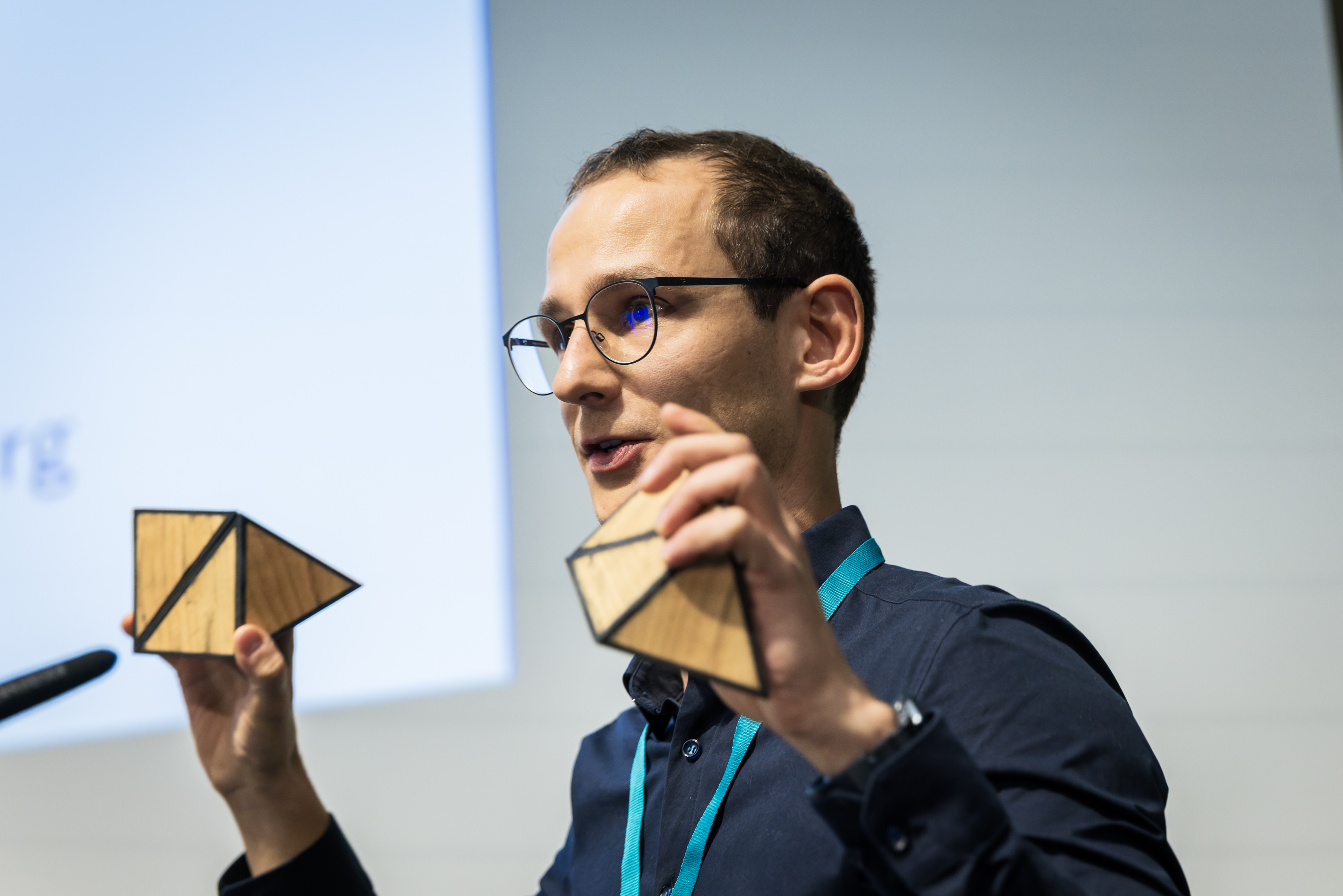
Christoph Hertrich, BMS alumnus (2022), now at the Technische Universität Nürnberg, delivered a talk on “Using Polyhedral Geometry to Understand Neural Networks.” Given the transformative role of AI in society, he asked how mathematics could deepen our theoretical understanding of neural networks. In his talk, he made the case that polyhedral geometry offers a useful perspective.. He demonstrated how polyhedral geometry can help reveal the capabilities and limitations of commonly used neural network architectures.
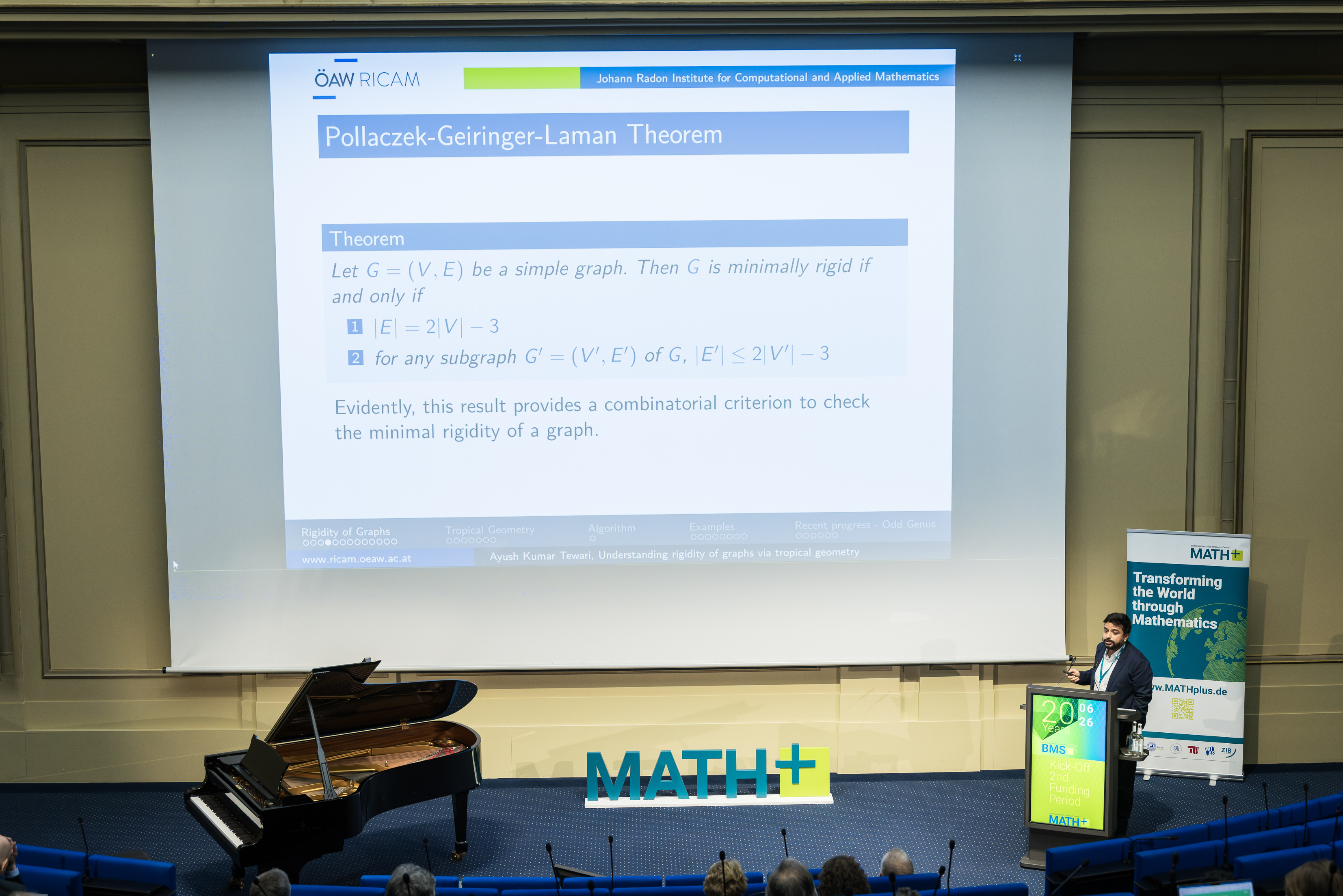
Ayush Kumar Tewari, BMS alumnus (2020), now at the Johann Radon Institute for Computational and Applied Mathematics (RICAM) in Linz, spoke about “Understanding Rigidity of Graphs via Tropical Geometry.” Drawing on the longstanding study of graph and framework motions under distance constraints in engineering and robotics, he discussed graph rigidity and explained the Laman number of a minimally rigid graph and how to compute it.
The final talk of the first day was given by Jean-Philippe Labbé, BMS alumnus (2013), now at École de Technologie Supérieure (ÉTS) in Montréal, on “Lineup Polytopes: The Geometry of Quantum Exclusion.” He introduced the topic with an intriguing question: “Why can’t we simply walk through walls?”
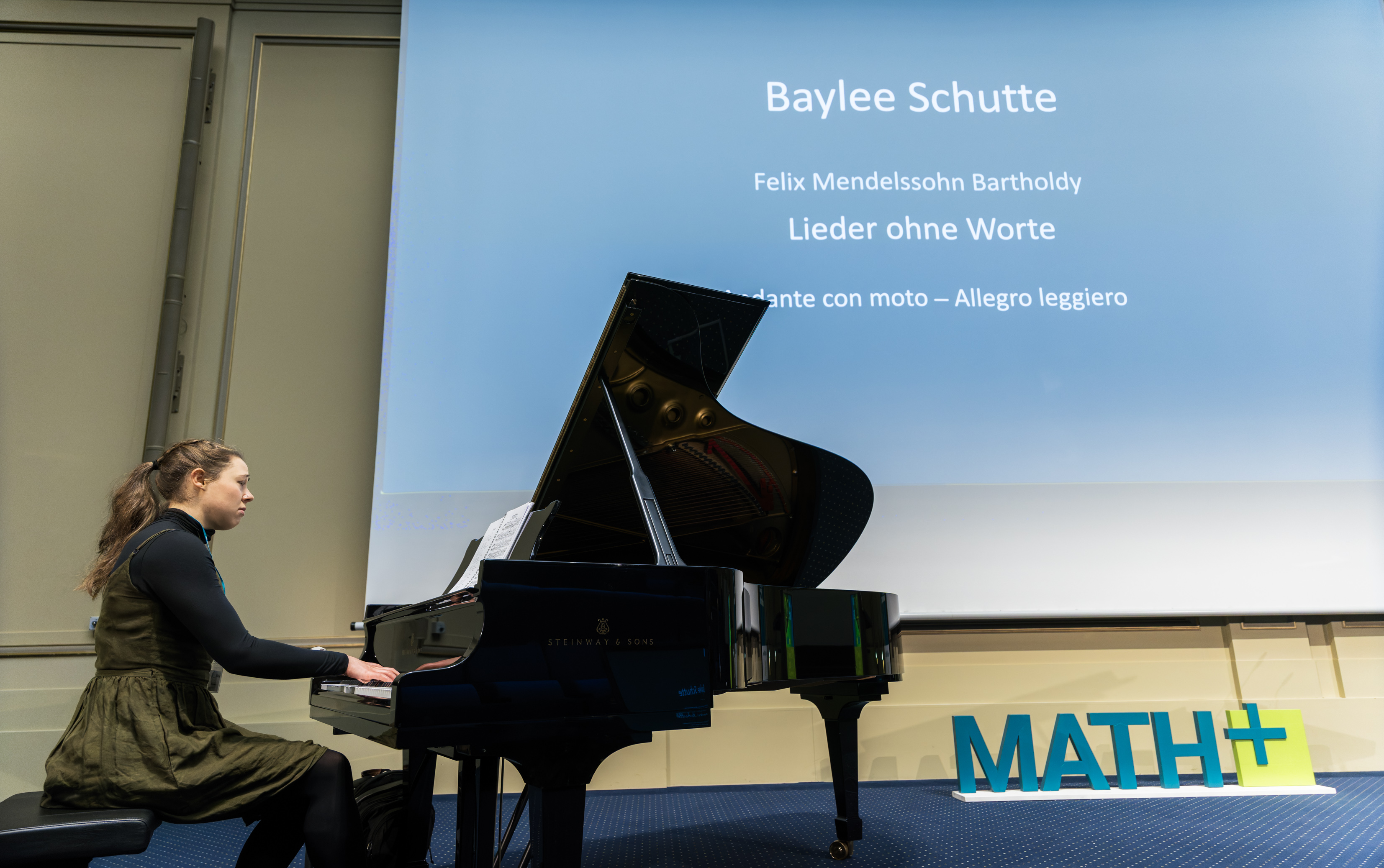
We would also like to extend our heartfelt thanks to Baylee Schutte for her wonderful musical interludes. She performed piano works by Felix Mendelssohn Bartholdy and Edvard Grieg and sang traditional English and Scottish folk songs for which Roger Quilter composed new piano accompaniments. Baylee is a BMS Dirichlet postdoctoral research fellow in the Discrete Geometry and Topological Combinatorics research group at Freie Universität Berlin.
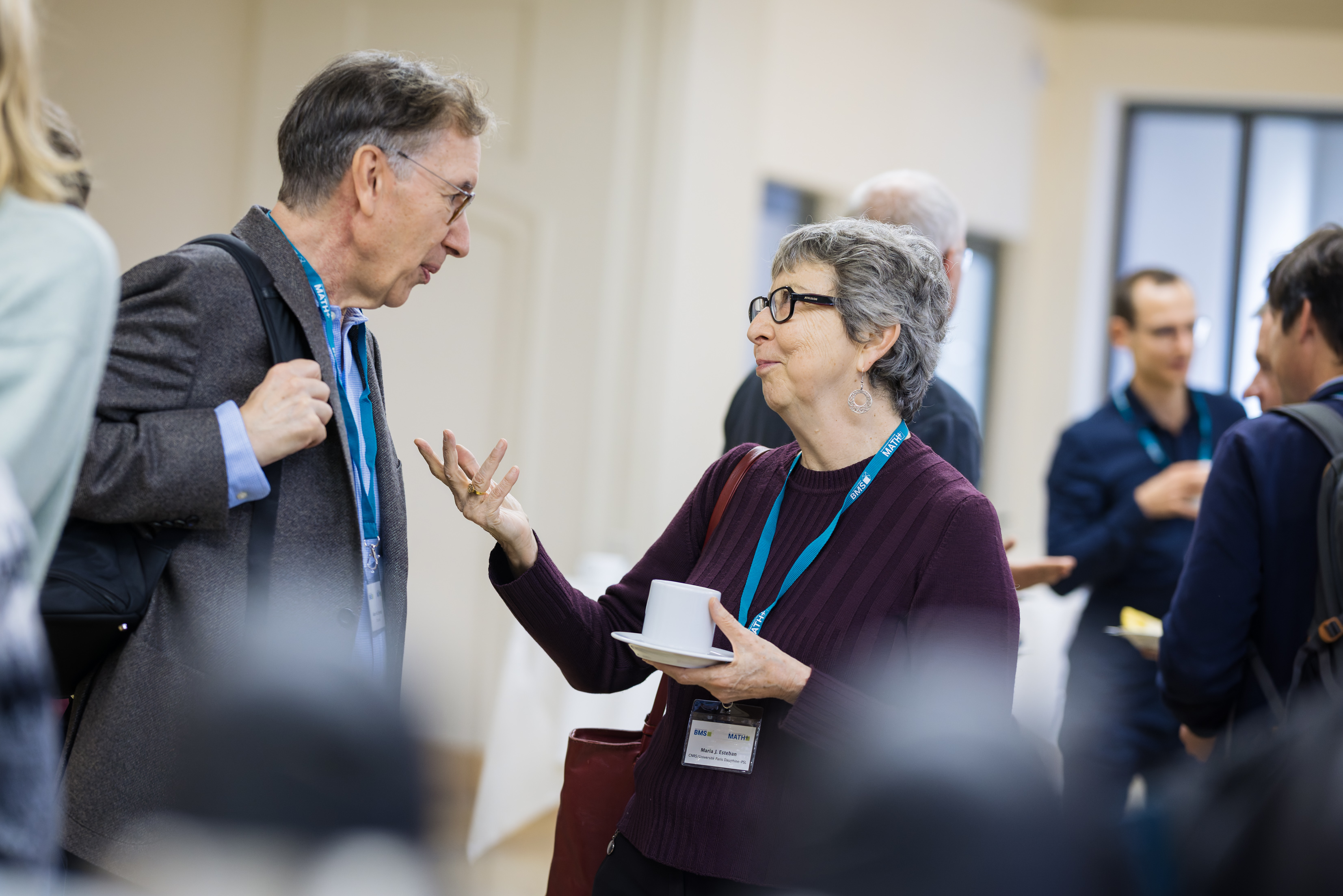
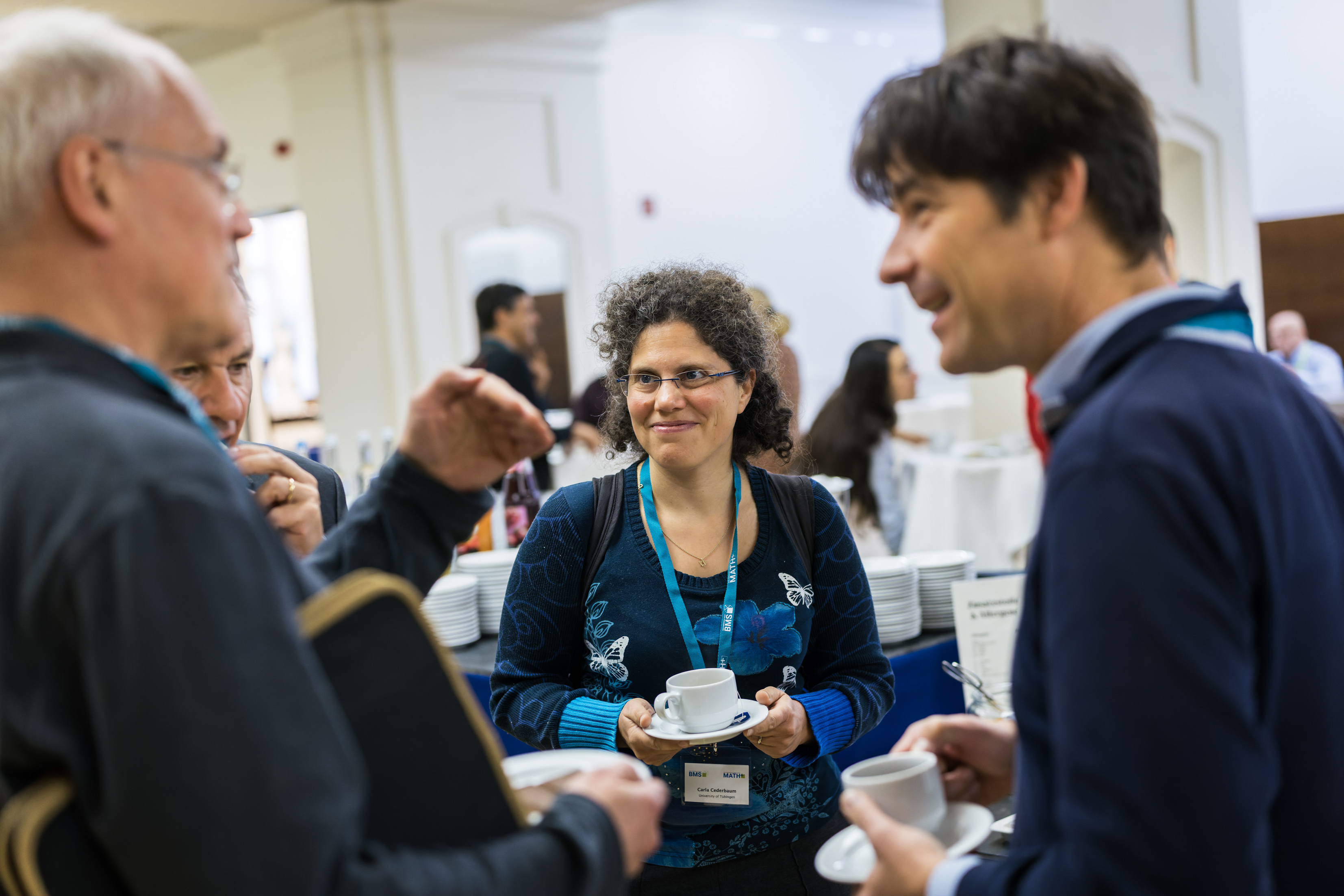
A lively reception concluded the first day of the BMS20 Anniversary Conference, bringing together old friends and colleagues for engaging conversations and further networking.
Program – Day 2: 19 November
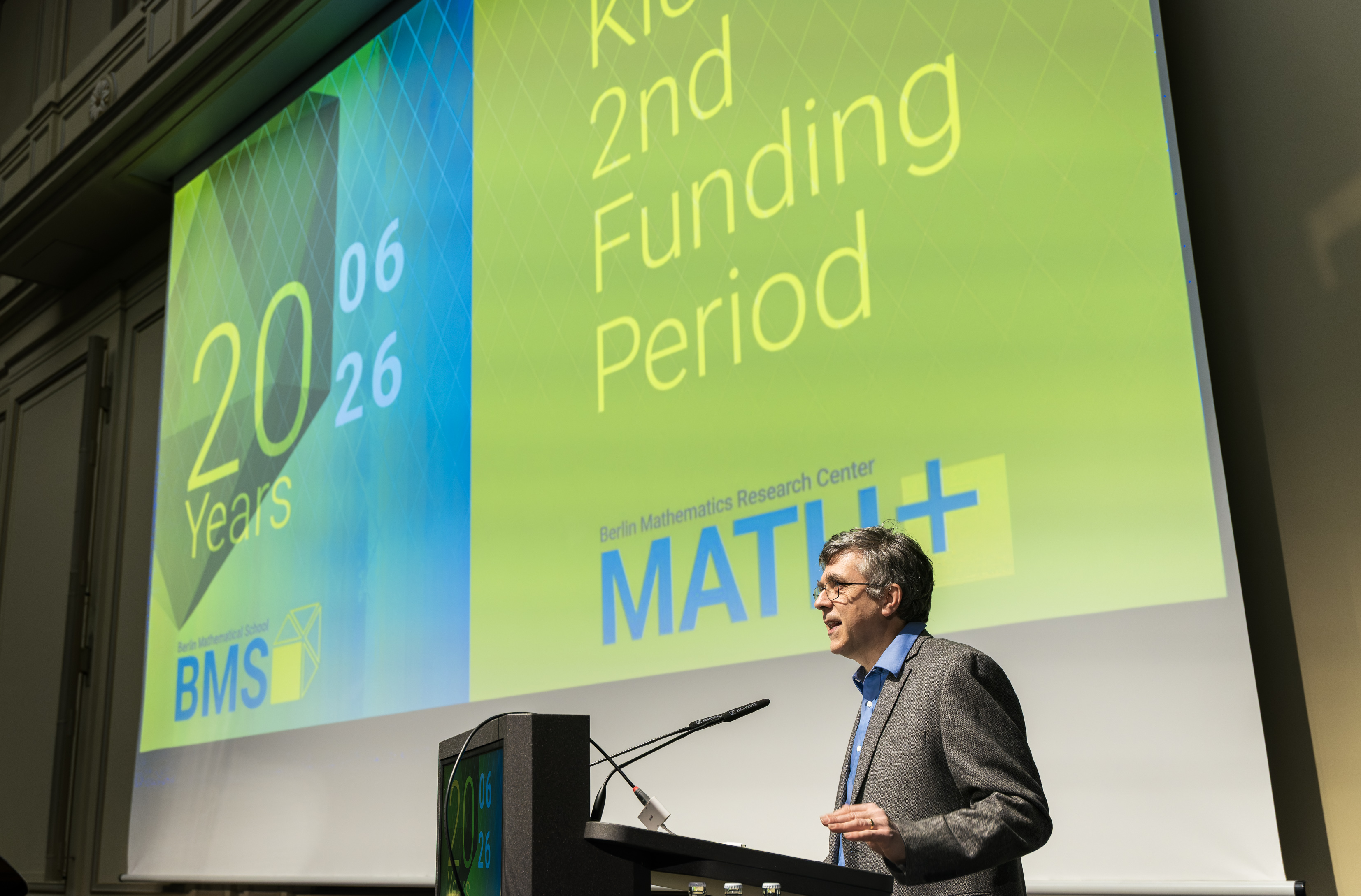
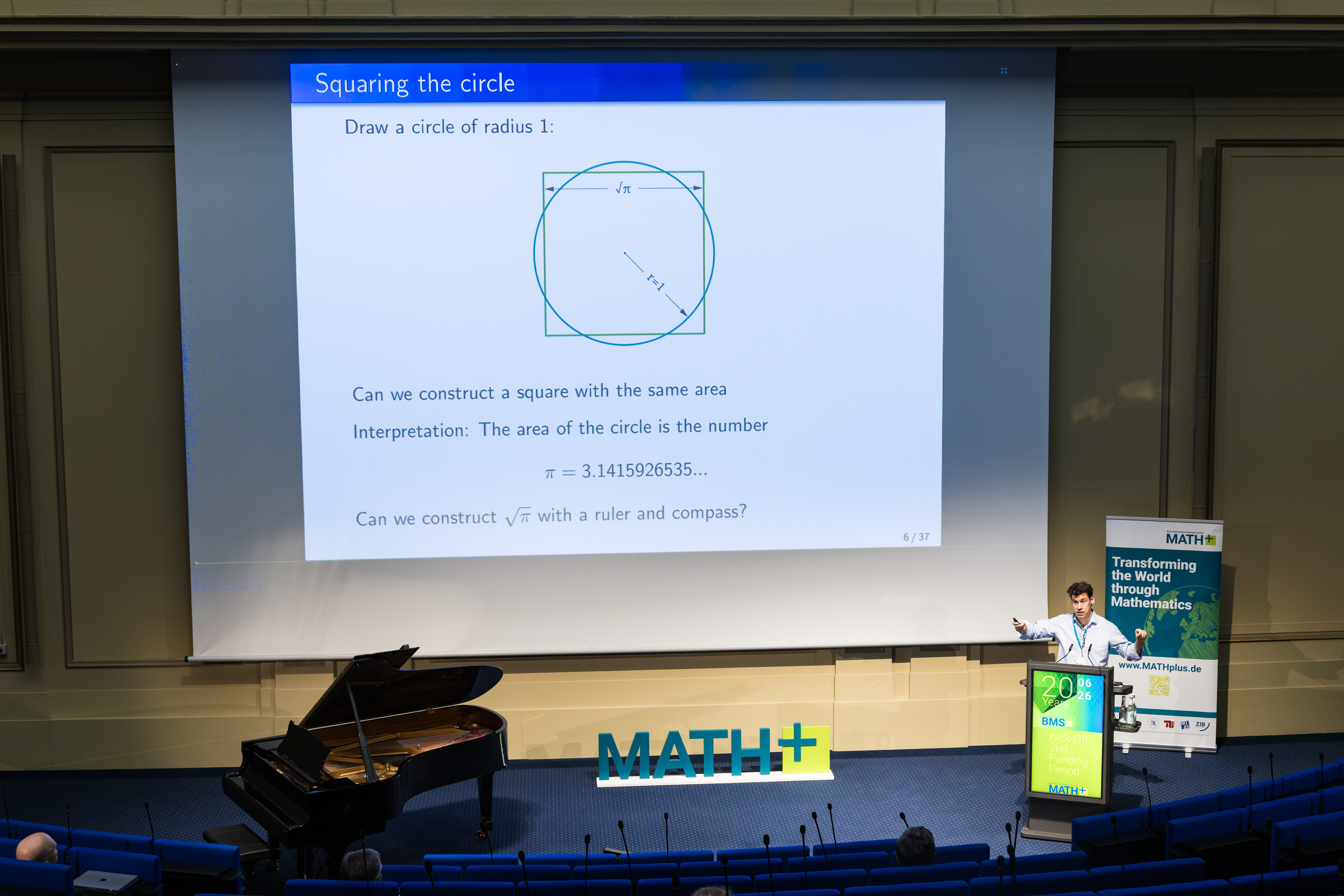
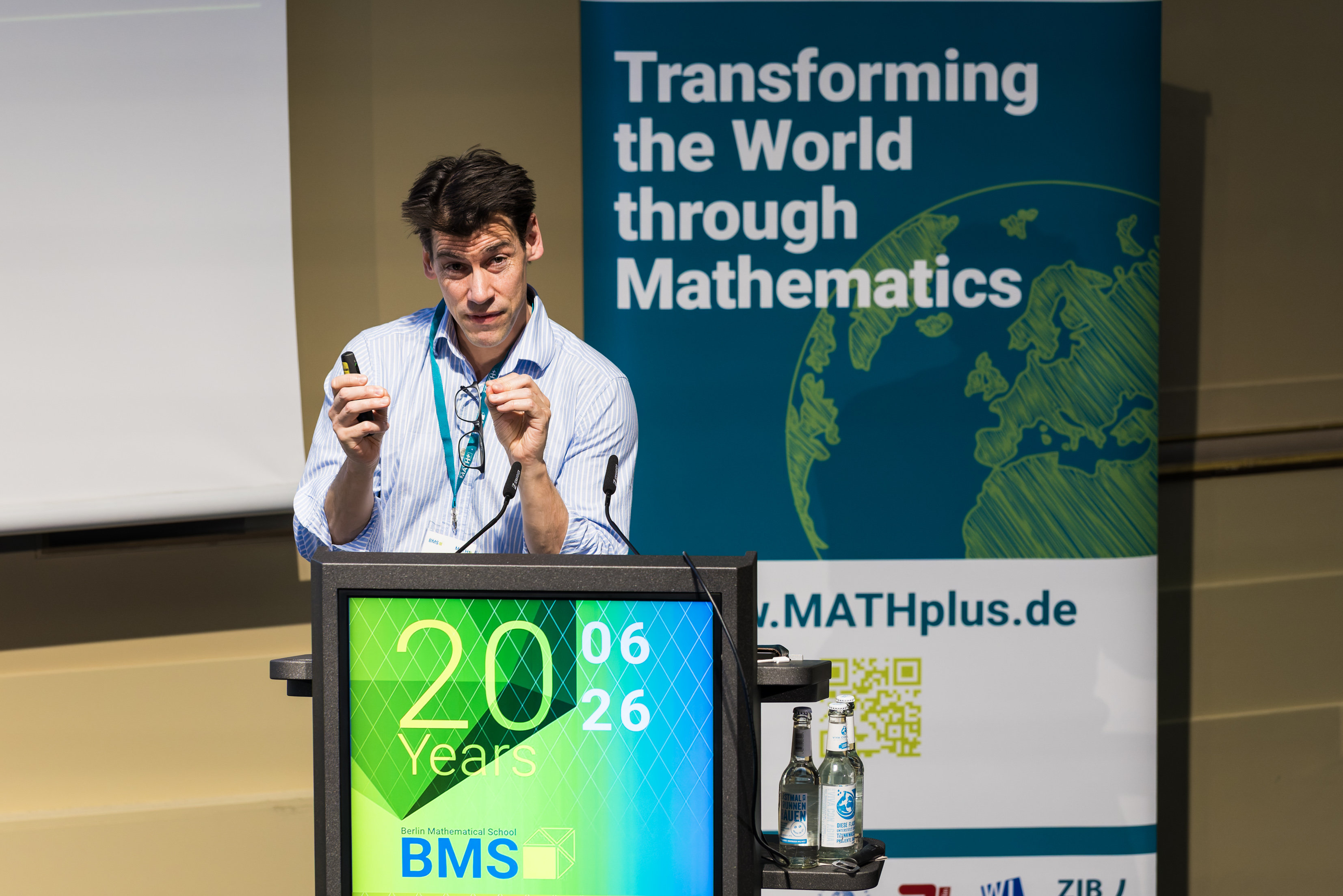
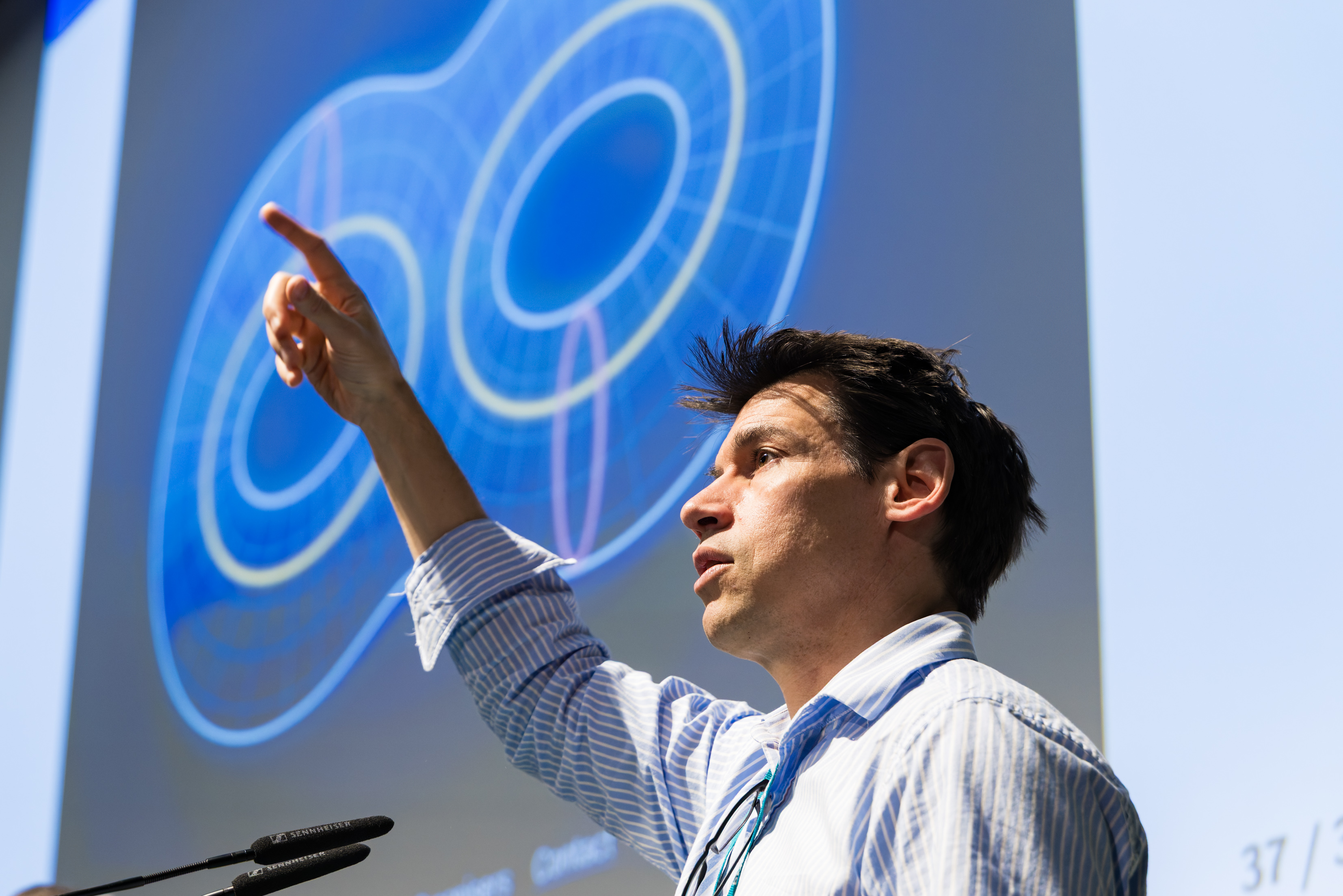
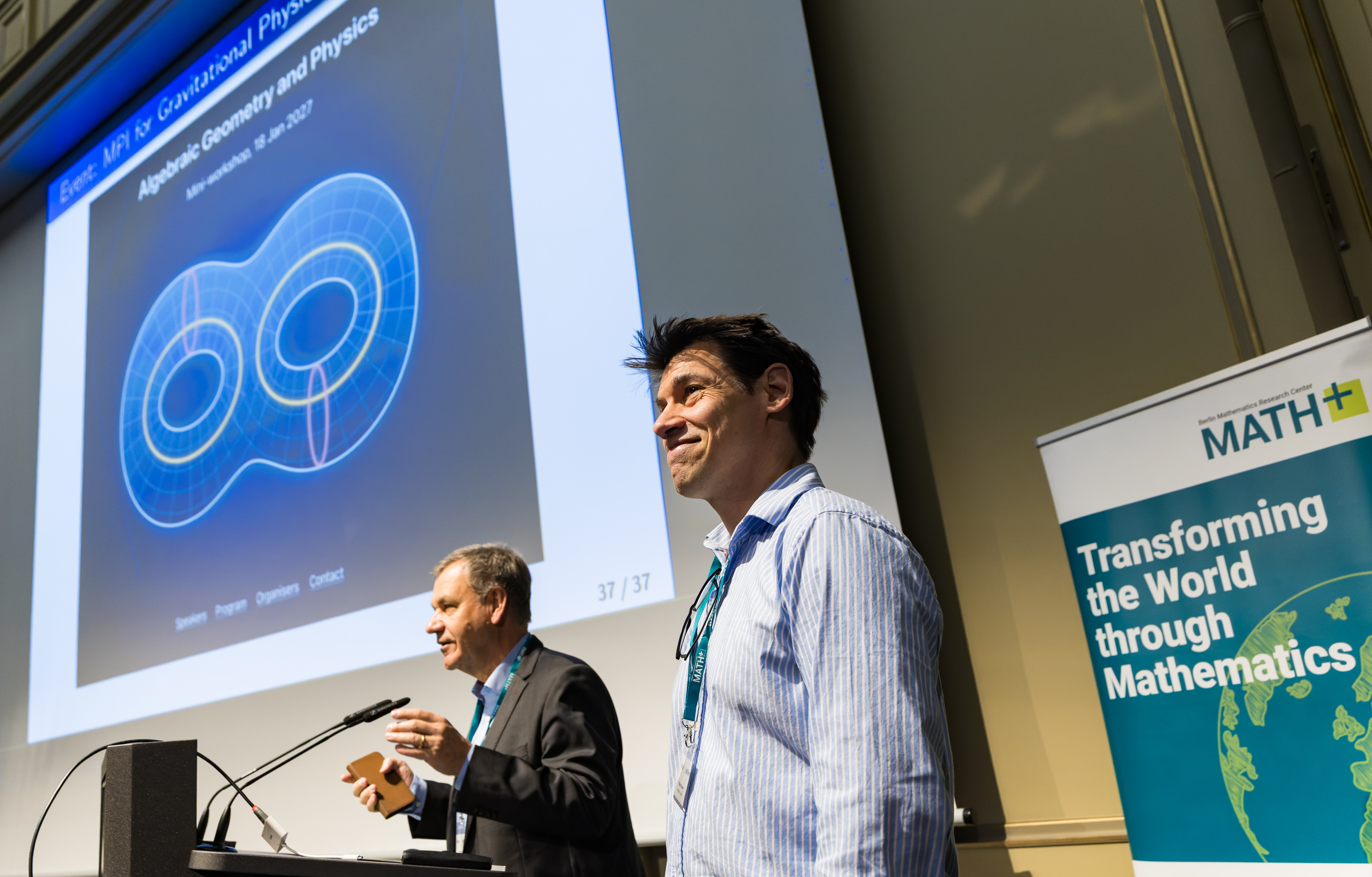
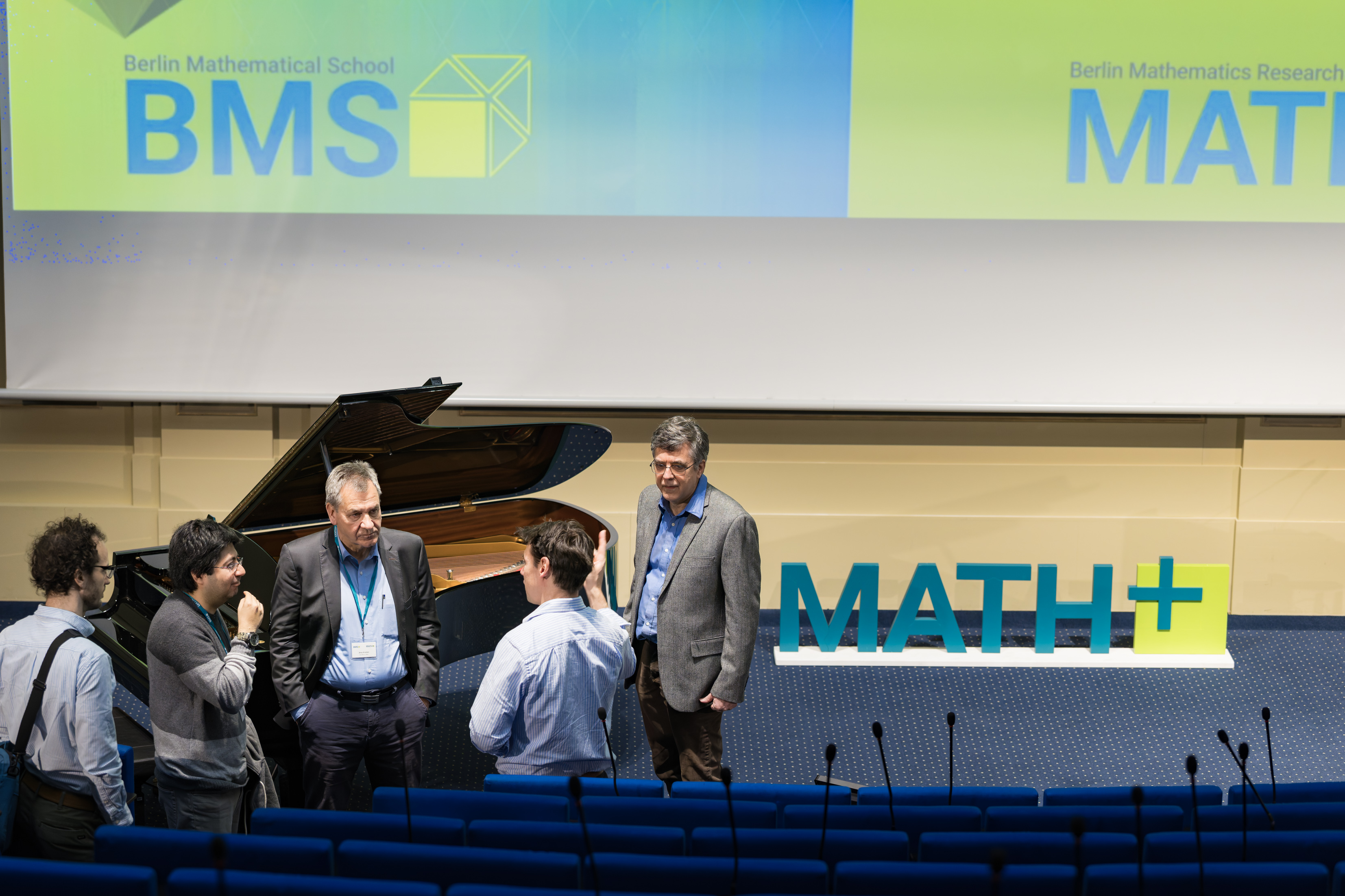
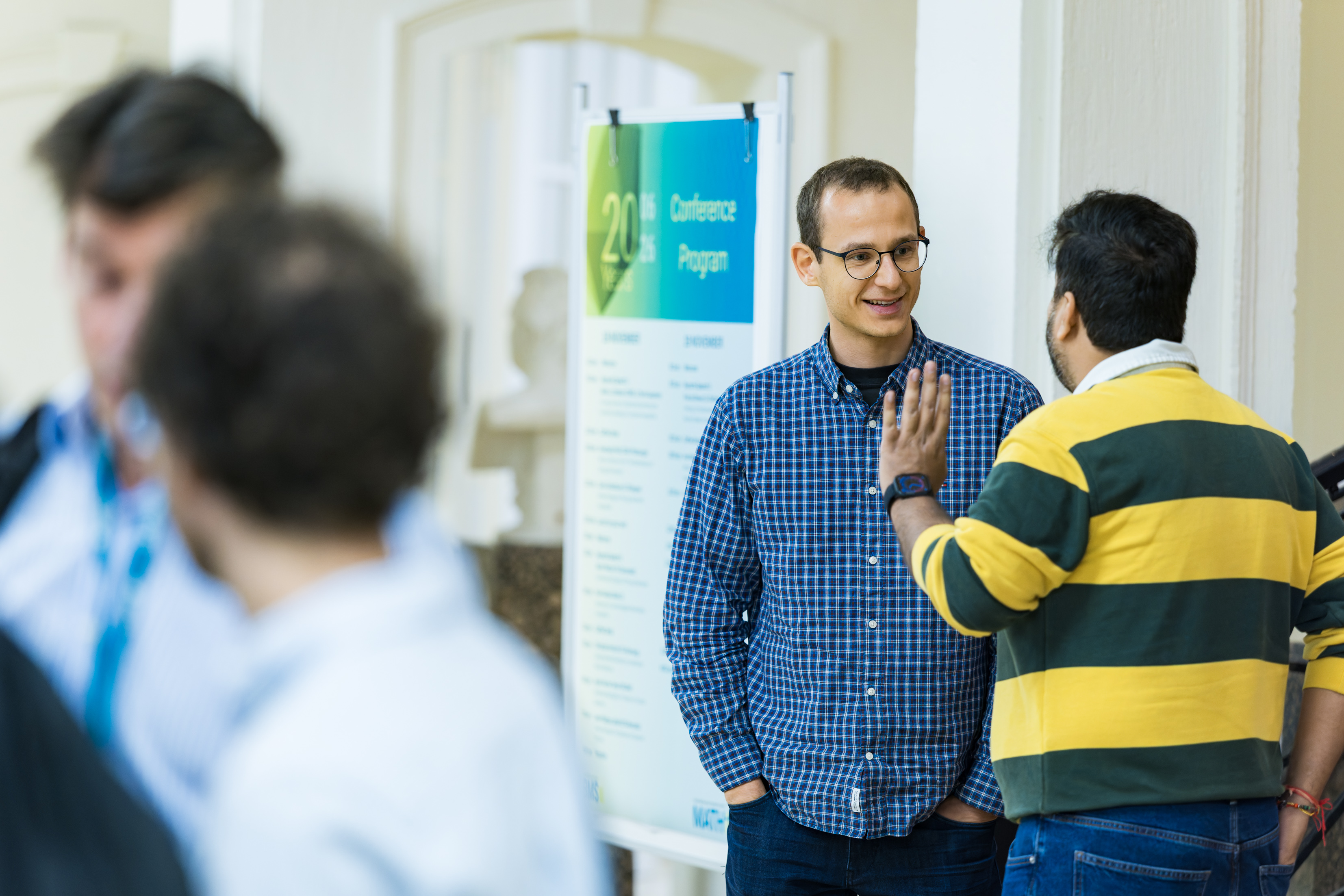
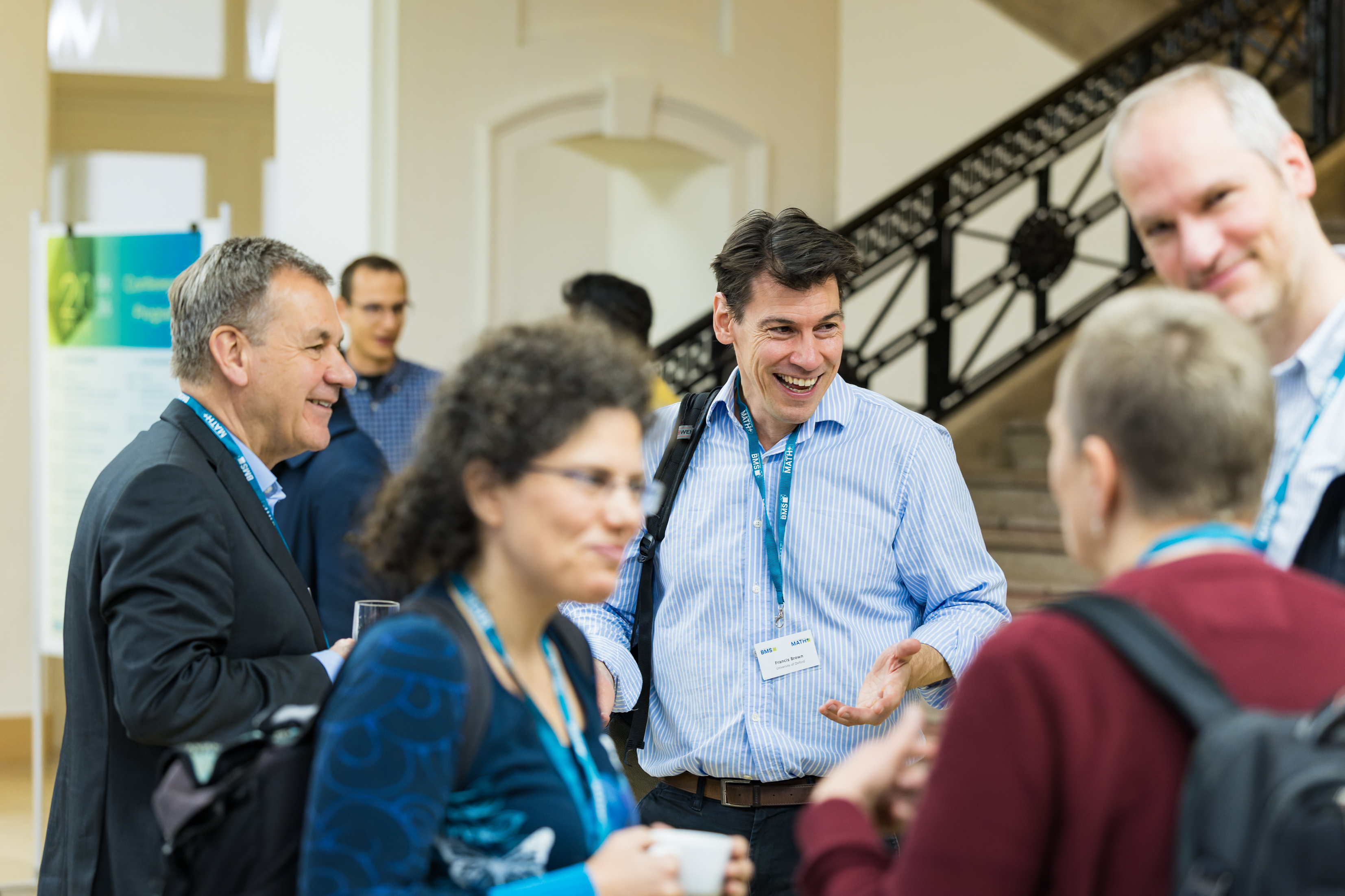
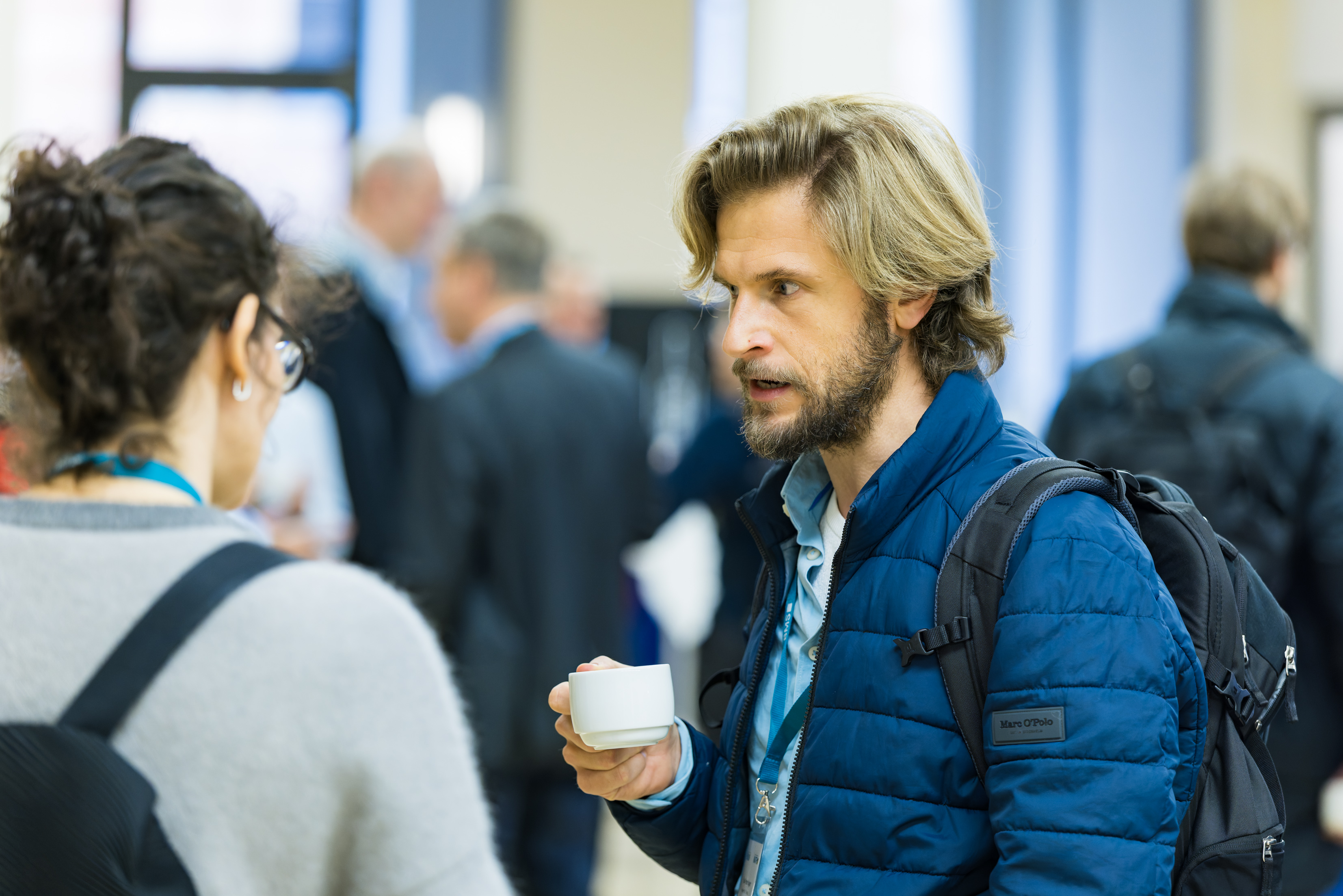
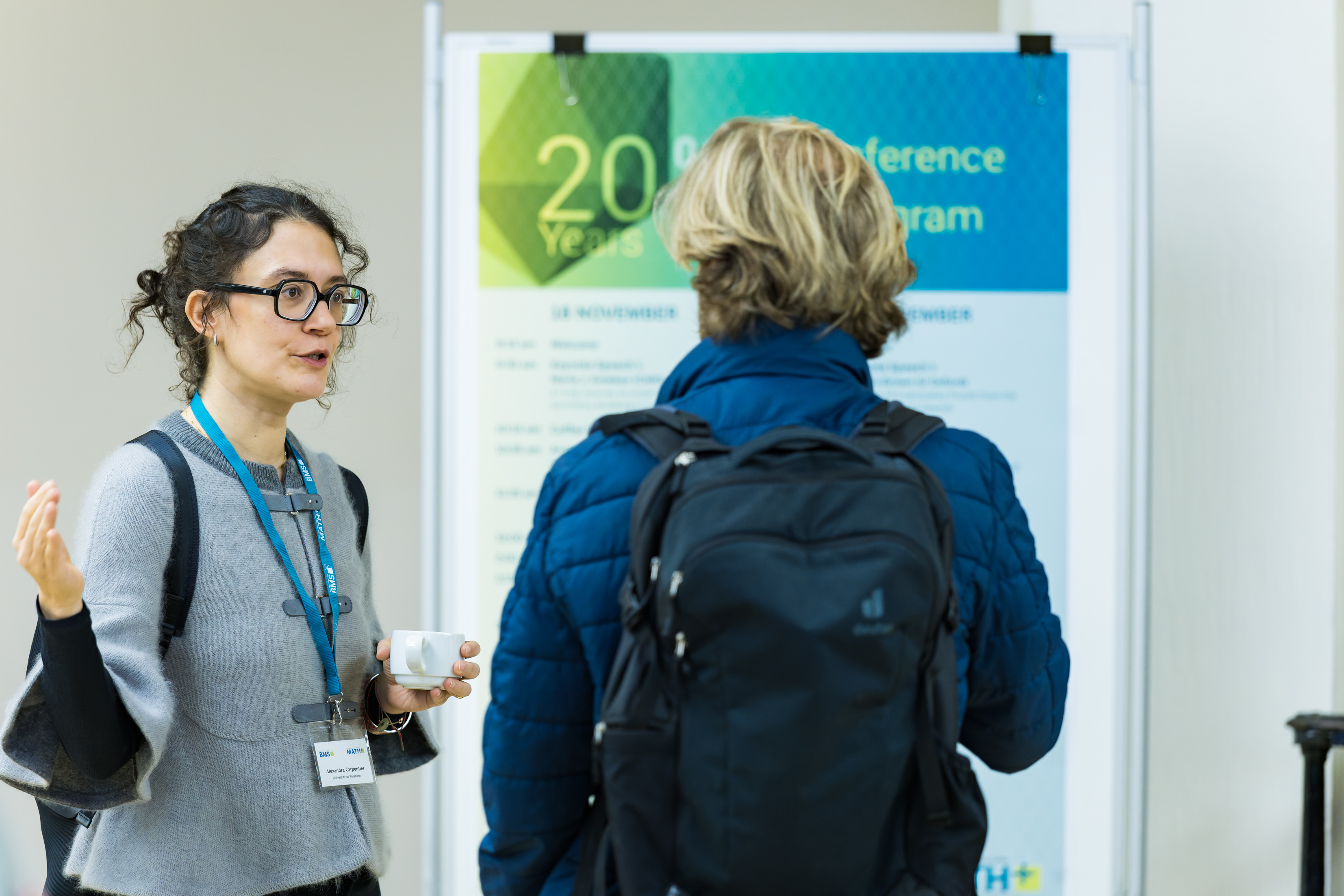
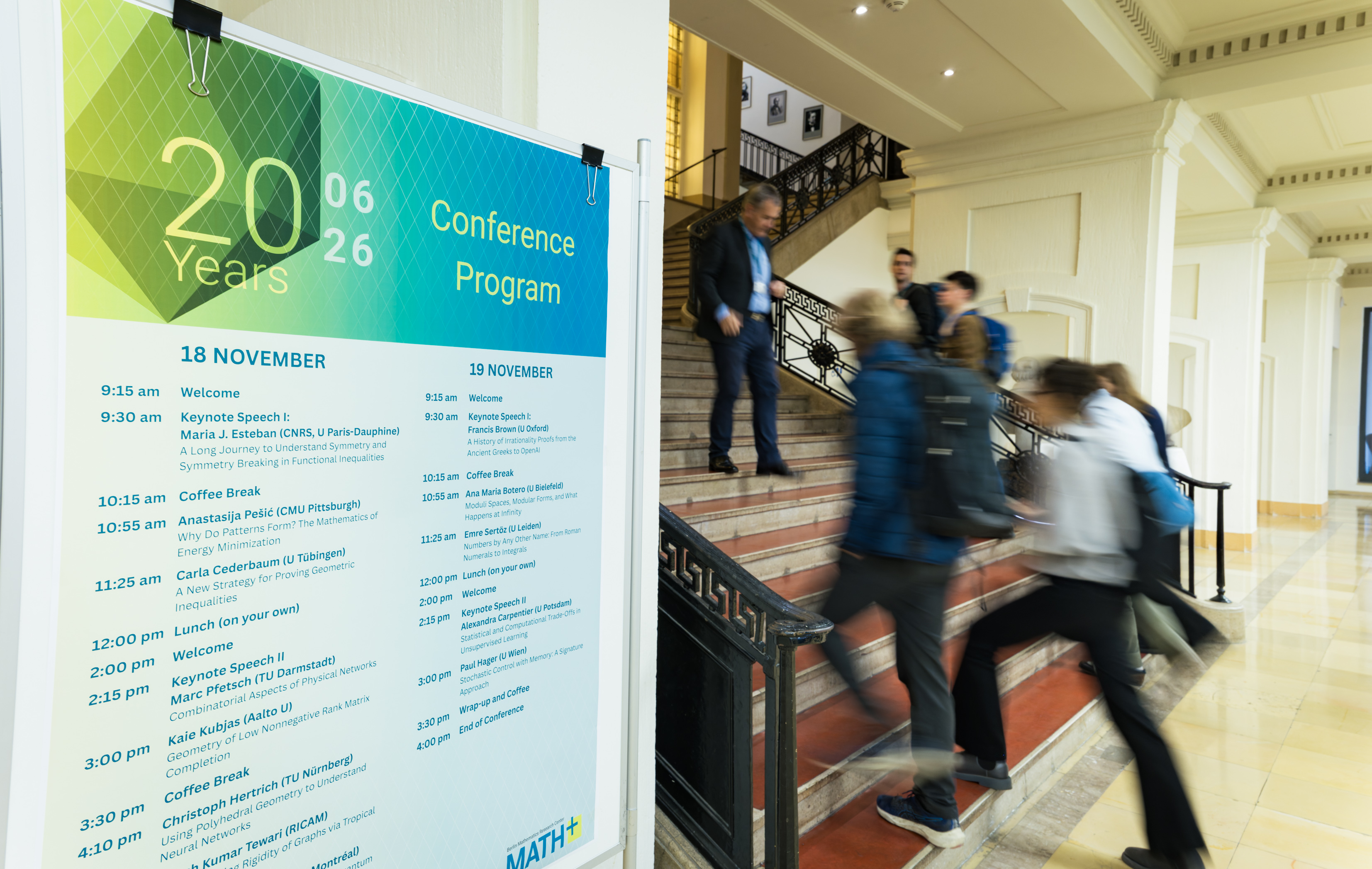
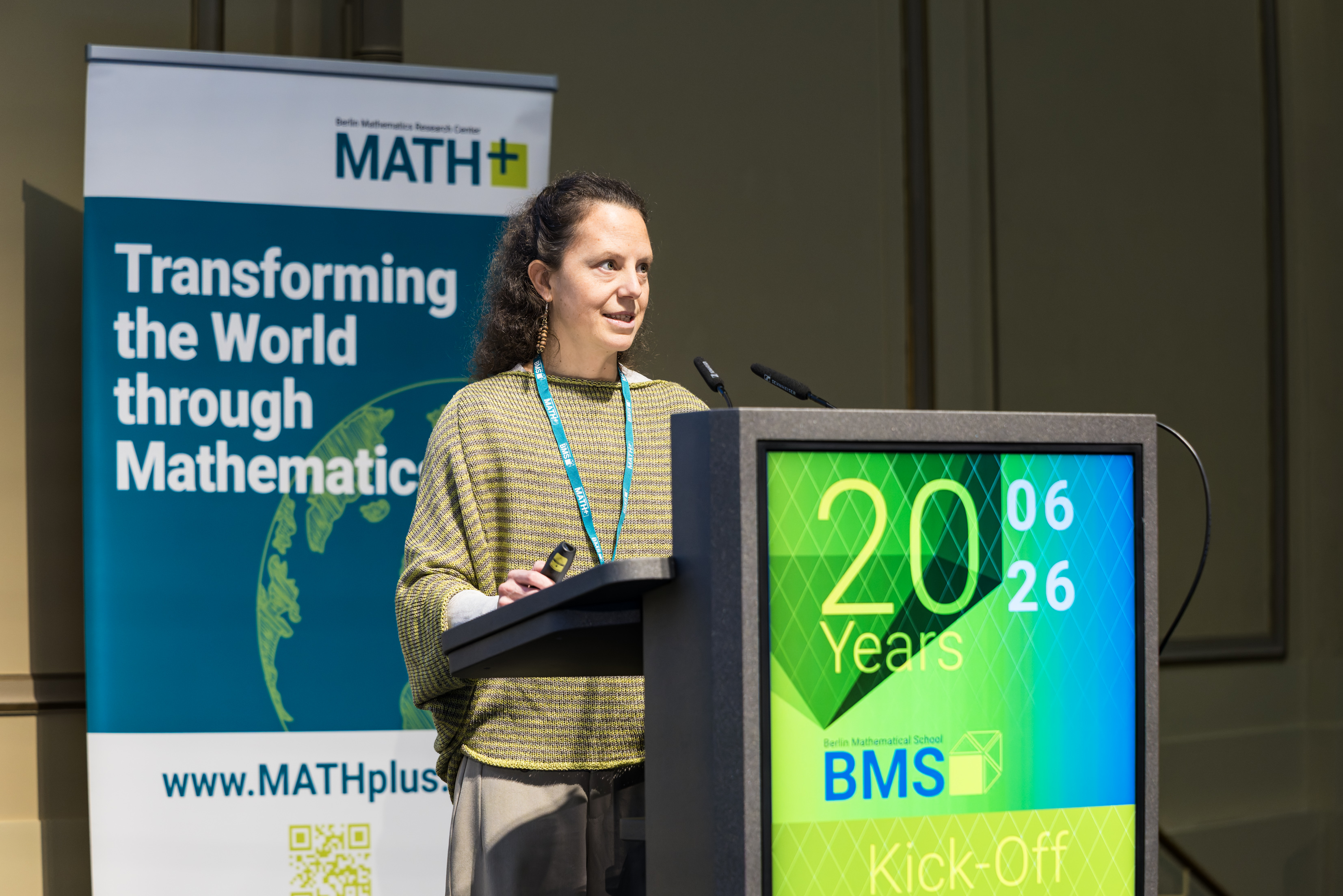
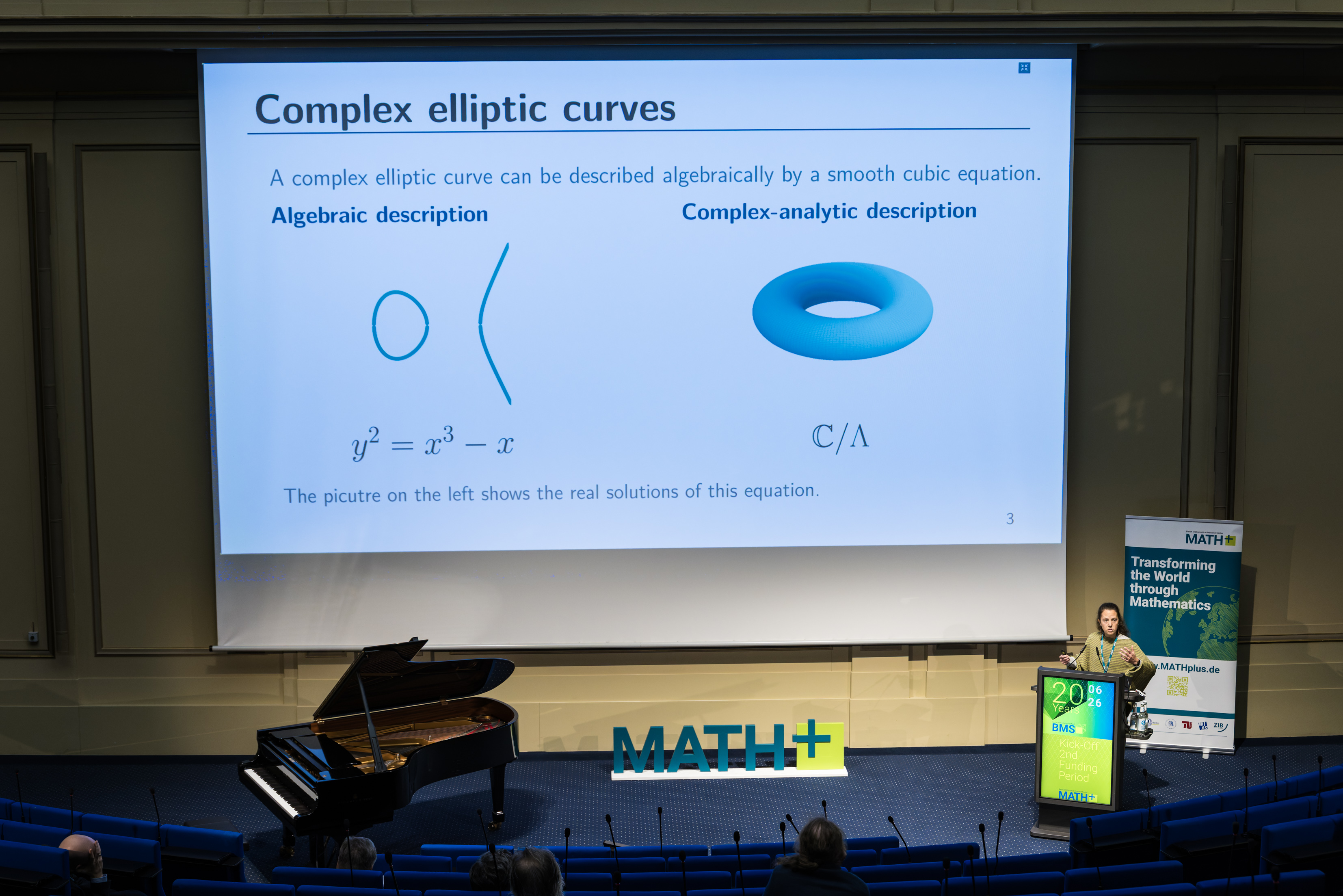
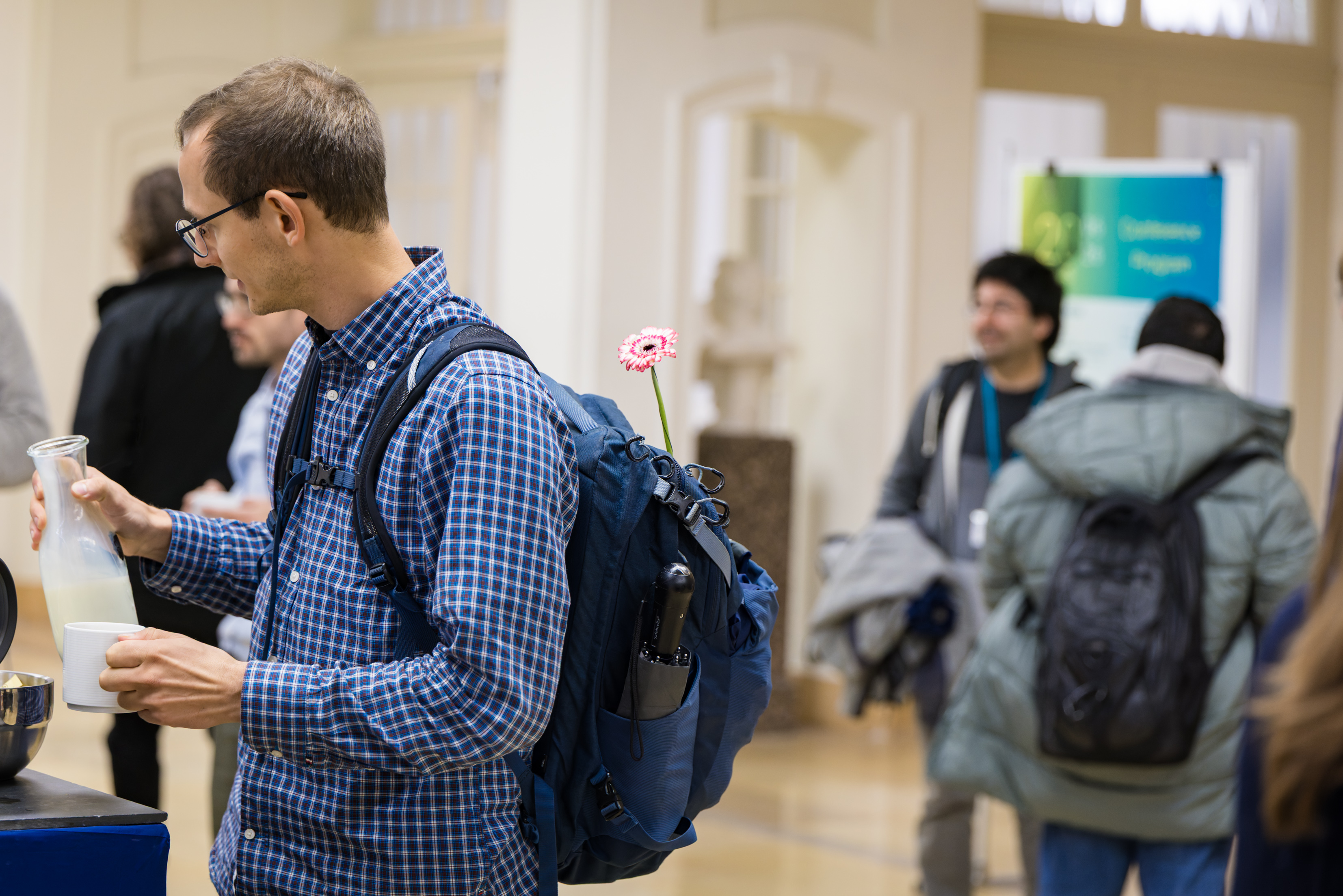
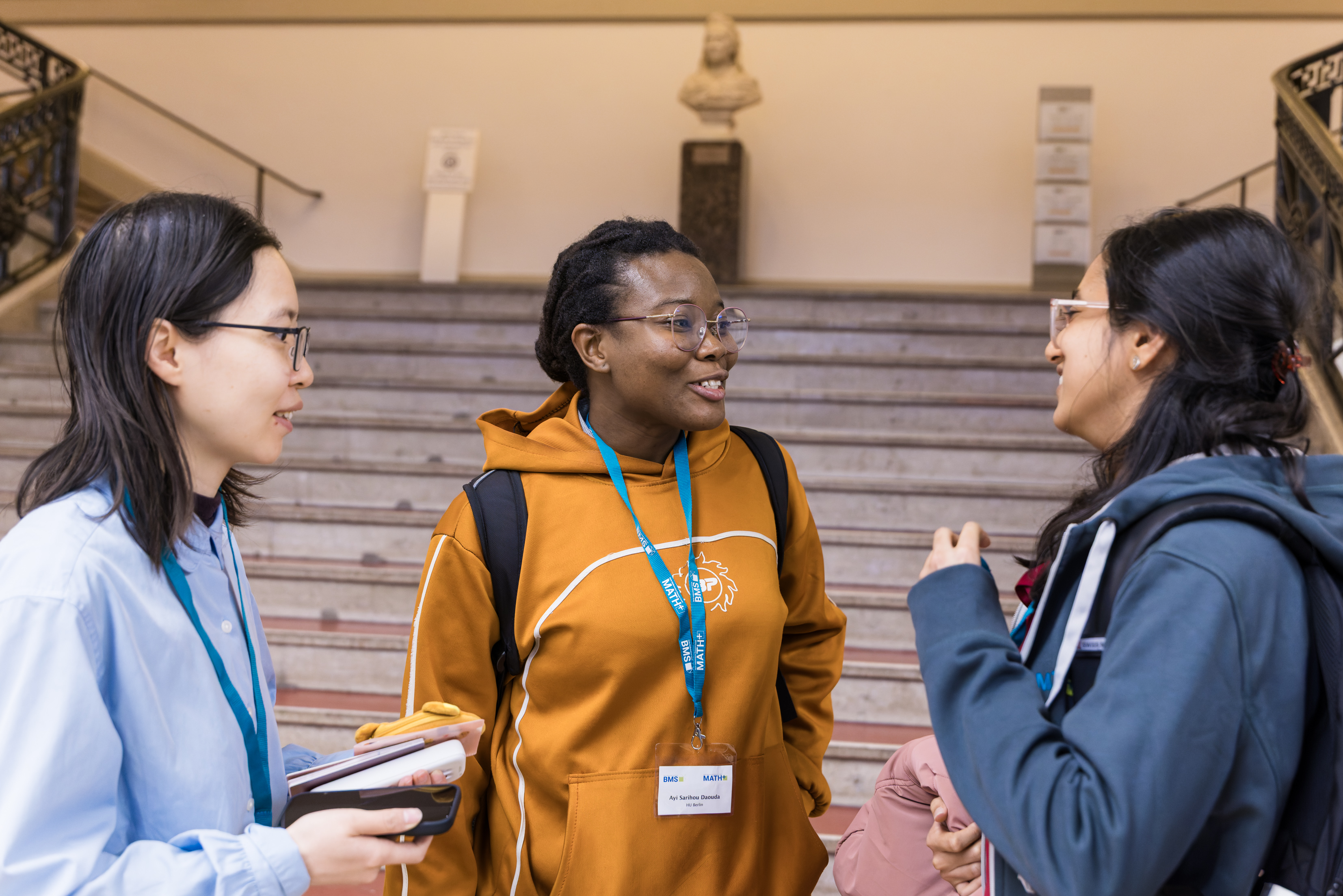
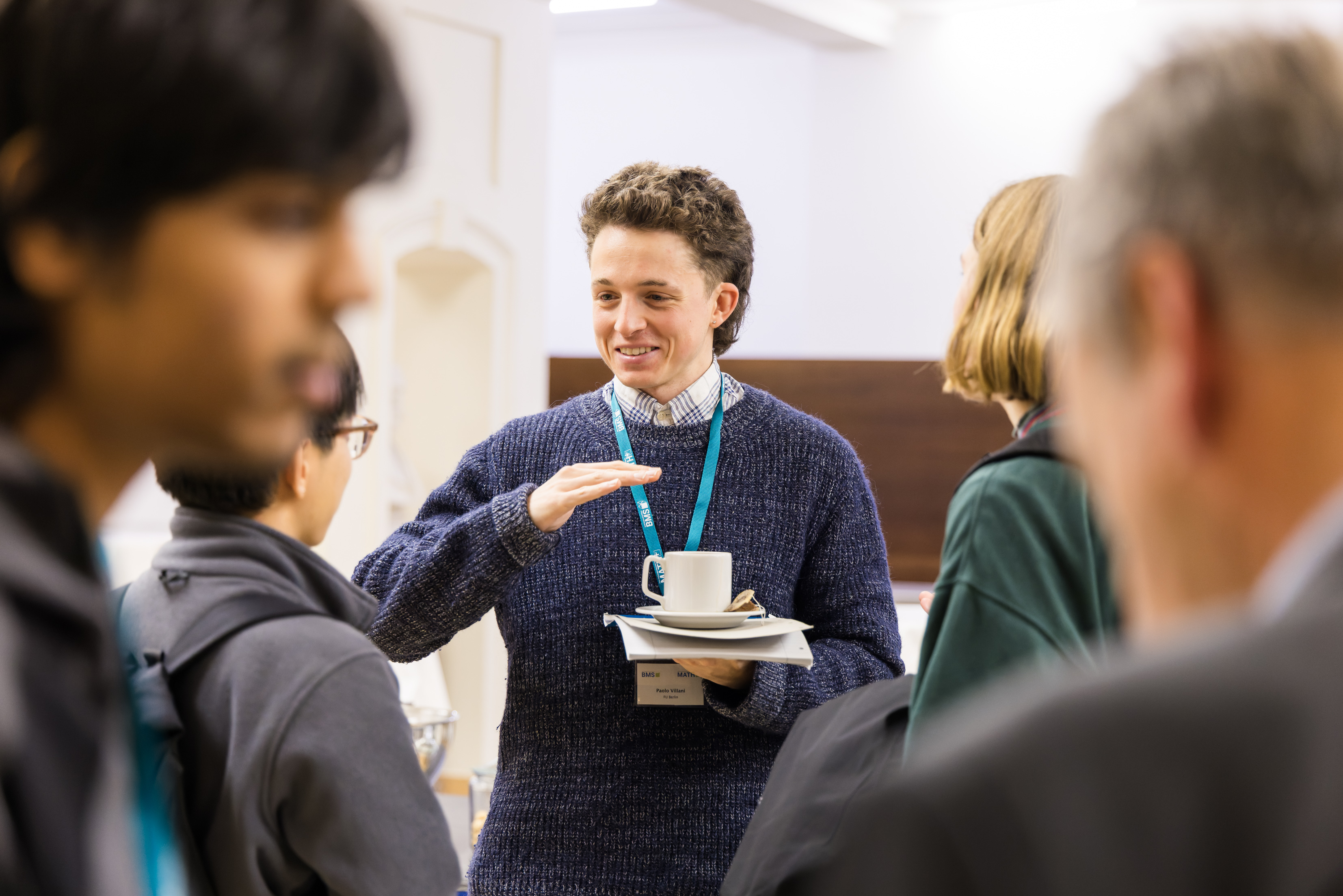
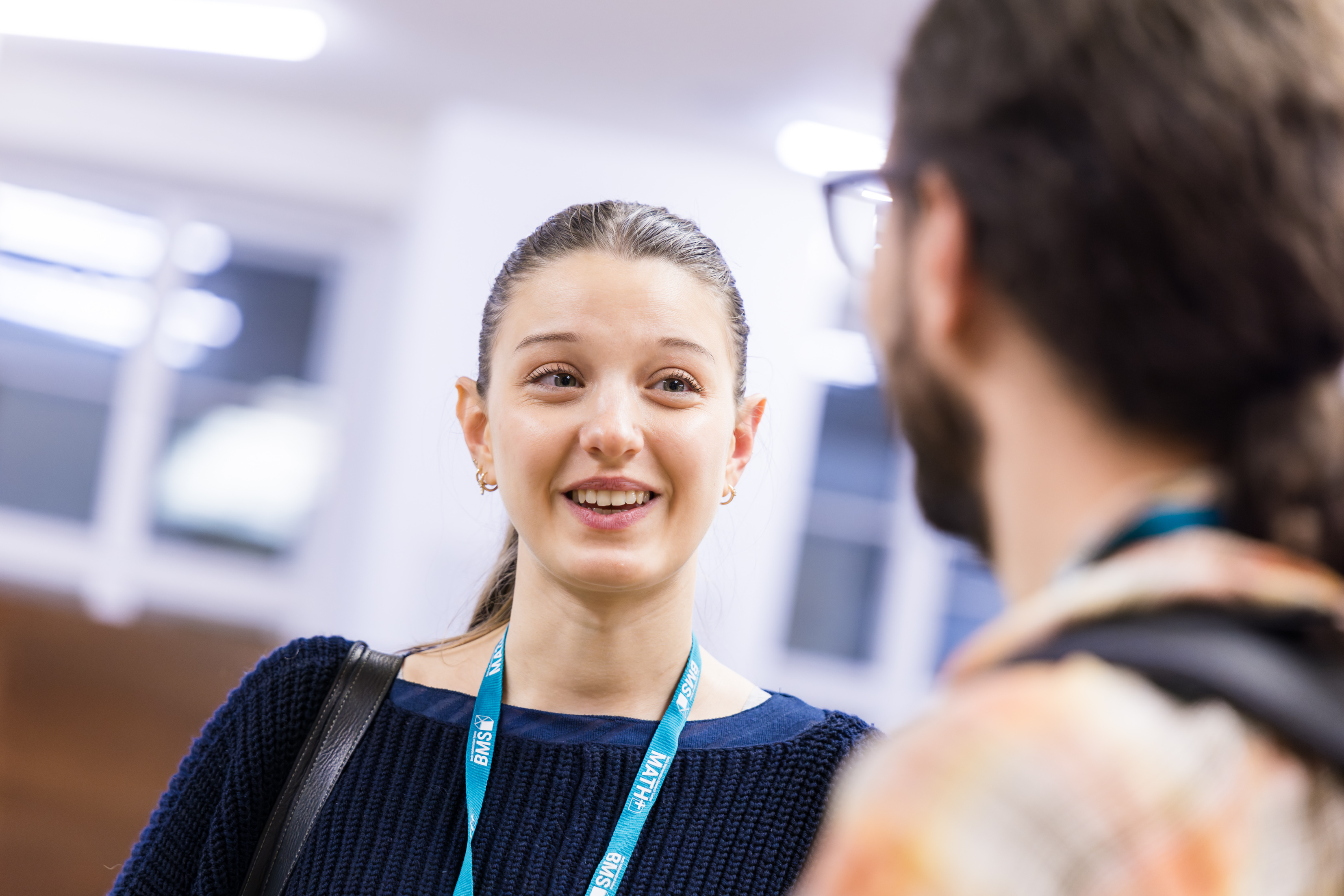
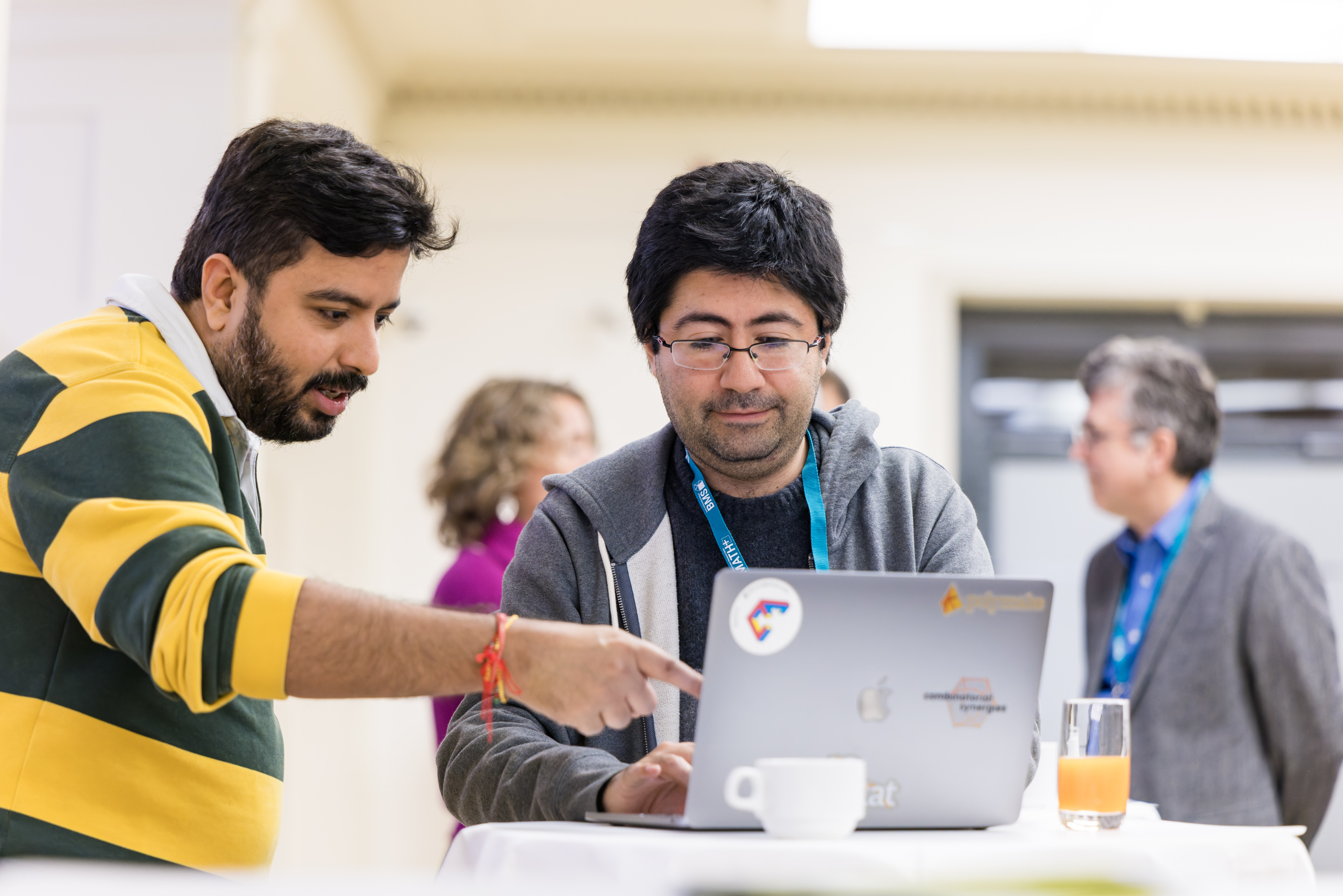
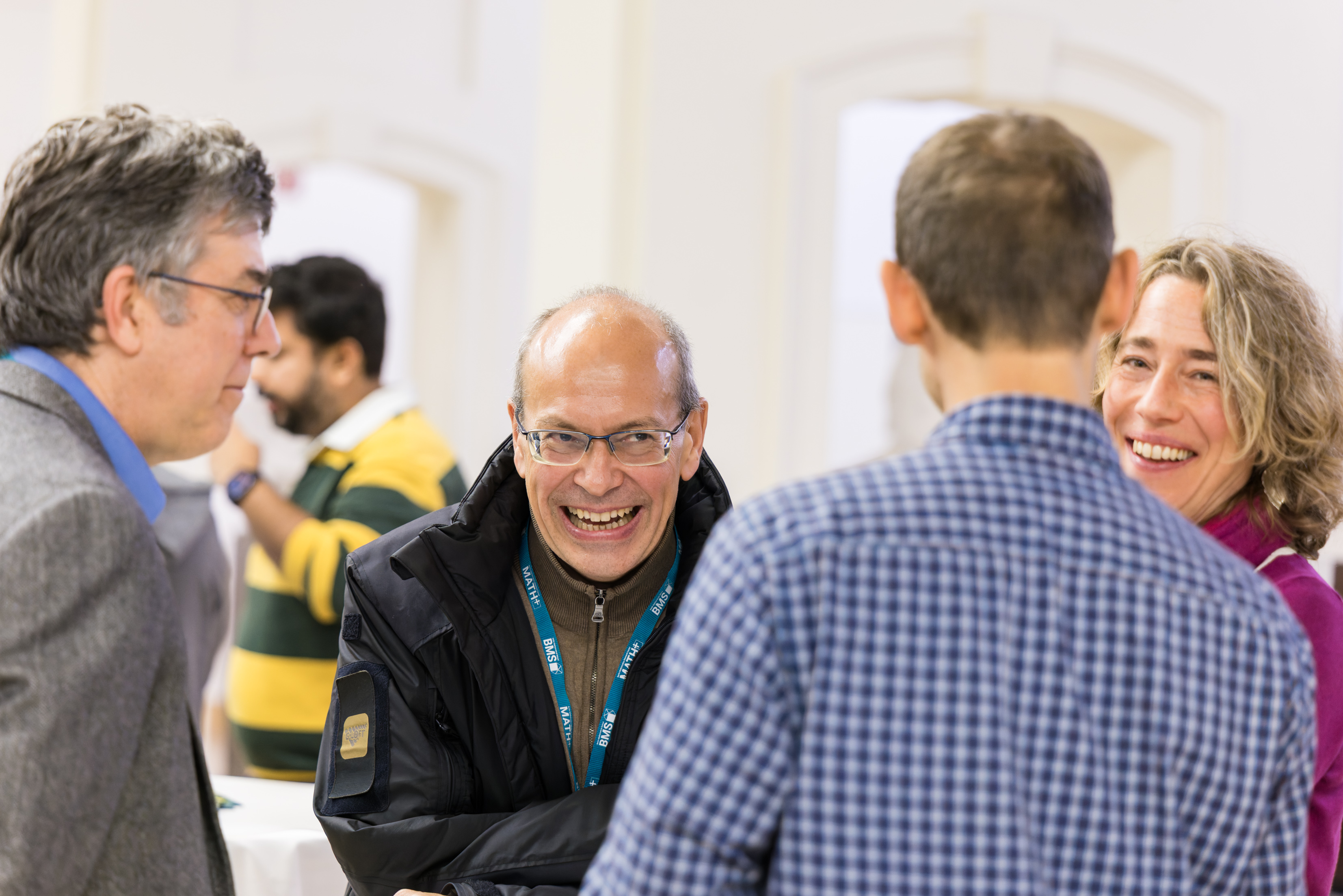
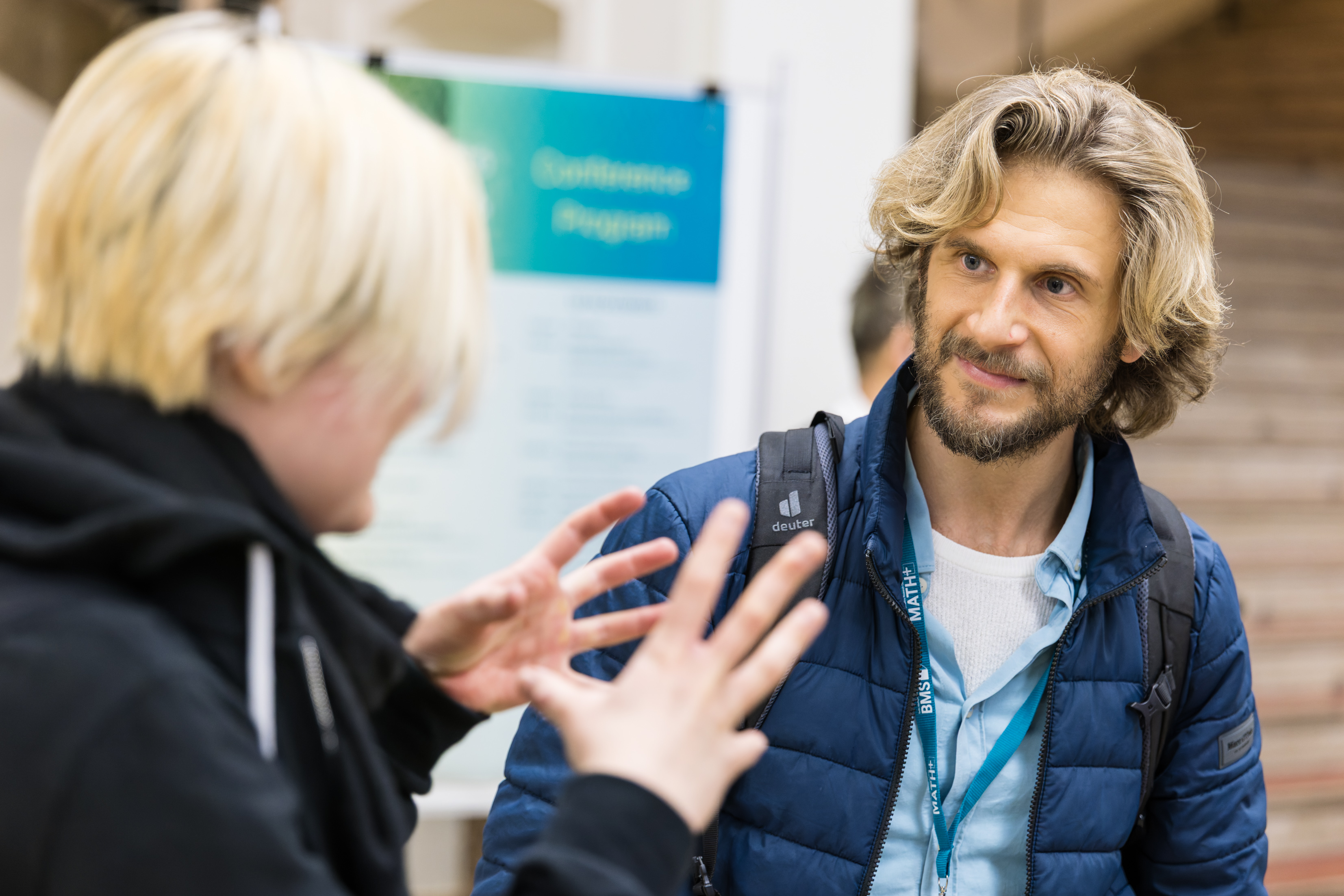
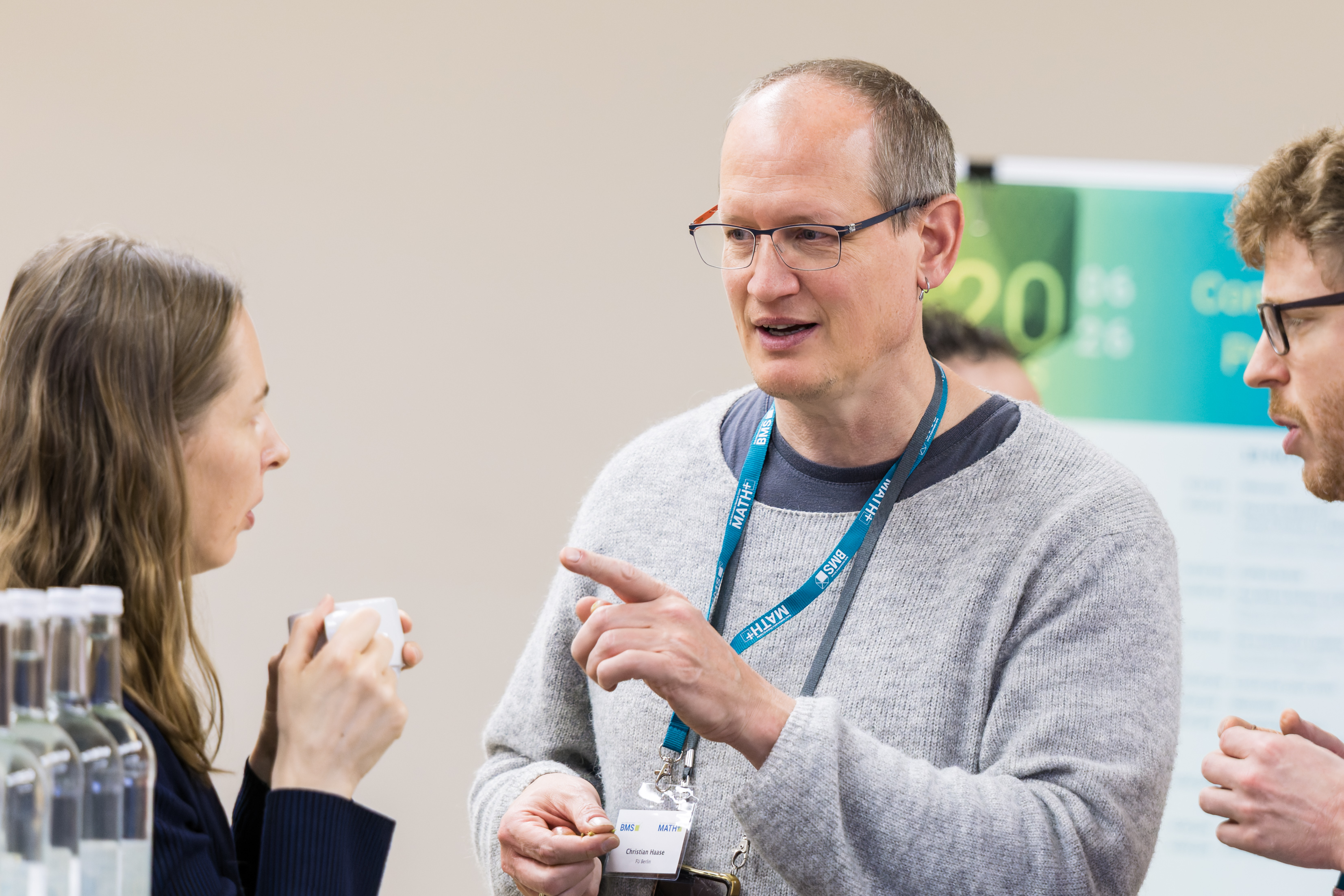
BMS20 Anniversary Conference – Day 2: 19 November 2026 | Photos: © Kay Herschelmann / MATH+
The second day opened with a keynote lecture by Francis Brown from the University of Oxford on “A History of Irrationality Proofs from the Ancient Greeks to OpenAI.” He explained how questions about the irrationality and transcendence of certain numbers have fascinated mathematicians for over 2,000 years and outlined some of the key ideas behind irrationality proofs.
Ana Maria Botero, BMS alumna (2017), now at Universität Bielefeld, followed with a talk on “Moduli Spaces, Modular Forms, and What Happens at Infinity.” She explored how geometric objects can be classified and what happens when they vary in families or begin to degenerate?
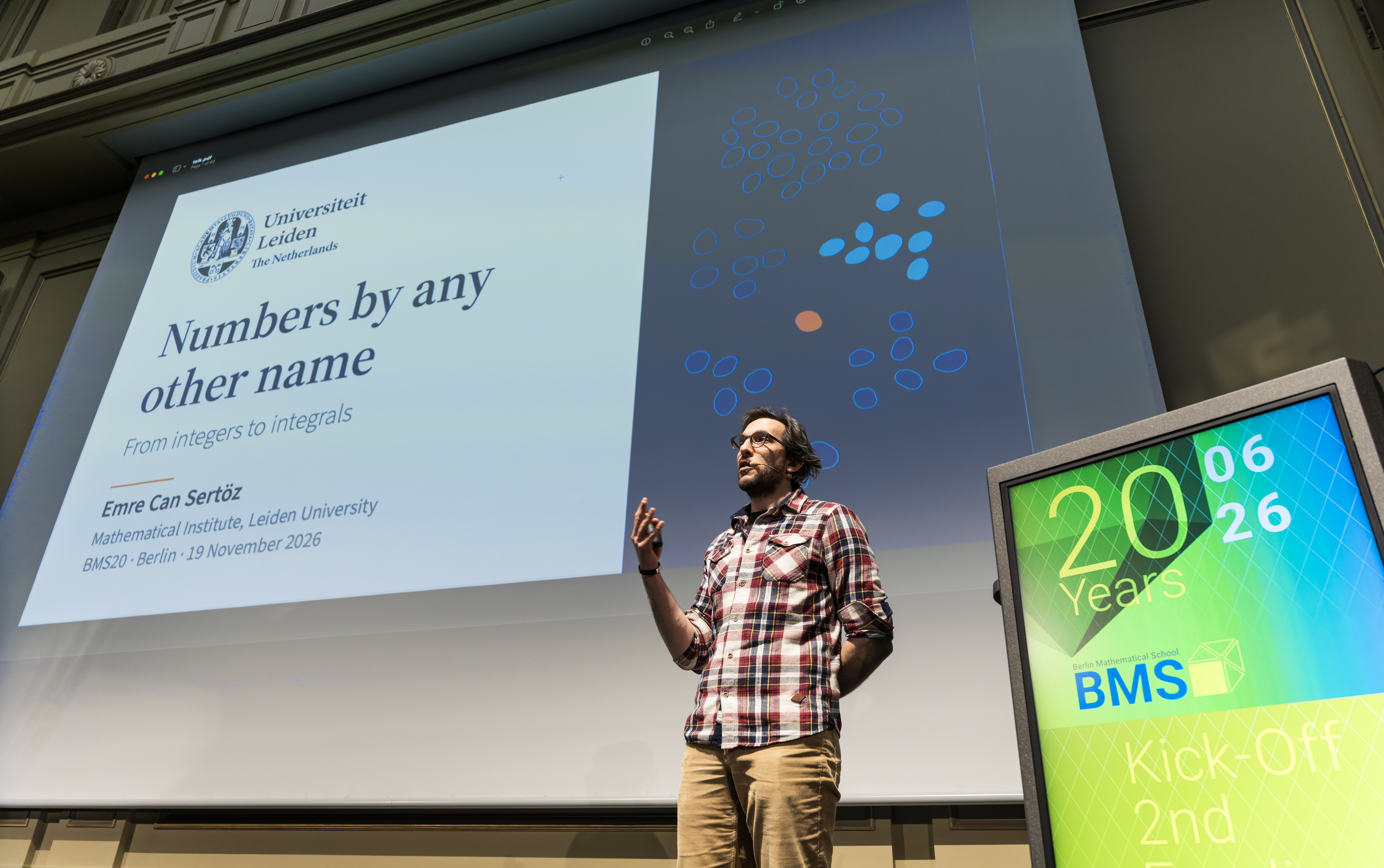
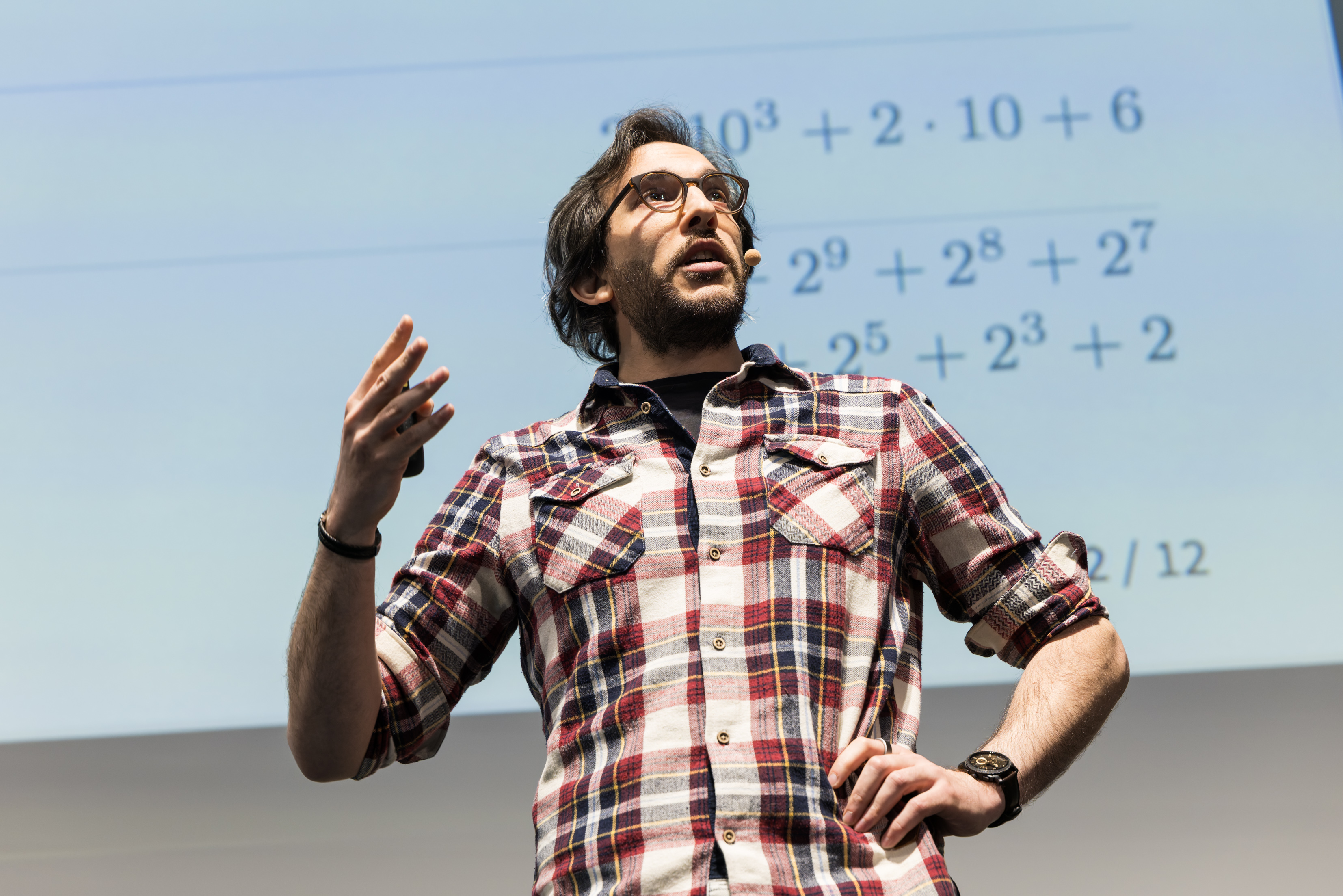
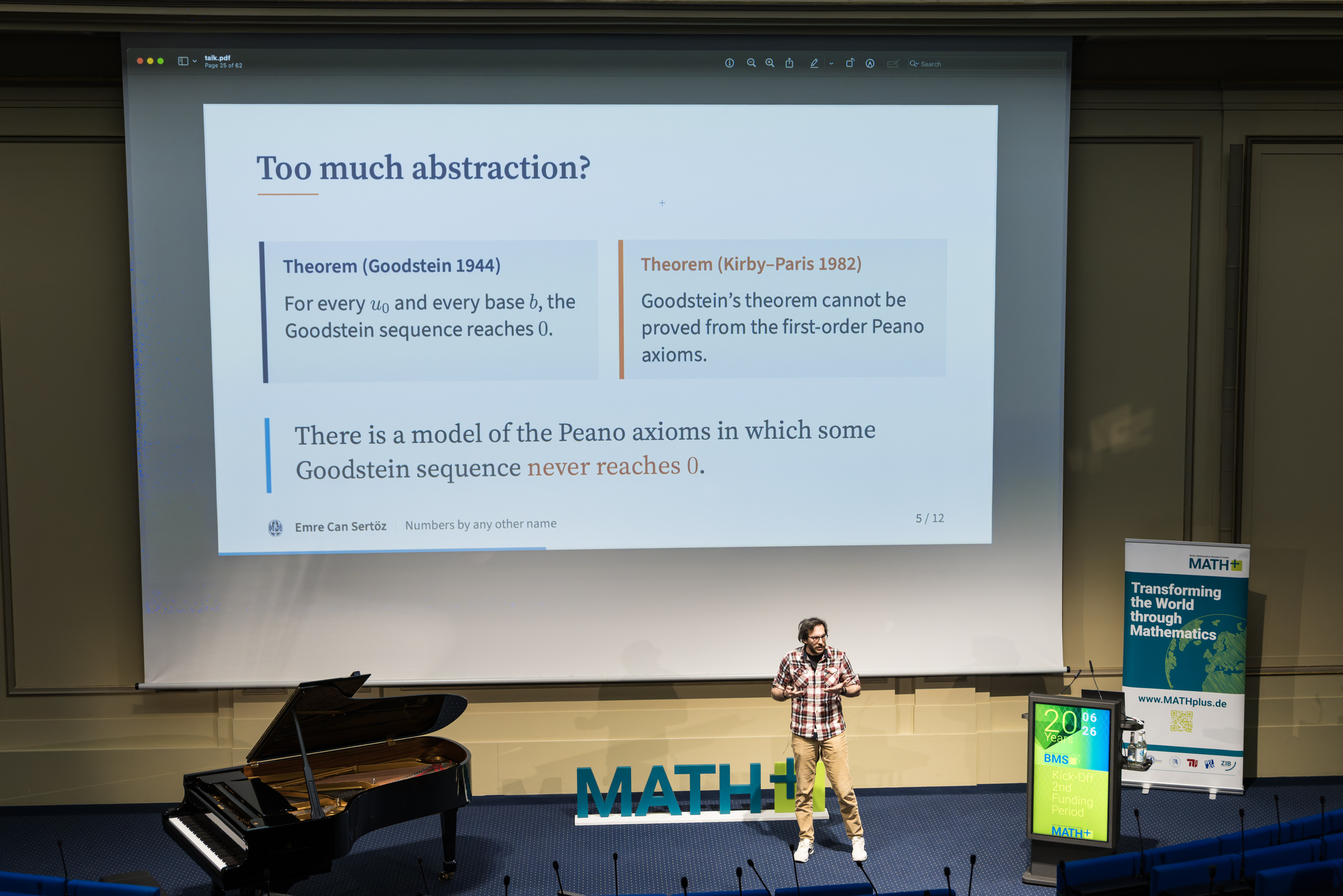
Emre Sertöz, BMS alumnus (2017), now at Leiden University, discussed “Numbers by Any Other Name: From Roman Numerals to Integrals.” While a rose by any other name would smell as sweet, the same cannot be said of mathematical objects: how we represent a number shapes what we can compute and prove.
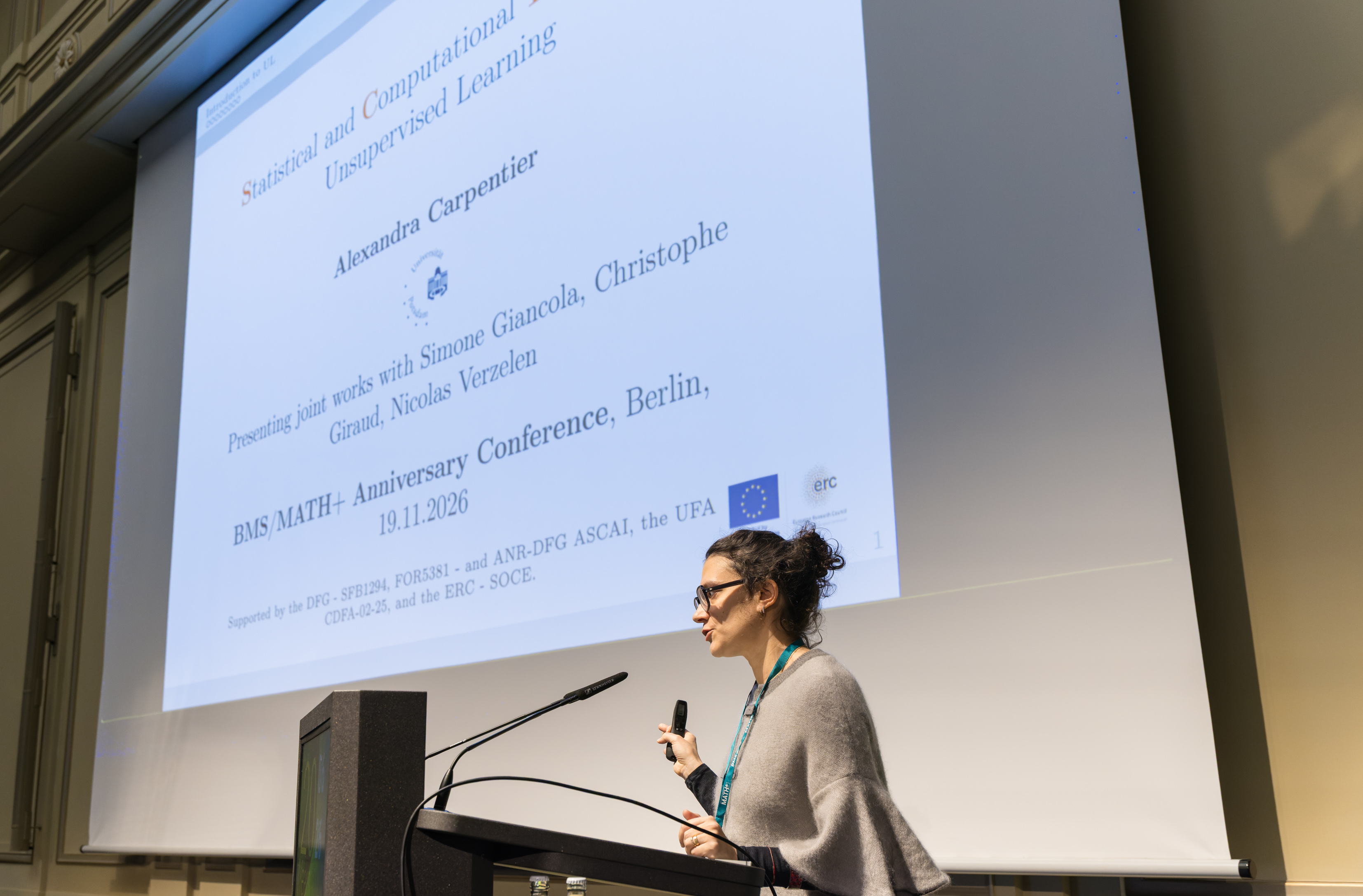
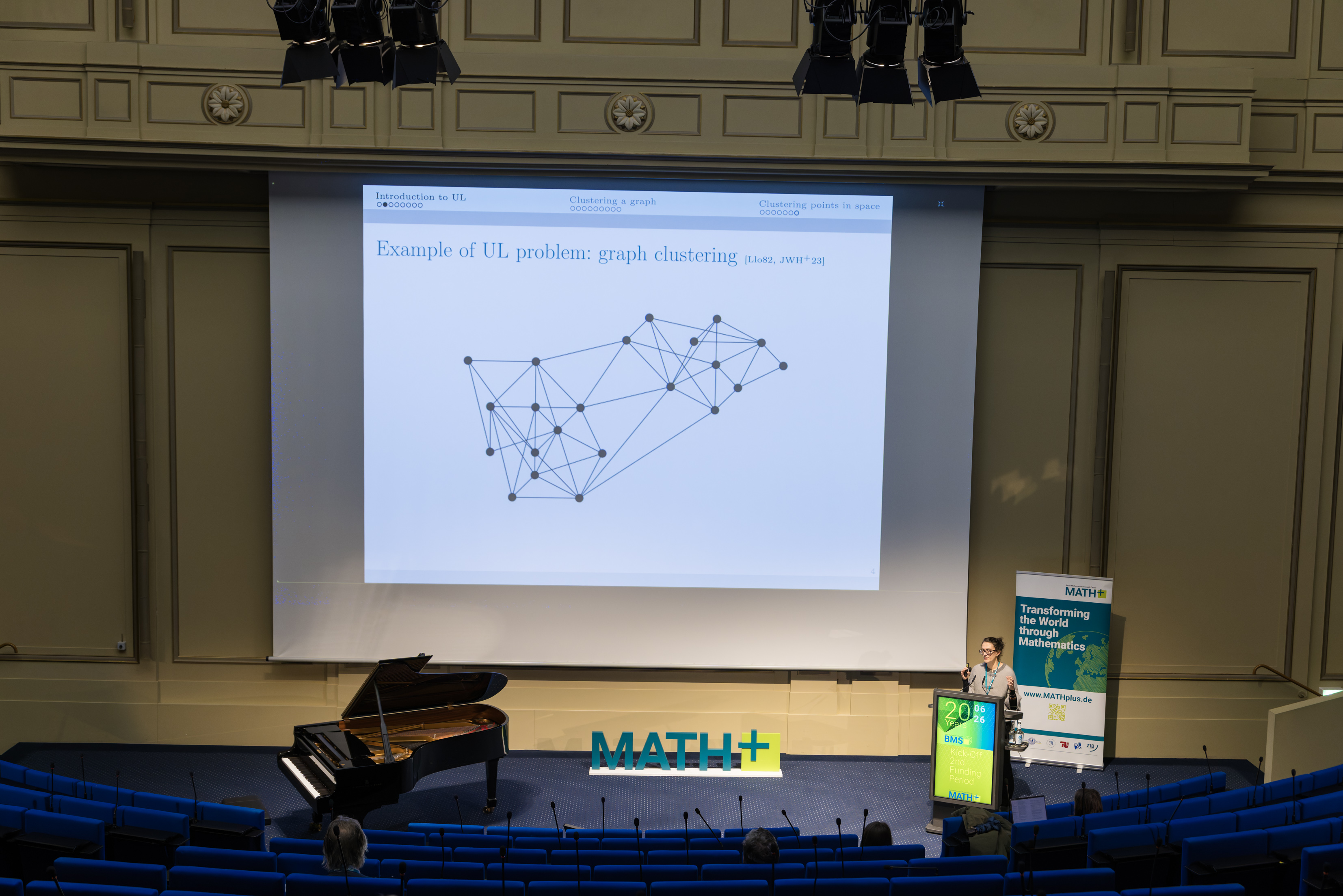
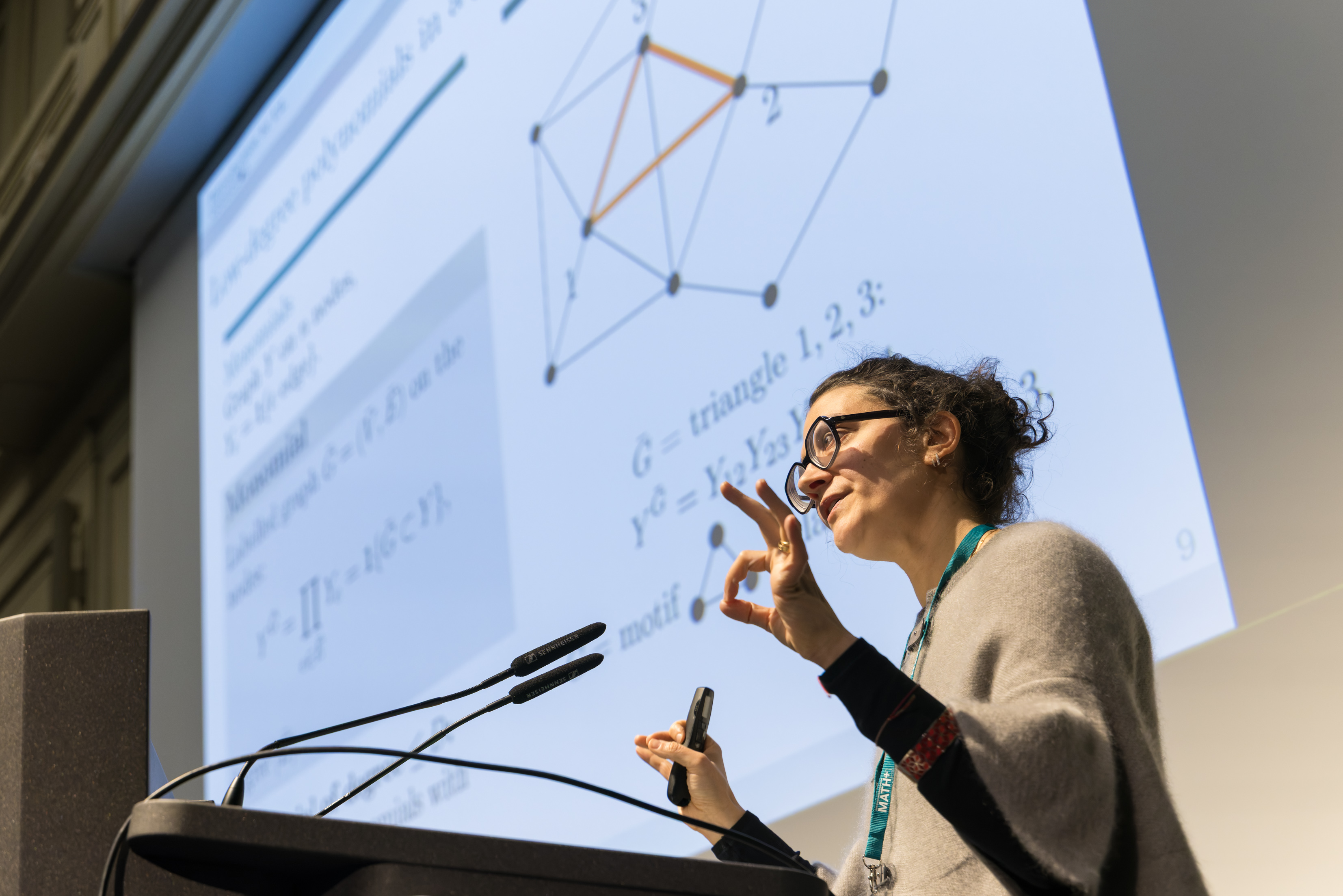
The second keynote lecture of the day was delivered by Alexandra Carpentier from Universität Potsdam on “Statistical and Computational Trade-Offs in Unsupervised Learning.” She addressed some common problems in modern statistics, machine learning, and computer science, highlighting applications such as clustering nodes in large graphs or feature vectors in large datasets, ranking experts or workers using crowdsourced data, and ranking tournament players or sorting objects based on pairwise comparisons.
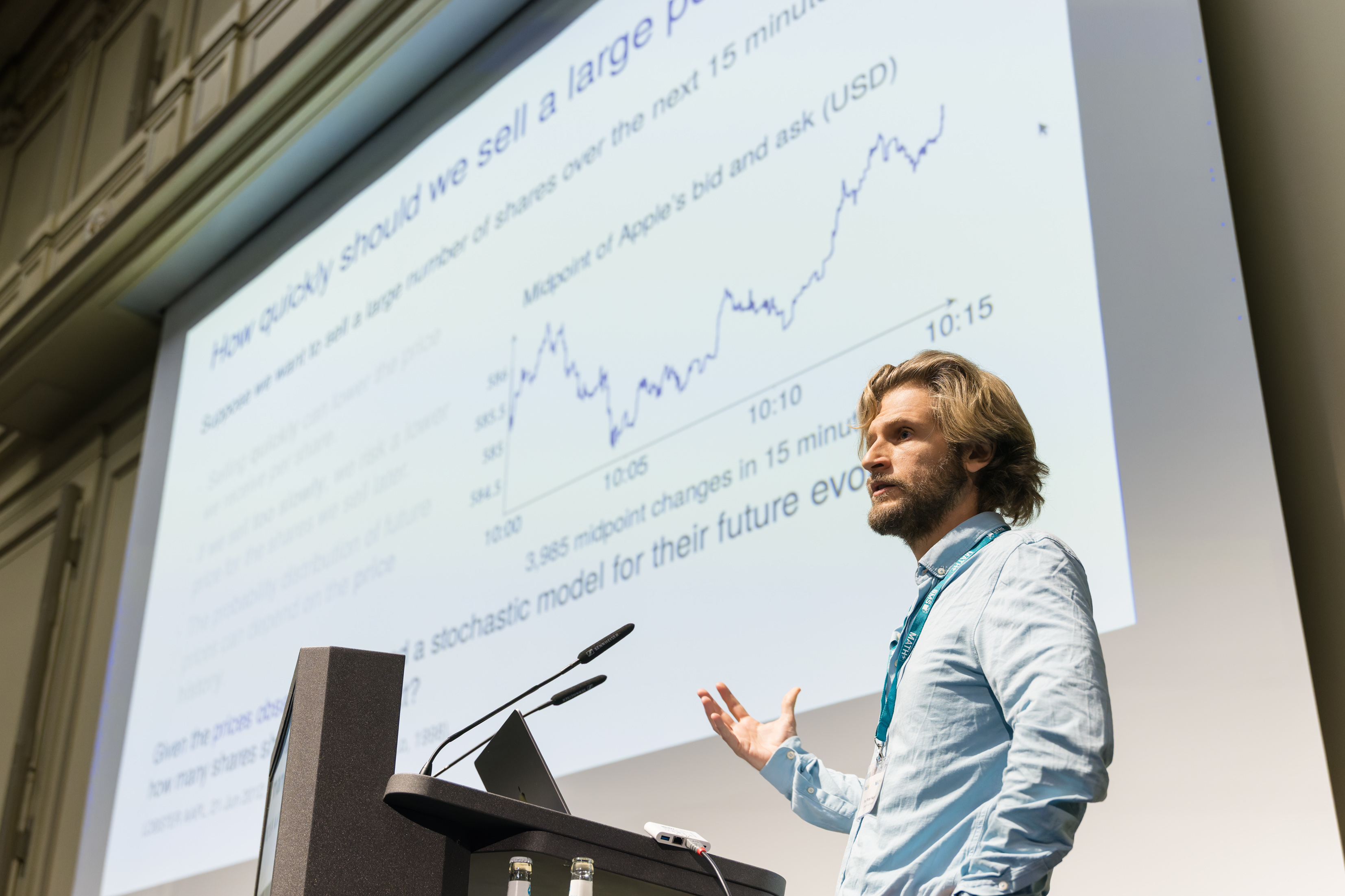
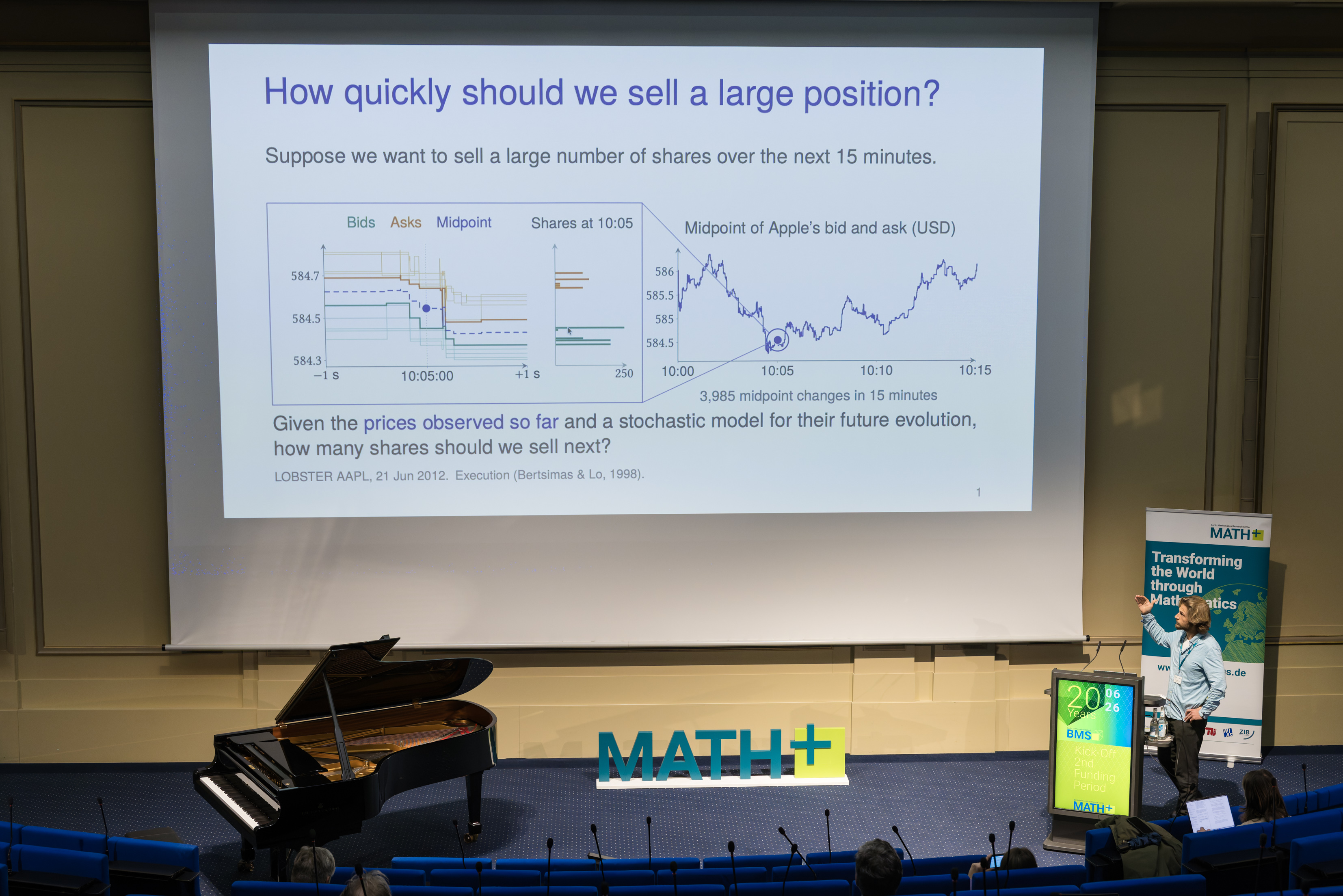
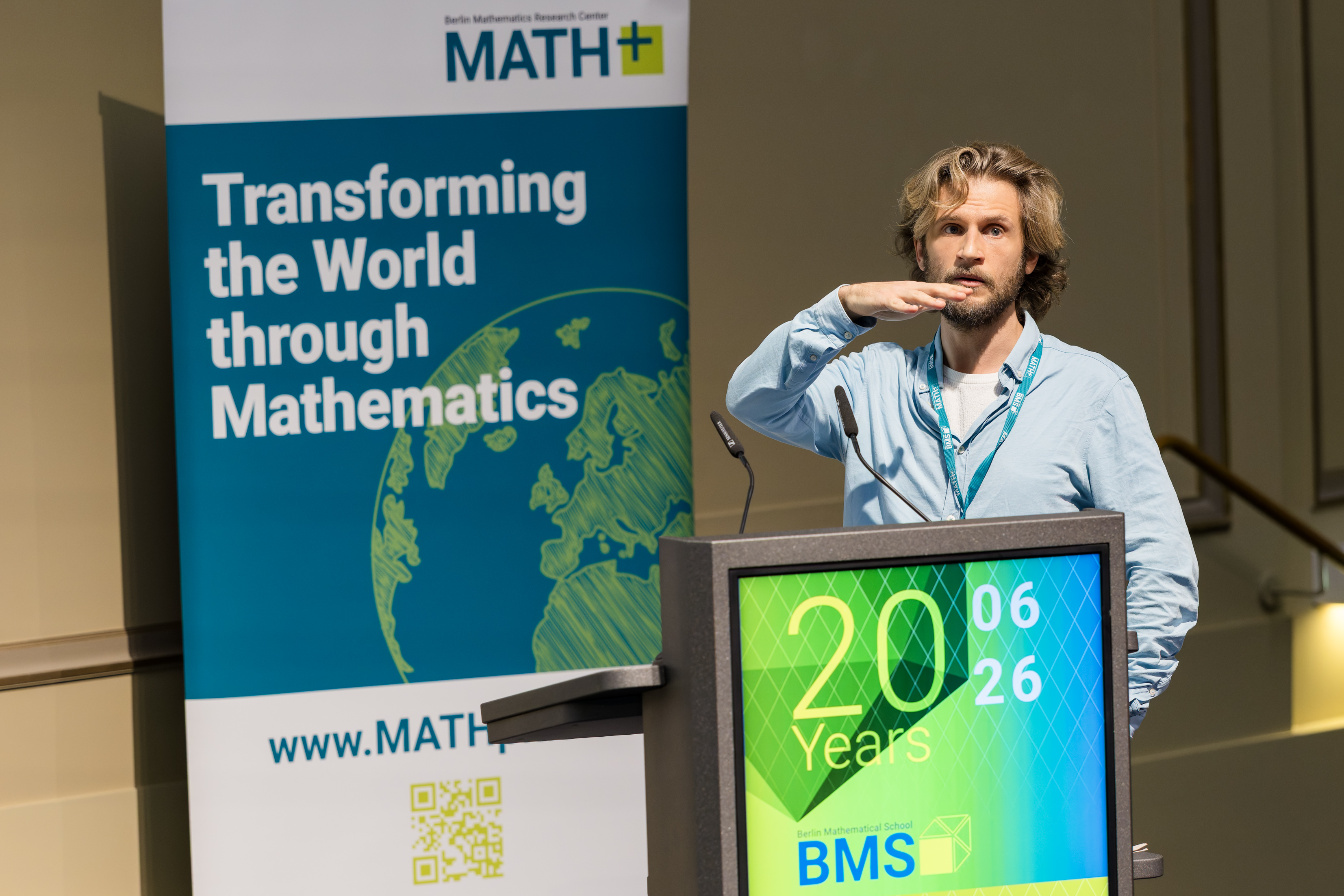
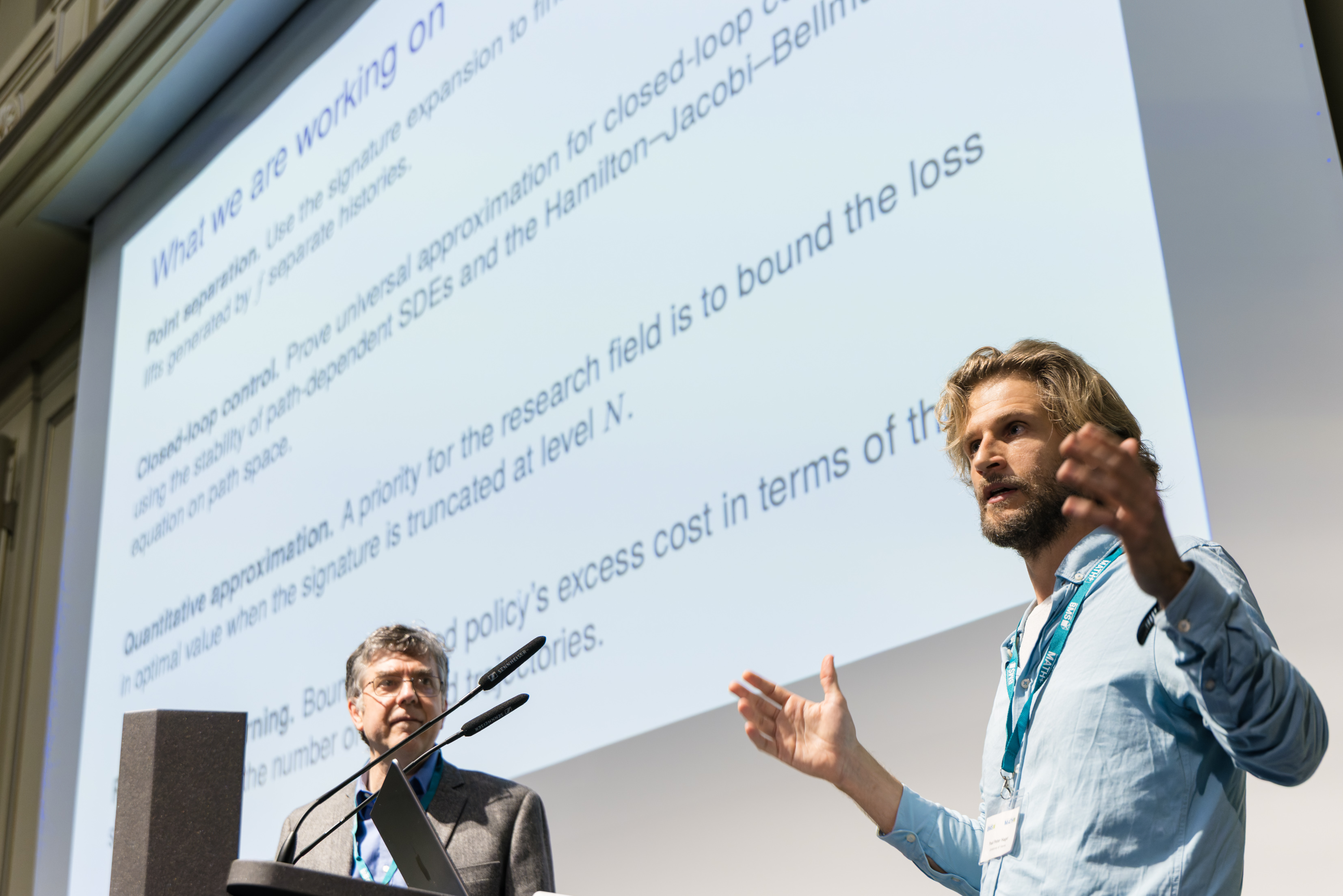
Paul Hager, BMS alumnus (2021), now at Universität Wien, discussed “Stochastic Control with Memory: A Signature Approach.” He introduced path signatures, which are collections of iterated integrals of a path, as a systematic tool for constructing finite-dimensional representations of a system’s history. Through simple examples, he illustrated how the choice and dimension of these representations affect the information retained and the approximation of the optimal value.
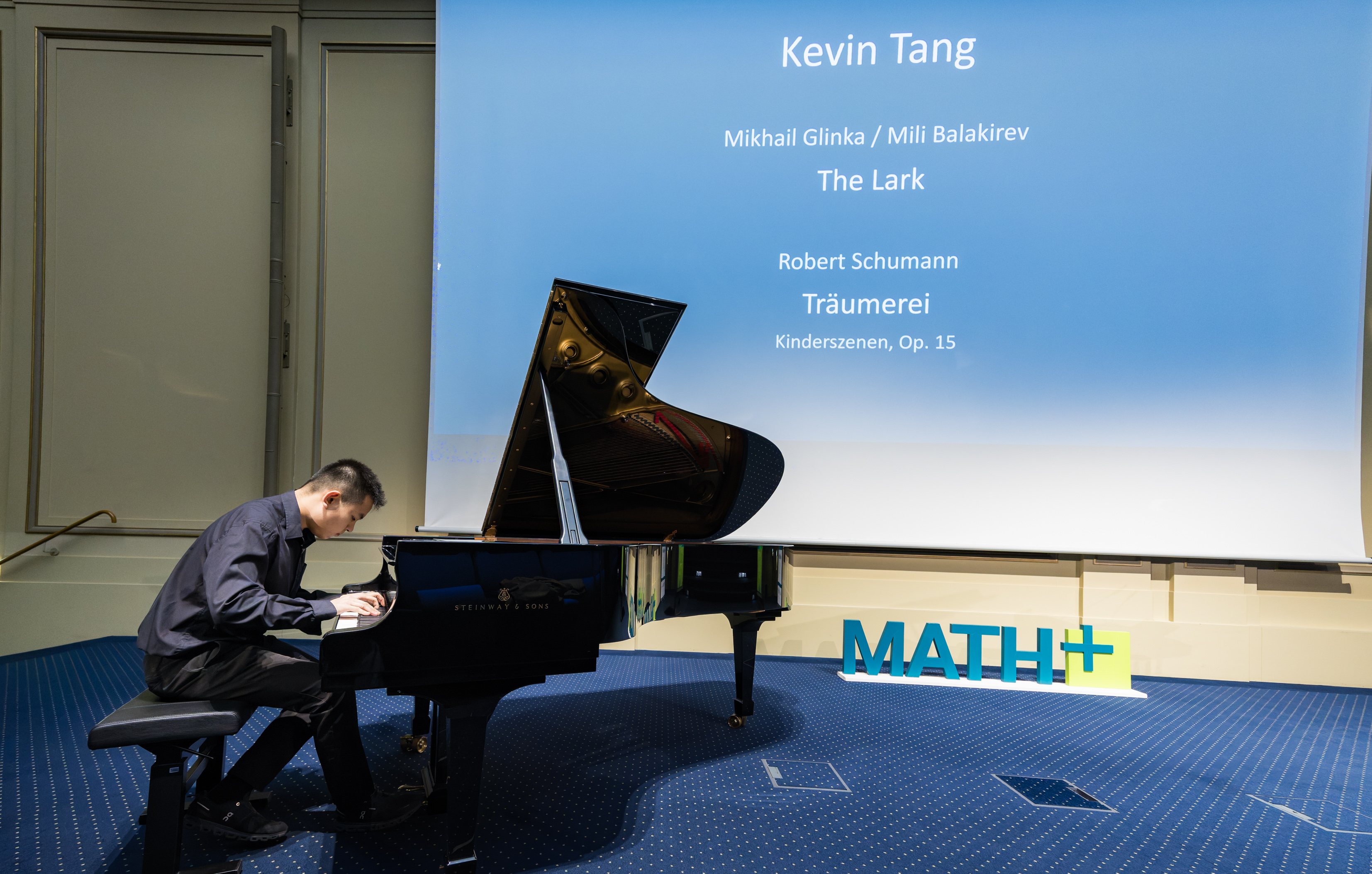
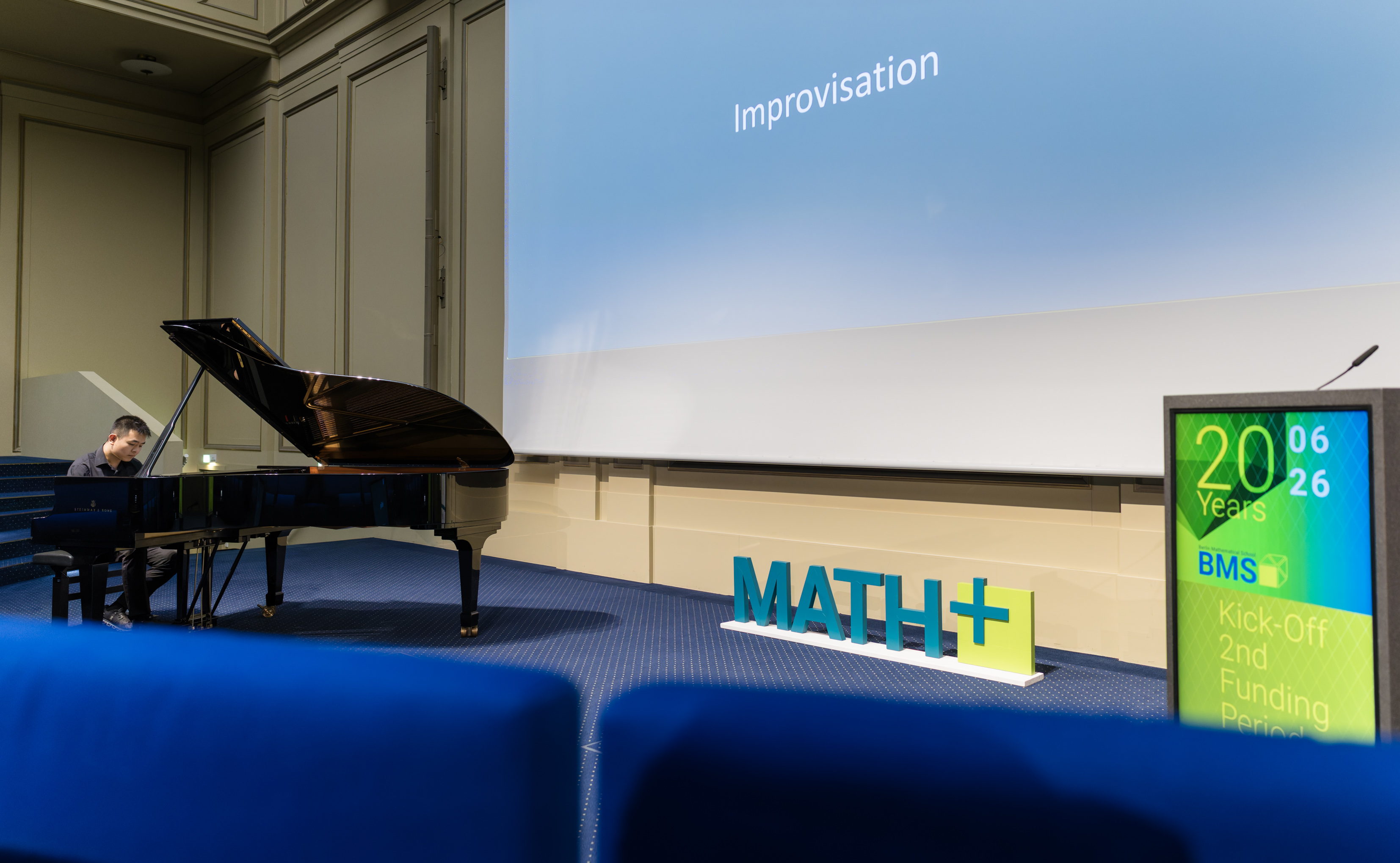
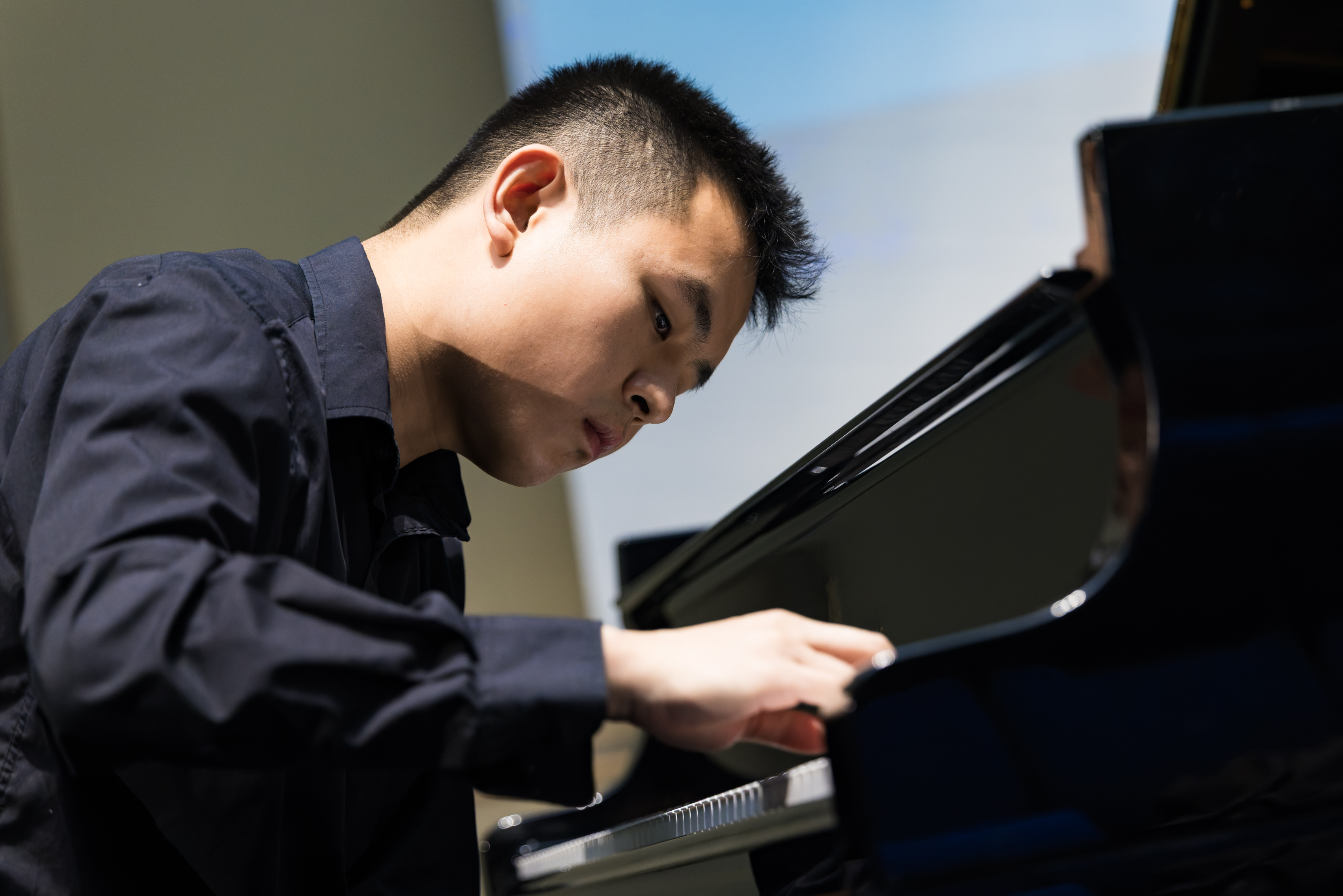
Our special thanks go to Kevin Tang, who delighted us with his piano performances between the talks. He performed works by Mikhail Glinka/Mily Balakirev, Robert Schumann, Maurice Ravel, and Charles Trenet/Alexis Weissenberg, as well as an improvisation. Kevin is a BMS graduate student at Humboldt-Universität zu Berlin.
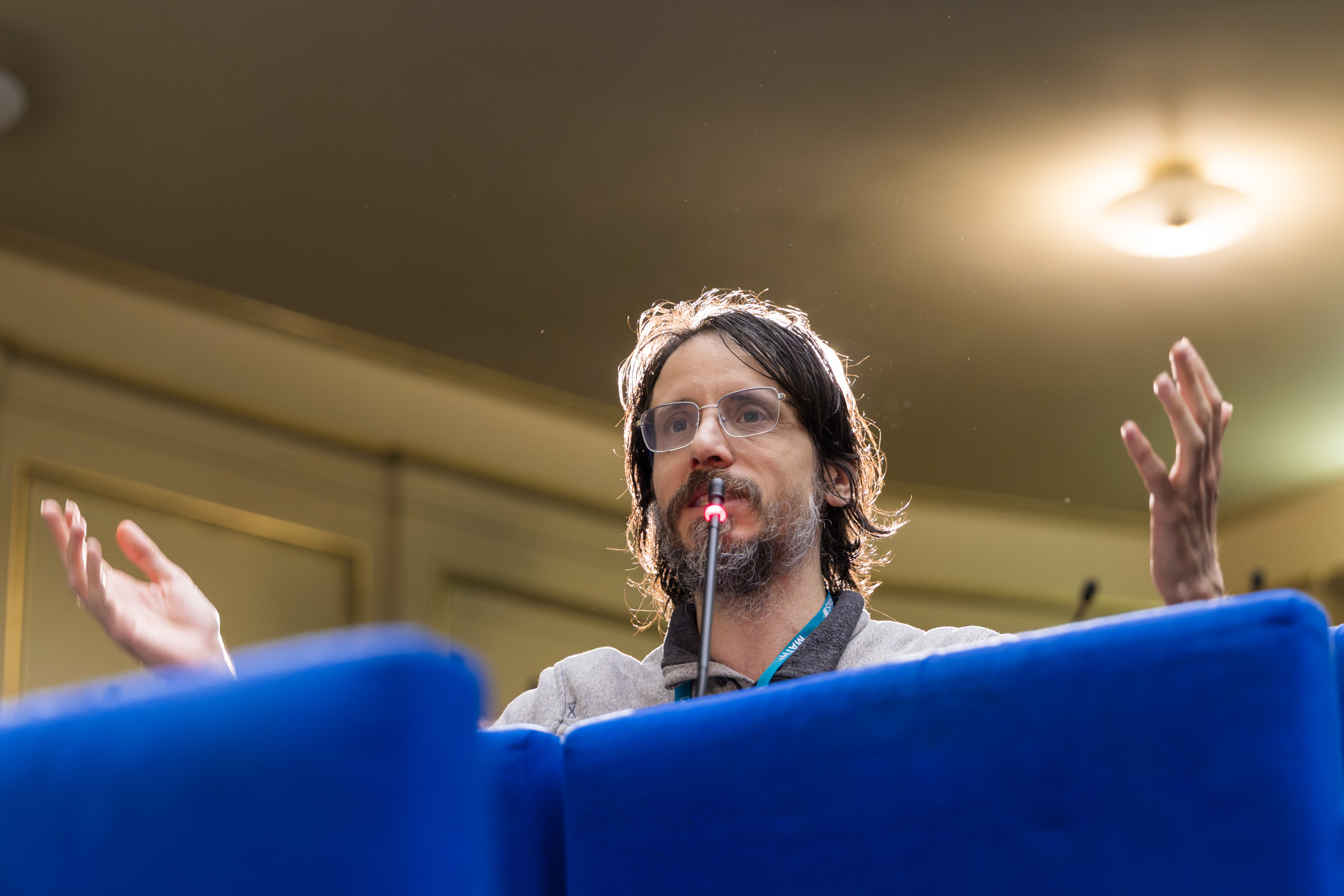
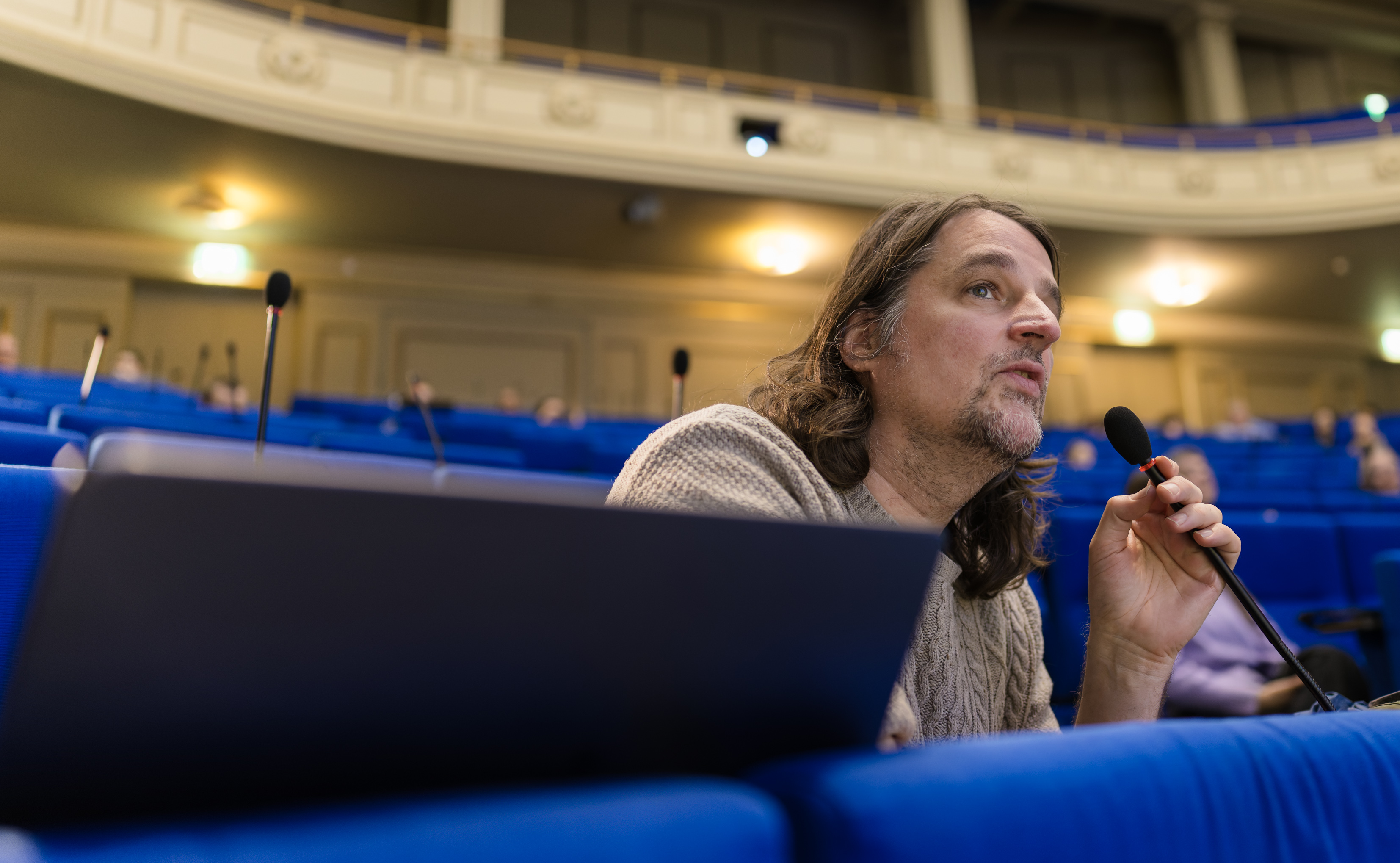
As the conference drew to a close, participants reflected on the two days of inspiring lectures and research presentations, revisiting selected topics in a final discussion.
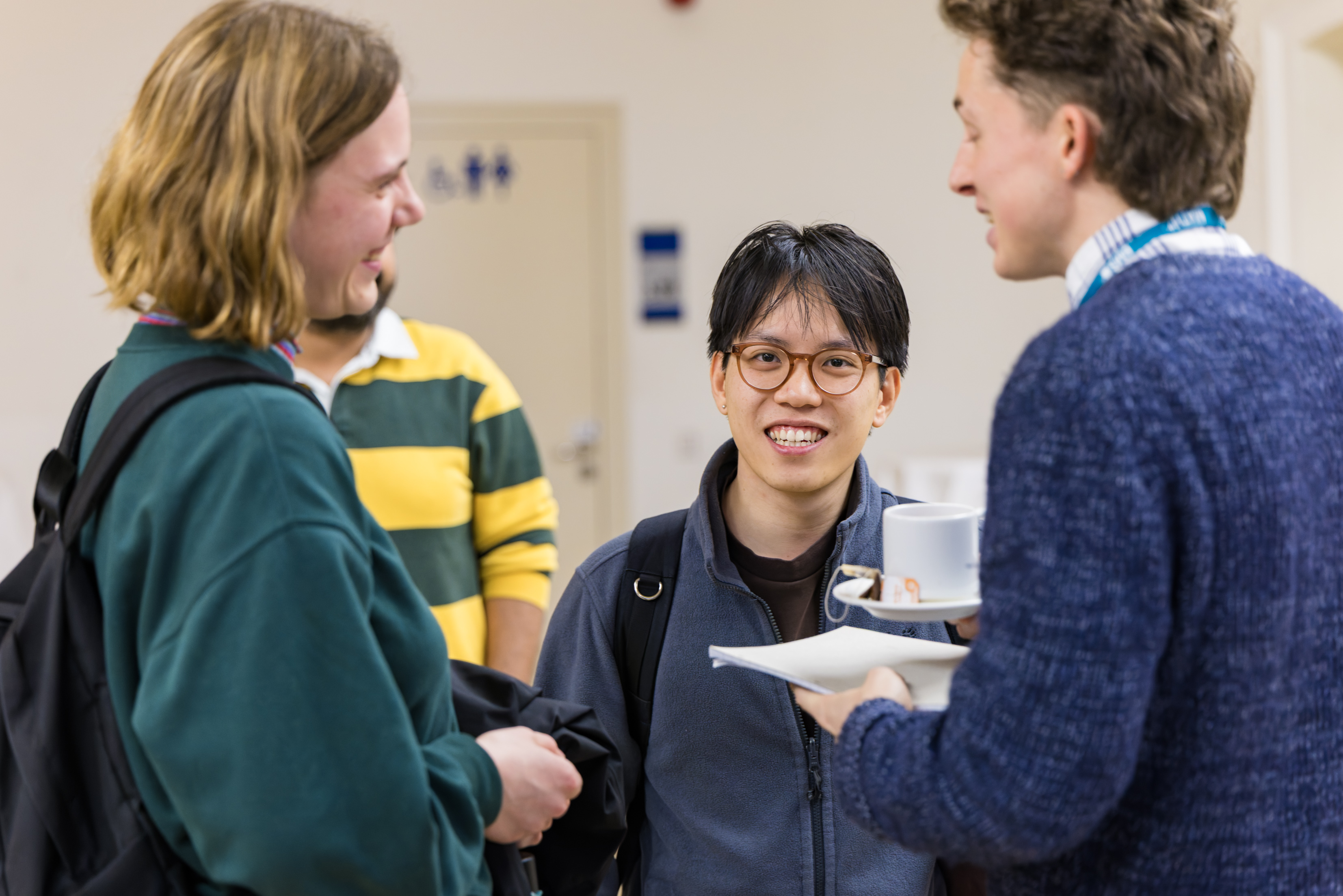
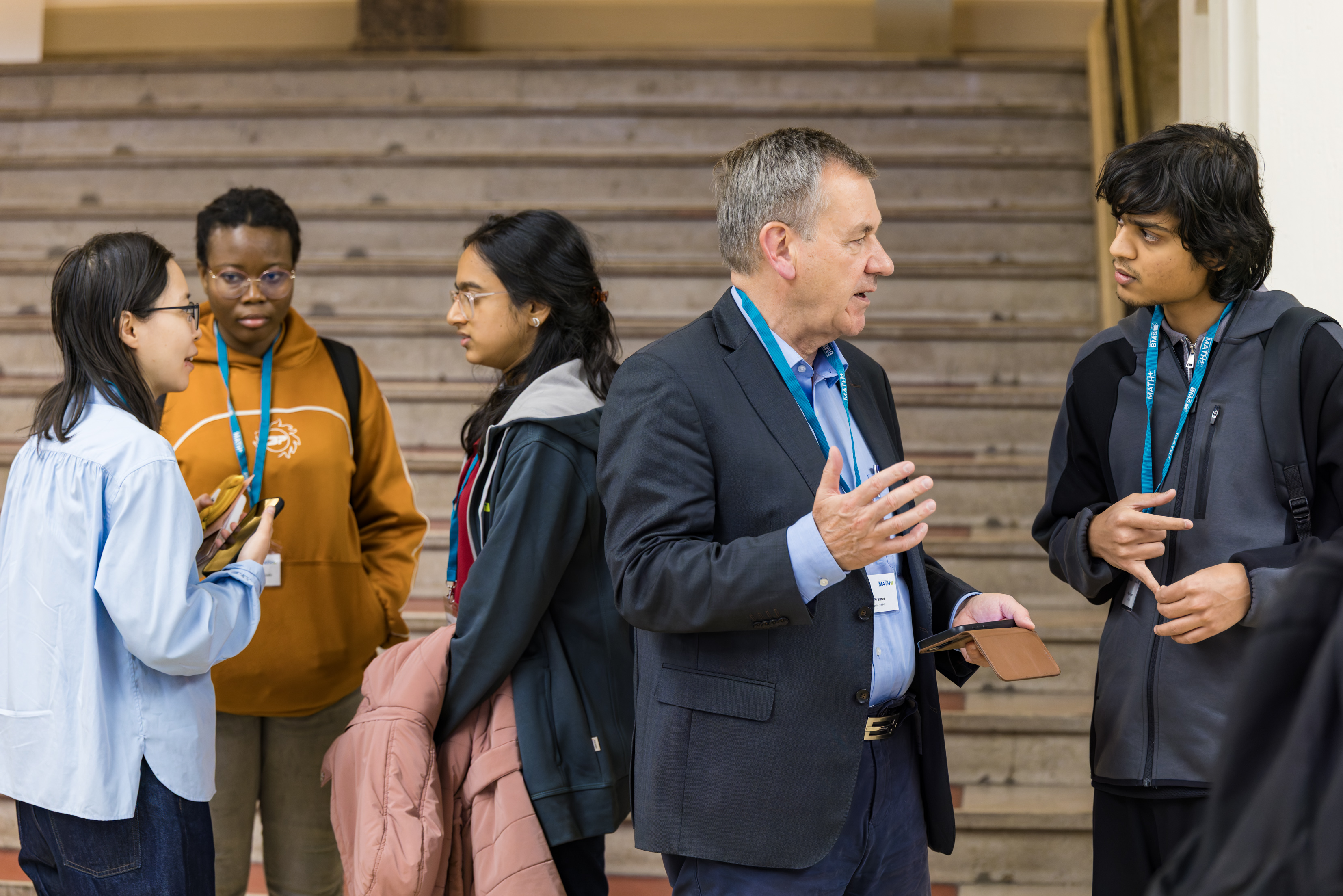
Then it was time to say goodbye! Over a final cup of coffee or tea, participants made plans and exchanged ideas for future collaborations. We look forward to meeting again, continuing our scientific exchange, and strengthening the worldwide BMS network.
LINKS:
- Program of all three celebration days, 17 to 19 November 2026
- Berlin University Alliance’s press release on the BMS20 anniversary and the kickoff of MATH+’s second funding period (in English and German)
- Berlin Mathematical School